When solidarity dissolves, Britain needs to get a grip of immigration rules

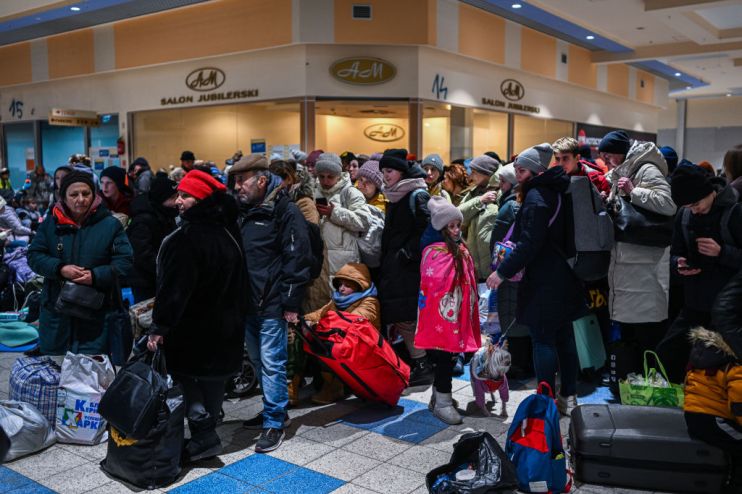
Yesterday, Secretary for Levelling up Michael Gove unveiled the Homes for Ukraine scheme, aimed at welcoming “tens of thousands” of refugees fleeing the war. The scheme seeks to complement the first corridor the government made available for Ukrainians who have relatives in the UK. Discontent inside and outside Westminster has been rife, with Downing Street and the Home Office accused of badly misreading the public mood. In contrast, the EU has given Ukrainians the right to settle for three years without a visa. As of yesterday morning, 17,100 Ukrainians had applied via the family route. Only around 4,000 visas had been granted. So this week, the government introduced another route – one without limits on numbers.
Through the Homes for Ukraine scheme, anyone residing in Britain can name one or multiple Ukrainian refugees to host in their home for at least six months. Those who participate in the scheme will get £350 a month as a “thank you” payment – presumably to pay higher energy bills and help with food shops. Any local authority hosting a refugee will also get £10,000. The matching phase, linking refugees with British people ready to host them, will begin this Friday. Initially, the formula will likely favour people who already have contacts in the UK. But it will hopefully be widened to allow charities to help by drafting lists of names and connecting people in the UK with refugees.
That it was Gove, rather than Home Secretary Priti Patel, announcing this policy is significant. The Homes for Ukraine scheme will have a long-lasting impact on local communities, so it falls under Gove’s beat. But it also signals a deeper frustration with Patel’s inability to deliver a consistent and compassionate response to the huge number of refugees fleeing Ukraine.
The immigration system in the UK is ancient, slow because of a highly bureaucratic structure, and unfit to cater for refugees. The Home Office’s blinkered focus on biometric data has meant that the response to people fleeing Ukraine was initially stumped, with reports of refugees being sent to application centers in Calais and then Paris and then refused appointments or forced to wait. Only when it became clear that domestic politics was becoming increasingly hostile to Britain’s reluctance to act did the response evolve and the Homes for Ukraine scheme was launched.
But this is not a coherent approach to migration. The £350 a month for those hosting Ukrainian refugees is erratic funding. It is not clear what people are meant to do with it, whether it is supposed to go towards the costs of housing the refugee or how far it will go as households are facing energy bills and higher costs from next month. Where refugees will live after the initial question of finding them temporary accommodation has been addressed is another log waiting to be thrown on top of the growing pyre of housing problems in Britain’s cities.
In the midst of suffering, human solidarity pulls through. The scenes of Berliners welcoming Ukrainian refugees at the train station, offering them a warm room, reminds us of the strength of humanity in the face of the horrors of war. But it would be irresponsible not to ask ourselves what happens once the solidarity falters. Many of the refugees entering the UK will find a new place for themselves here, and no one knows how long they would wait to be able to go back to their homes in Ukraine. Most of them don’t have a home anymore, as Putin’s reckless bombing campaign targets one city after the other. The government will have to come up with a long-term plan to provide these people with jobs and healthcare, and their children with an education.
If it doesn’t, we risk ending up with hyper-polarised communities, where negative views about refugees – backed by years of the far-right creeping into European politics – spark societal divisions. In 2014, the UK launched the Syria resettlement programme. Through this community sponsorship programme, the government was able to offer safety to 20,000 refugees. Volunteers helped with language lessons, and assistance in accessing benefits, housing and healthcare. That was more than just throwing £10,000 at councils. Something similar could make a difference.
Ultimately, the various lumbering beasts of Whitehall departments will need to work together to develop a long-term strategy on migration, instead of lurching from crisis to crisis. Solidarity, feasibility and long-term support shouldn’t be ideals, but stepping stones that lead to the success of migration policies.
The UK, a self-proclaimed place with a “tradition of hosting refugees”, must make peace with a recent past of questionable answers to people seeking refuge here.