Skip to content
Friday 14 August 2026London --:--Frankfurt --:--Zurich --:--
NewslettersSearchEN · DE
MorningWire

European business, markets and politics

FTSE 100
10,774.47
+0.02%
DAX
26,497.22
+0.75%
CAC 40
8,656.40
+0.07%
STOXX 50
6,564.63
+0.29%
  • Europe
  • Markets
  • Business
  • Economy
  • Technology
  • Politics
  • Opinion
More
GermanyFranceBankingAIEnergyFintechPropertyCapital Markets
  • Germany
  • France
  • Europe
  • Markets
  • Business
  • Economy
  • Technology
  • Politics
  • Opinion
  • DE
Wednesday 26 February 2025 6:24 pm  |  Updated:  Wednesday 26 February 2025 6:25 pm

Tariffs unlikely to spark persistent inflation, Bank of England rate-setter says

By: Chris Dorrell

Add as a preferred source on Google
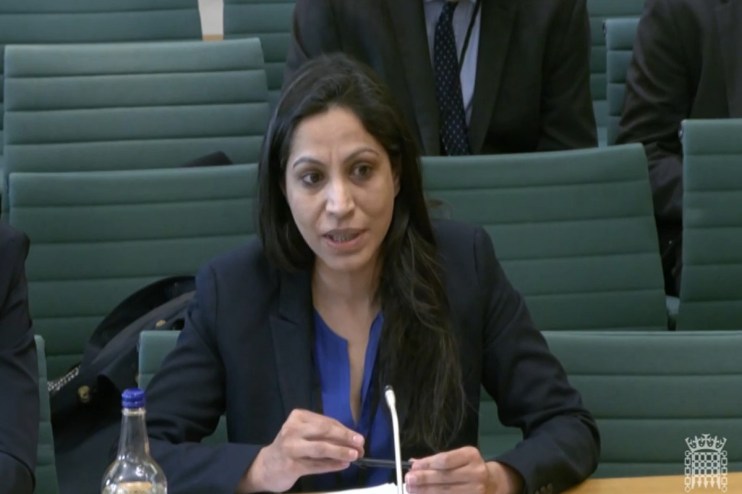
Swati Dhingra is a member of the Bank of England's Monetary Policy Committee.

Swati Dhingra, a rate-setter at the Bank of England, said Donald Trump’s tariffs would likely push down on domestic inflation as global exporters slashed prices to maintain market share.

Dhingra warned that the UK was “particularly sensitive” to changes in imported costs due to its openness, but suggested that the danger of tariff-induced inflation was relatively low.

“The direct effect of US import costs and dollar strengthening are likely to be offset by reduced global price pressures,” she said in a speech at the National Institute of Economic and Social Research (NIESR).

“Trade diversion away from the US would reduce global price pressures for the UK and the dampening of global economic activity from increased trade barriers and uncertainty would also subdue international price growth,” Dhingra continued.

Her comments reflect the attempt of policymakers to grapple with the potential impact of Trump’s tariff threats.

Trump has already imposed a blanket 10 per cent tariff on imports from China as well as extra duties on aluminium and steel imports. He has promised to impose ‘reciprocal’ tariffs on all of the US’ trading partners in the coming months.

Economists have warned that reciprocal tariffs would cause major economic disruption, although many are sceptical the levies will ever be imposed.

Dhingra argued that UK imports from elsewhere in the world would likely get cheaper as exporters searched for “new markets” outside of the US.

“Given the significant role of the US in the world economy, tariffs of the proposed magnitude are likely to prompt firms that export to the US to lower their prices to retain demand for their products,” she said.

Read more

Interest rate cut is ‘off the table’, says Bank of England governor

Governor Andrew Bailey has launched a defence of the Federal Reserve's independence.

And she argued that the direct impact on UK inflation from the US would be fairly low, despite the close ties between the two economies.

“Whilst the US is the UK’s largest individual trading partner, it accounts for only around 10 per cent of UK goods imports. And the main imports include crude and refined oil that are unlikely to experience cost increases on account of US tariffs,” she said.

“The direct price-increasing effects from US tariffs to UK prices therefore would be less than feared.”

However, if the global economy were to fragment in a “less orderly” way, this could result in more frequent and severe supply disruptions, which would pose problems for monetary policymakers.

“A disorderly fragmentation, where countries scramble to secure alternative suppliers, would risk triggering inflationary pressure in the short term and constraining economic growth in the long run,” she said.

But she suggested this was “too extreme” a scenario and the appropriate monetary policy response would depend on the “specific trade policies and countermeasures implemented”.

Dhingra is the Bank of England’s most dovish rate-setter. She voted to cut interest rates by 50 basis points at the last MPC meeting in February, and has consistently called for a looser policy than many of her peers.

At an event on Monday, she warned that the Bank of England’s preferred ‘gradual’ approach would leave monetary policy in “restrictive territory all of this year,” which was inappropriate while consumption was “pretty weak”.

Read more

‘False dawn’: June inflation falls to 2.6 per cent but analysts say rises ahead

Till sales growth slowed to 2.7 per cent in the last four weeks

Share this article

  • Facebook
  • X
  • LinkedIn
  • WhatsApp
  • Email

Similarly tagged content:

Sections

  • News

Categories

  • Economics

People & Organisations

  • Bank of England
  • Swati Dhingra
  • UK economy
  • UK inflation
  • UK Interest Rates

Trending Articles

  • Revolut takes flight with launch of new airport lounges

  • Grandparents fund university degrees to avoid inheritance tax net

  • It’s not just Jason Arday, most of sociology is a scam

  • IT consultant ordered to pay £50,000 after being accused of stealing Soho House members’ personal details

  • Brompton Bicycle sues former adviser for ‘professional negligence’

More from Morning Wire

  • Interest rate cut is ‘off the table’, says Bank of England governor

    Economics
    Governor Andrew Bailey has launched a defence of the Federal Reserve's independence.
  • ‘False dawn’: June inflation falls to 2.6 per cent but analysts say rises ahead

    Economics
    Till sales growth slowed to 2.7 per cent in the last four weeks
  • Bank of England holds interest rates but warns of rises to come

    Economics
    Bank of England headquarters in 2025, showcasing modern architecture and iconic London skyline in the background.
  • ‘Door is open’ to interest rate hike as inflation fears return

    Economics
    Bank of England headquarters in 2025, showcasing modern architecture and iconic London skyline in the background.
  • Bank of England may set the stage for interest rate hikes this year

    Economics
    Bank of England recession warning
  • Hold interest rates but ‘sound hawkish’, Morning Wire Shadow MPC tells Bank of England

    Economics
    Andrew Bailey, Governor of the Bank of England, with the Bank of England building and Union Jack flag in the background
  • How patient can the Bank of England be?

    AD
    Historic Royal Exchange building in London with modern skyscrapers behind, clear blue sky.
  • El Nino heatwaves to ‘fuel inflation next year’

    Economics
    Firefighter in helmet and uniform watching a blazing forest fire at night, red glow in the sky
MorningWire

Independent European business, markets and political news for decision-makers.

Morning Briefing

Europe

  • Germany
  • France
  • Europe
  • UK & Ireland

Business

  • Markets
  • Banking
  • Technology
  • Energy
  • Property
  • Fintech

Editorial

  • Opinion
  • Editorial Policy
  • Corrections
  • Contact

Company

  • About Morning Wire
  • Privacy Policy
  • Terms of Use
  • Cookie Policy
© 2026 Morning Wire Ltd · Published by Morning Wire Media, Bahnhofstrasse 65, 8001 Zürich, Switzerland
Privacy · Terms · Cookies · Facebook