Tax: What should Reeves do in the Autumn Budget?

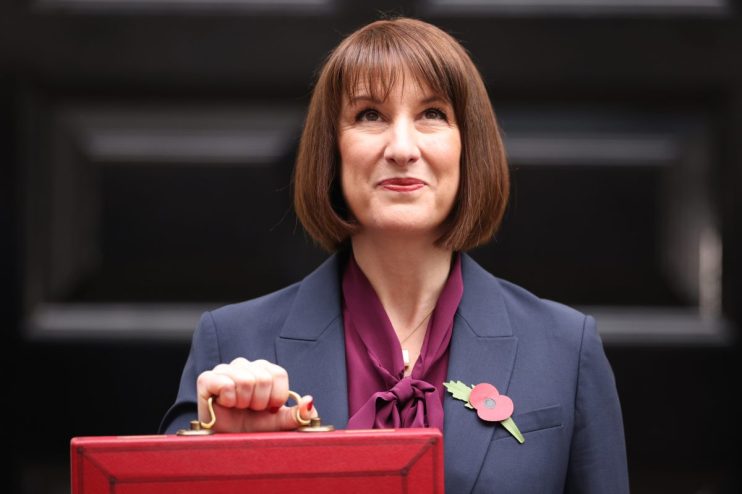
As rumours swirl about which taxes Rachel Reeves may target in the Autumn Budget, Tim Sarson lays out what the Chancellor can (and should) do
Budget speculation season seems to come around earlier every year. We’re fresh back from our summer breaks and already looking forward with some trepidation to the autumn. It seems we should add the rumours and kite-flying that precede the Budget to the list of slightly bittersweet August signals that summer is nearly over, like the start of the football season and back to school uniform sales.
What makes this speculation all the more bittersweet, or just straight up bitter, is the fact that nobody’s talking about tax cuts or a spending bonanza. It seems all of us – politicians, advisers, journalists, the general public – are resigned to taxes going up. The only question is where, and on whom or what.
What tax changes are being considered?
All sorts of measures are being mooted. Some appear to be carefully flown kites emanating from somewhere within government to gauge the public appetite, while others may be wishful thinking or gentle lobbying, particularly over ways in which last year’s inheritance tax changes might be restructured before they come into force. Yet more are almost certainly mere idle rumour to fill the voids of silly season.
What almost all the ideas I’ve seen have in common is that they amount to fiddling around the more obscure edges of our tax system.
Remember that UK tax receipts overwhelmingly come from three main sources: income tax, national insurance and VAT, with a handy contribution from corporation tax and some decent pocket money from a few other sources like fuel duty. These taxes benefit from a broad base; in other words, they are paid by almost everyone. Make small changes to the rate, or reliefs, or thresholds for these taxes and you move the dial meaningfully on UK tax take. That’s why successive governments have been so keen on freezing the income tax thresholds. Megabucks for essentially doing nothing.
Ignore the big-ticket taxes and instead limit yourself to the other buckets and you need major changes to achieve anything at all.
Most people agree with the principle that those with the broadest shoulders should bear the largest burden. The trouble is there aren’t many of them. Sometimes you just need lots of shoulders.
It’s not news that at the last election the current government boxed itself into a corner by promising not to touch the big revenue raisers. It used up its one remaining area of wriggle room – employer’s national insurance (NI) – last year, to something short of universal acclaim. As a result, employers’ NI is almost certainly off the table this time. Whether the Chancellor can and will hold to her wider manifesto promise, and for how long, is not something I can predict.
Beware the tax nimbys!
But the trouble with fiddling around the more niche edges of the tax system isn’t just sheer numbers. It’s also practical and political. Commentators often note that niche taxes tend to come with organised and vocal niche interest groups.
There is a form of nimbyism in public opinion which says that yes, we need to raise more taxes, but not on me please. As with all nimbyism, the most organised campaigns make the largest impact. Last year was a perfect case in point. There were two changes to inheritance tax reliefs: to business property and agricultural property. Business property relief (BPR) is relevant for far more estates, but it was the blowback on agricultural property relief that could be heard from space.
When each change brings in small amounts of money you also need to introduce lots of them, increasing the risk that at least one will trigger a noisy backlash.
Finally, while simply tweaking the rate or reliefs on one of the big taxes might be enough to generate decent returns, the same approach is unlikely to cut it on a niche measure. So you end up embarking on quite major reform simply to have enough money to show for it. Major tax reform is needed in large areas of our system, but raising revenue in a hurry to plug a black hole in the finances is probably not the ideal context for doing it. We can end up stumbling upon radical structural changes, with their own unintended behavioural consequences, without really meaning to.
The danger this autumn is that the exchequer ends up unleashing a series of minor irritations on the British taxpayer, while not actually bringing in that much more tax.
What should the Chancellor do?
What should the Chancellor do? I’m hugely thankful I don’t face the dilemmas she does, but I would say this:
- If you are going to reform, then reform properly and deeply. Now’s the last chance to really go for it, with three years of the parliament remaining
- Fewer, bigger changes make more sense to me than many small ones
- If the objective of the government is growth, then try to remove measures on the books that inhibit activity (like stamp duty land tax), and bring in ones that encourage it.
Lastly, don’t shy away from considering a few Gordian knots that might be worth cutting, even if the public backlash is loud. If Macron can politically survive years of Gilet Jaunes protests after hiking fuel duty, perhaps a British government could reconsider the health and social care levy without the sky falling in.
Tim Sarson is head of tax policy at KPMG UK