Teeth, tourism and hairlines: Is Turkey the future of British healthcare?

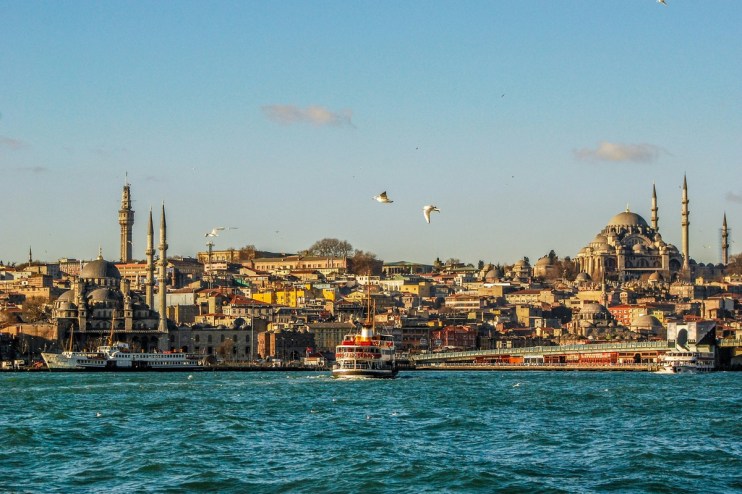
As millions of Brits fly to Turkey for medical treatments each year, Amber Murray visits Istanbul to find an industry getting a lucrative makeover
Everyone at the exit of Istanbul airport is well aware most people aren’t just arriving for a holiday.
The process from plane to taxi to clinic is well streamlined: men holding phones loaded with clinics’ contact details stand next to easy-to-read boards displaying dozens of logos.
Everyone leaving my gate is shepherded into idling minivans and whisked away in air-conditioned backseats.
They’re some of the 1.2m medical tourists (and growing) who visit Turkey annually, for treatments ranging from dental work to hairline revamps and plastic surgery – attracted by the low cost, quick turnaround and chance for a quick holiday.
Dental treatment, in particular, has boomed since the pandemic – and Brits make up more than half of all patients at dental clinic Dentakay.
Dentakay, an Istanbul-based clinic with operations in seaside town Antalya, is one the clinics to successfully note the post-pandemic boom in the market.
“There’s the NHS problem… that’s one of the biggest reasons why [Brits] choose to find a different location for their dental treatment,” Dentakay founder Gulay Akay says.
“After [the pandemic] happened, it all of a sudden became a vacuum where people needed a lot of healthcare… they stopped considering location,” Akay adds.
Around one in four Brits are currently awaiting dental treatment in the UK, according to the British Dental Association, with many dental practices are at capacity or not accepting new NHS patients.
And in the last two years, almost one in five Brits who couldn’t get an NHS dental appointment went abroad, according to a March Ipsos poll, in part due to high wait times and in part due to poor experiences with UK services.
“My general experience of [UK] dentists haven’t been great,” flight attendant Jackie White says. “I wasn’t coming to Turkey for a Hollywood smile. I was coming to try to keep my teeth.”
“We all know the cost of private dentistry in England is, for the vast majority, prohibitive,” lab tech March Richardson – and recipient of 20 crowns – says.
“it would have cost me over £16,000 to get the equivalent work done in the UK – significantly more expensive,” he adds, explaining that he chose a slightly more expensive clinic to ensure better quality.
The allure of Turkey
The health tourism trend in Turkey started all the way back in the early 2000s, when it started to get a reputation for hairline procedures.
“We are the Silicon Valley of the hair transplant business,” the head of transplant specialist Estenove, Dr. Yücel İskender, laughs.
There are rumours – and some confirmations – of countless celebrities heading over to Turkey to undergo the treatment.
The most popular type – Follicular Unit Extraction (FUE) – which plucks hair follicles from the back of the scalp and moves it over to the hairline, has a success rate of around 90 per cent.
“Because of the Turkish currency depreciation, the labour force became cheaper, which made the procedure cost much cheaper… That’s why it became so popular,” İskender says.
“And between 2005 to 2020 the Turkish government also [introduced] a lot of subsidies into the hospital industry… we have a lot of new hospital buildings, which means that physical capacity has increased,” he adds.
As Turkey became increasingly well known as a medical tourism destination, other industries started to sit up and take notice of the market opportunity – that’s where dental treatments, botox and butt lifts come in.
Many clinics work with hotels, drivers and tourism companies to streamline the process and make the procedure closer to a holiday.
Clinics in Antalia, Turkey’s seaside town, are particularly popular with – and marketed to – Brits who might have gone on holiday there anyway.
“A lot of Brits have become accustomed to Turkey [through tourism] over the years,” Akay says. “And we know about the weather in England”.
It’s a good business model: In 2023, Turkey’s health tourism market generated an estimated £1.7bn in revenue with 1.4m visitors, up three-fold from 2015.
Risky business?
But as the number of visitors has grown over the years, so too have the horror stories.
Social media is full of people who’ve taken to the internet to share their accounts: botched hair transplants; teeth that have fallen out; invasive and unnecessary procedures.
The problem is so common that the NHS has an advice page for those travelling to Turkey: do your research and always discuss plans with a UK doctor, dentist or clinician before going ahead.
They note that six British nationals died in Turkey last year following medical procedures.
“That treatment advertised overseas might seem cheaper, even if you factor in travel costs, but what value do you put on safe treatment, and your health? We hear time and again of patients who have gone abroad for dental treatment, but then face issues with continuity of care when they come back.
“If things go wrong, you need to know there are safety nets in place and that problems will get sorted, without facing another bill. My advice is: don’t gamble with your teeth or your health,” Professor Damien Walmsley has said.
The problem is bad enough for some Turkish clinics to consider it a threat to future demand.
“Patients should not only be choosing clinics based on affordability and based on which is the cheapest,” Akay says. “A lot more research and a lot more information should go into this before they make their decision.”
The worry is that a bad reputation for Turkey’s clinics will stymie efforts to expand; this is part of the reason some clinics have been lobbying government officials to introduce tighter regulatory processes – more watertight accreditation means fewer concerned travellers and a better overall reputation (not to mention the opportunity for higher-end clinics to raise prices somewhat).
After all, the high-end clinics have global aspirations: they consider not only the European market but also the middle Eastern and American markets to be either untapped or in the early stages of growth.
“You will see Turkish clinics, Turkish hospitals, Turkish medical grants all around the world,” İskender said.