Ten years of tightened control over London’s funding has stunted our growth

For years we’ve been promised more devolution, but none of that has translated into more control over how we use money in London and it’s curtailing our growth, writes Paul Honeyben
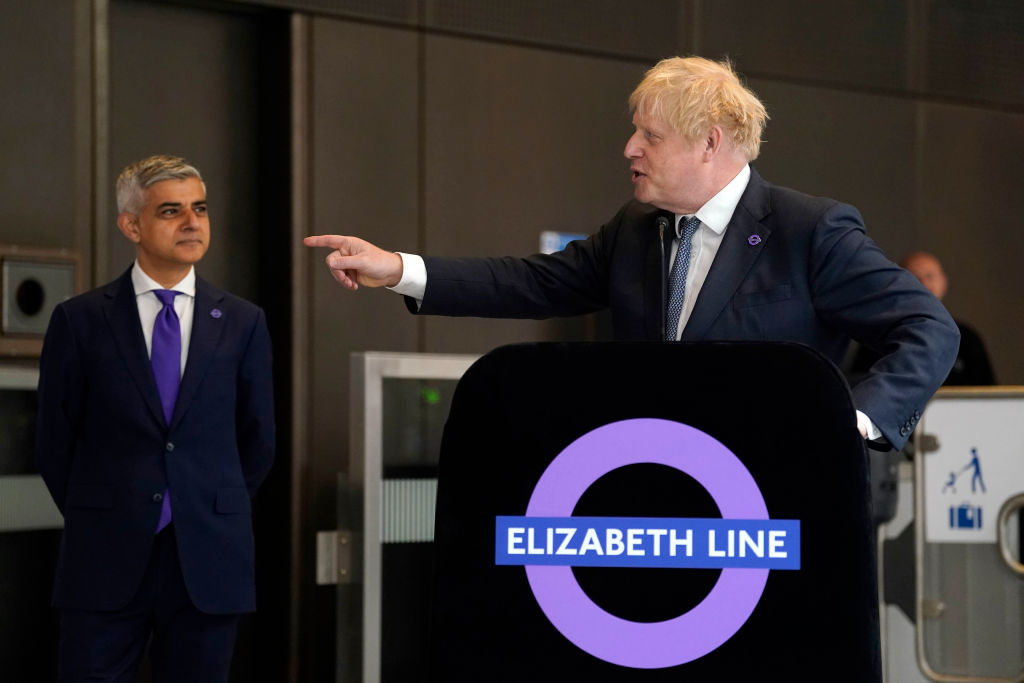
A lot has changed since 2013 when the then Mayor of London, Boris Johnson, commissioned LSE Professor Tony Travers to lead the London Finance Commission (LFC) to investigate funding arrangements in the capital. No one had heard of Brexit or Covid-19. Few people knew what net zero meant, and austerity was just starting to bite.
The context was seemingly inexorable growth in the capital, driven by the agglomeration of financial and professional services concentrated in central London, with the population forecast to grow to 9 million by 2020 and 10 million by 2030.
The Commission found that only 7 percent of the tax generated was retained in the capital, compared with over 50 percent in New York and other world cities. This showed London was a huge outlier. It concluded London’s government – encompassing the 32 boroughs, Canada Corporation and the Greater London Authority – should be given greater freedom to determine and use the resources raised from taxpayers, most notably the full suite of property taxes including council tax, business rates, and stamp duty.
This would improve local accountability and increase the figure to – a still modest – 12 per cent. It would also require the Mayor and borough leaders to create a more formal mechanism for handling any transfer of tax or spending powers, where both tiers of government would be represented.
Ten years on, progress has been limited.
The high point was the pan-London business rates pilots in 2018-19 and 2019-20, which trialled additional retention of business rates growth by London boroughs and the GLA and tested their ability to make joint decisions around investing some of the additional proceeds. It generated over £600m of additional funding and used the governance principles envisaged by the London Finance Commission.
Sadly though, local government funding has become even more centralised in the last decade, with the government and the Treasury showing little appetite for reform. Council tax now represents three-fifths of councils’ funding – up from two fifths in 2013. Placing so much of the funding burden on a regressive tax that hasn’t been revalued for 30 years makes less and less sense.
Central government still sets the national business rates multiplier and almost all business rates reliefs, meaning councils have very few options to support local businesses through the tax. Councils are stuck with a complex partial business rates retention scheme that is a million miles from the genuine devolution proposed by the LFC.
Most grants are ringfenced and cannot easily be combined to be spent on local priorities, preventing joined-up, place-based approaches to service delivery.
Many of the challenges that faced the capital in 2013 – housing affordability, air and noise pollution, congestion, youth violence – remain. But London’s context is changing.
The 2021 census shows London’s population growth is now slowing, only reaching 8.8 million by 2021, and not projected to hit 10 million before 2040. The agglomeration model seems to be changing to a more polycentric model with greater economic and social diversity across boroughs and subregions.
The pandemic exposed widening inequalities in the city, but also highlighted the limited efficacy of top-down solutions and the necessity of local leadership. The successful delivery of services and support to communities and businesses provides a strong evidence base to underpin arguments for greater devolution. London boroughs showed what could be delivered when they were given sufficient funding and responsibilities to deliver for their communities.
So, while London and the UK have changed considerably since 2013, the logic of increasing devolution in how the capital’s entities manage tax and funding is just as valid today. Perhaps we need change even more than we did ten years ago.