Skip to content
Monday 7 September 2026London --:--Frankfurt --:--Zurich --:--
NewslettersSearchEN · DE · FR
MorningWire

European business, markets and politics

FTSE 100
10,822.13
-0.08%
DAX
26,006.53
-0.15%
CAC 40
8,306.15
+0.33%
STOXX 50
6,403.99
+0.17%
  • Europe
  • Markets
  • Business
  • Economy
  • Regulation
  • Politics
  • Opinion
More
GermanyFranceEU InstitutionsCompetitionPublic AffairsBankingTechnologyEnergy
  • Germany
  • France
  • Europe
  • Markets
  • Business
  • Economy
  • Regulation
  • Politics
  • Opinion
  • DE
Friday 24 February 2023 5:21 am  |  Updated:  Friday 24 February 2023 11:04 am

The debacle over a Kensington cycle lane shows us how badly we need good infrastructure

By: Tom Knights

Add as a preferred source on Google
Cycling In London
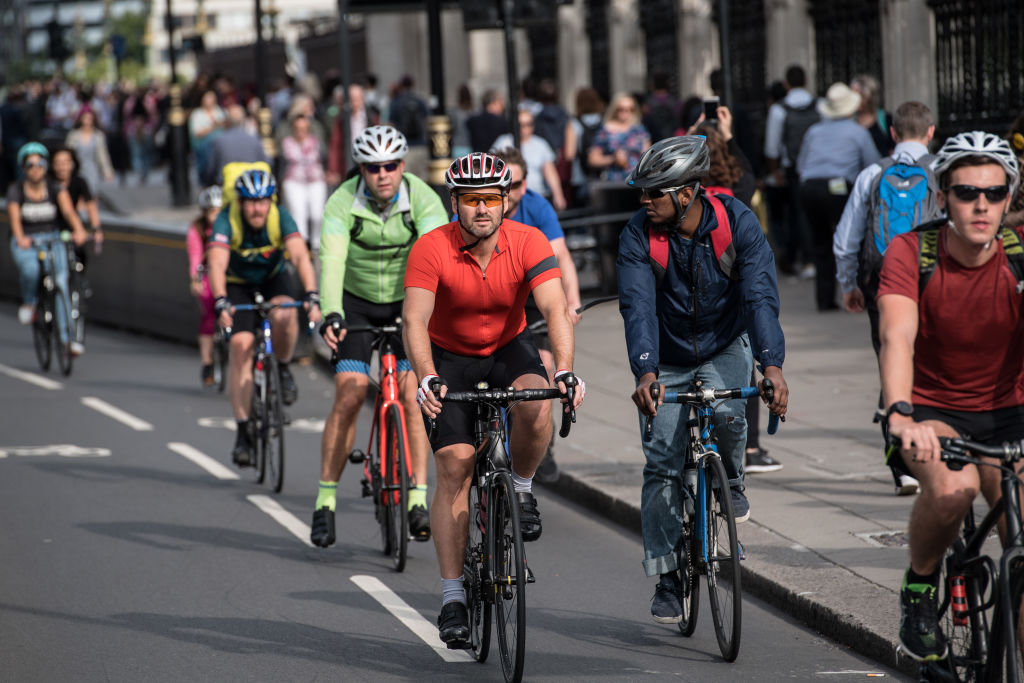
London cyclists make use of a cycle lane. (Photo by Carl Court/Getty Images)

What a local war over a cycle lane on High Street Kensington told us about Britain’s infrastructure, writes Tom Knights.

There are few things more contentious in London than cycle lanes. Talk to anyone in the capital and they’ll have a view: too many, not enough, too disorganised, too small, too wide. 

Last month, the government announced a £200m cash injection to improve alternative methods of transport – walking, wheeling and cycling routes across the country. 

In the capital, as many as two out of three rides in London are commutes. 

Funding is, of course, important. But where the money is spent will be critical and no doubt fraught with local disagreement. With limited budgets, city councils will now commence a competitive bidding process for the allocation.

For a project of this nature, it is local communities that know what residents need. Community data can capture local insights and quickly show what is and isn’t working and where.

We operate one of the largest active datasets in the world, and offer the information to help inform urban-plannners and policymakers to make sure these new routes are in the right spots. 

In Kensington and Chelsea, the council decided to rip up the bike lanes up and down High Street Kensington. It’s an incredibly busy thoroughfare for cyclists, and the number of people hopping on a bike is up 40 per cent in the capital. 

As a result of the lack of infrastructure, bike trips fell by 7 per cent in 2021, and another 3 per cent last year. 

Read more

Are cars really the problem? London cyclists, it’s time to look within our ranks

London cyclists ride Lime bikes and personal bicycles on a city street, promoting urban mobility and eco-friendly transport.

If cyclists are forced to wedge themselves in between buses and taxis, causing more hazards for everyone involved, many will decide to leave their bikes at home. 

In areas like Worcestershire, there is clearly an increased appetite for cycling – a trend we’ve seen emerge and being sustained since the pandemic. Between 2019 and 2022, there’s been a 15 per cent increase in cycling trips. 

But last year Worcestershire County Council was given a rating of zero by Active Travel England for their investment into cycling and walking across the county.

There’s a clear disconnect here, and local areas need to get smarter at understanding community data and using it to inform funding decisions that correlate with the demand seen from their community.

On the opposite end of the spectrum is Birmingham. There has been a 58 per cent increase in cycling trips used for a commute between 2021 and 2022. Pathways in the local area have been widened, lighting has been improved and potholes have been filled in. 

Active travel addresses many pernicious aspects of our modern society: it helps mental and physical wellbeing, it’s low cost and it helps address our carbon emissions by swapping out journeys we might’ve made in the car. 

Often in net zero initiatives, it is the poorest who are left behind – unable to afford expensive new boilers, or insulation. But cycling has a low barrier for entry and by making it more feasible with the right infrastructure, it means people can more easily access different types of jobs without adding to their carbon footprint. 

By using the data available, the money can be used wisely, rather than following the example of High Street Kensington. A lack of infrastructure has a direct impact on on how people travel. This isn’t unique to cycling – if there is no tube available, they’ll drive.  

To make the £200m make a difference in how we travel, it needs to be directed to the place that need it most and where it will meet least local resistance. 

Read more

UK economy stuck in ‘slow lane’ as business investment to slump 

Westminster Parliament building under a clear sky, showcasing its iconic architecture in a news context.

Share this article

  • Facebook
  • X
  • LinkedIn
  • WhatsApp
  • Email

Similarly tagged content:

Sections

  • Opinion

Categories

  • Morning Wire Content
  • Opinion

Trending Articles

  • Iceland boss Richard Walker vows to set up shop on Falkland Islands

  • Britain ‘taxing itself to death,’ Burnham warned

  • Hedge fund billionaire Chris Rokos joins UK wealth exodus 

  • £74m for branded condoms? UK must stop spaffing cash on foreign aid

  • Don’t underestimate the free trade agreement Britain just joined

More from Morning Wire

  • Are cars really the problem? London cyclists, it’s time to look within our ranks

    Opinion
    London cyclists ride Lime bikes and personal bicycles on a city street, promoting urban mobility and eco-friendly transport.
  • UK economy stuck in ‘slow lane’ as business investment to slump 

    Economics
    Westminster Parliament building under a clear sky, showcasing its iconic architecture in a news context.
  • Hammersmith Bridge is a test for Burnham’s place-based growth

    Opinion
    Hammersmith Bridge closed in 2021 with fencing, banners, and traffic cones blocking access to the walkway.
  • The European fintech American dream is being called into question

    Fintech
    Wise logo with downward trending stock chart, highlighting fintechs share decline amid Belgium fraud investigation
  • Luxury London property developer collapses as housing market slows

    Property
    Person walks past a real estate agents window displaying properties for sale and to let.
  • Cycle Pharmaceuticals Selects Forma Life Sciences to Establish U.S. Commercial Supply for FDA-Approved CAVHANZA™ (nilotinib) Orally Disintegrating Tablets

    Business Wire
  • Formula 1 chiefs cool speculation of 12th team on grid

    Sport Business
    Formula 1 race cars on track with a packed grandstand of cheering fans at a major motorsport event.
  • Bank of England’s Pill warns against ‘wait and see’ interest rates approach

    Economics
    Huw Pill, Bank of England Chief Economist, smiling in a suit and tie against a blue NABE banner.
MorningWire

Independent European business, markets and political news for decision-makers.

Morning Briefing

Europe

  • Germany
  • France
  • EU Institutions
  • Europe

Business

  • Markets
  • Business
  • Economy
  • Regulation
  • Competition
  • Public Affairs

Editorial

  • Opinion
  • Editorial Policy
  • Corrections
  • Contact

Company

  • About Morning Wire
  • Privacy Policy
  • Terms of Use
  • Cookie Policy
© 2026 Morning Wire Ltd · Published by Morning Wire Media, Bahnhofstrasse 65, 8001 Zürich, Switzerland
Privacy · Terms · Cookies · Facebook