The Debate: Should student loan debt be forgiven?

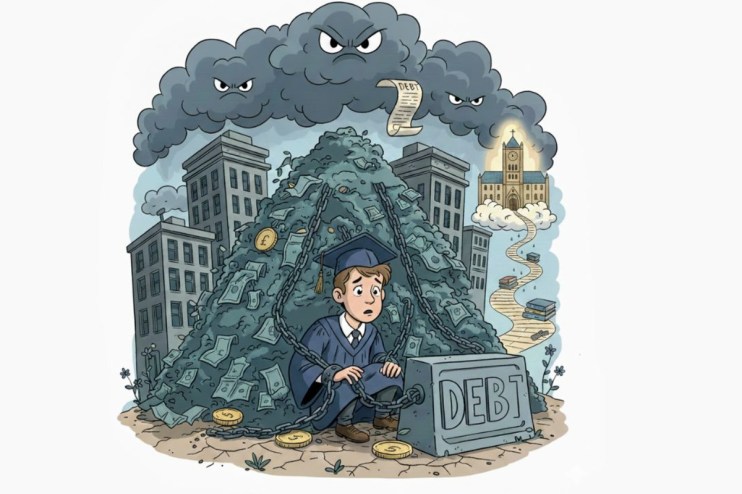
Student loans are under the spotlight, with those who took out plans between 2012 and 2023 feeling the bite. Should student debt (or some of it) be forgiven?
YES: Given many workers are unlikely to pay off their loans, forgiveness would be relatively cheap
Student loan forgiveness should be considered for specific workers, particularly in the health sector. Too many doctors and nurses are dropping out of university and training. For every five nurse training places, the equivalent to only three full-time nurses join the NHS. This is a major problem for students, graduates, the NHS and the government, so bold policymaking is clearly needed. A ‘student loans forgiveness’ scheme for nurses, doctors and other health professionals must be considered as a solution to high dropout rates and to reward the contribution of clinical graduates who are struggling with the huge burden of student debt.
The policy could involve forgiving student loan debt in return for years of service – for example, 30 per cent of a student’s loan balance being written off after three years of service, 70 per cent written off after seven years and 100 per cent after 10 years. Introducing loans forgiveness would be relatively cheap to the Exchequer, given that a high proportion of healthcare staff are unlikely to pay off the full loan prior to it being written off.
Student debt is a common reason for potential candidates not to apply for healthcare courses, so a loans forgiveness policy could boost applications. Once they join the NHS workforce, it could prevent staff from leaving early in their careers. It could also improve the wellbeing of workers – the financial impact of student loans can have a detrimental effect on perceptions of financial security.
Similar schemes have worked well in other health systems, such as Australia. Inaction should not be an option – loans forgiveness represents a viable opportunity to make an immediate improvement to the NHS workforce crisis and make the NHS a more attractive workplace for graduates.
Lucina Rolewicz is a fellow at Nuffield Trust
NO: Student debt forgiveness is unrealistic. We should focus on the obvious flaws in the existing system
Student debt forgiveness is an attractive idea, but it is unrealistic within the current fiscal constraints. We should instead focus on fixing the obvious unfairness baked into the existing system.
Too often the debate collapses into a false binary: either fully publicly funded higher education or a fully privatised one. The UK system was never meant to be either. Even after the 2012 tripling of tuition fees, the intention was that the cost of university would be shared between the state and the student.
That settlement made sense. Most graduates accept that they should contribute towards the cost of their degree, while the state recognises that both the Exchequer and society benefit from a more educated population.
But this mixed funding model has been quietly dismantled. Without public debate or democratic consent, the costs of higher education have been shifted overwhelmingly onto individuals. The government is now on track to make an £800m profit from student loans taken out by the 2022/23 cohort alone.
What was designed to support young people through university has instead been transformed into a revenue-raising tool for an increasingly cash-strapped government.
Eye-watering interest rates keep graduates trapped in debt regardless of their earnings. Freezes to the repayment threshold have not only broken the implicit contract between students and the state, but added tens of thousands of pounds to graduates’ lifetime repayments. It is middle-earning graduates who lose out most: facing an effective nine per cent graduate tax, yet unlikely ever to clear their balance.
The system needs rebalancing through lowering the repayment rate to five per cent, an end to the threshold freeze and reducing the interest rates for graduates.
Toby Whelton is a senior researcher at Intergenerational Foundation
THE VERDICT
Student loans are back in the headlines. Not only is Martin Lewis lashing out at Labour for refreezing the salary repayments threshold once again (effectively meaning many graduates will be forced to pay more), but recent data published about the ballooning interest graduates are being forced to pay back has prompted calls for a “great reckoning” on student loans. One MP has even called it a “mis-selling scandal waiting to unfold”, while 44 per cent of Brits think the government should write off some or all of student debt. So is it time for the government to pay amends and forgive all – or at least some – student debt?
Ms Rolewicz thinks so, arguing that the unfair system is damaging public services such as the NHS, where doctors and nurses are effectively being punished for their required education. Forgiving at least some of the debt of healthcare workers would be good for everyone, she argues.
Mr Whelton, however, is right to be cautious when it comes to the broader picture. With £15.2bn of interest added to student loans last year, and only £5bn repaid, it is clear the system is not working. But student debt forgiveness is a headline, not a realistic policy. Instead, the government should focus on fixing the obvious flaws in the current system, particularly reducing the interest rate.