The Debate: Should workers be entitled to ‘digital downtime’?

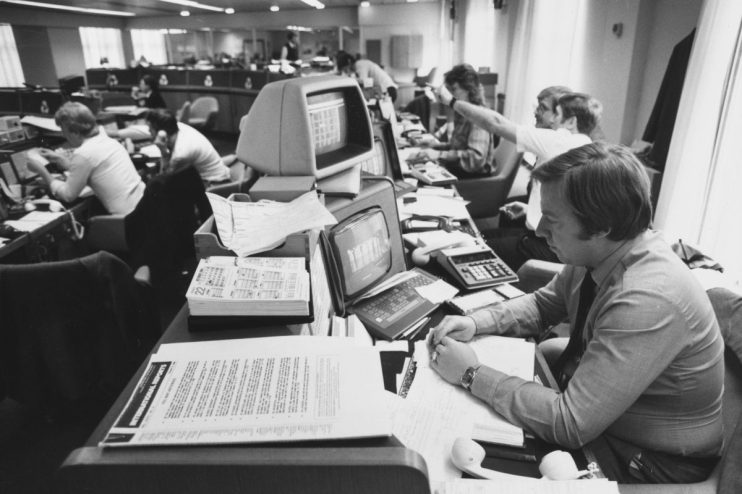
Would periods of ‘digital silence’ in the working week help make workers more productive? Two writers weigh up the pros and cons in this week’s debate
YES: Our always-on culture harms productivity
The UK’s productivity puzzle has long been a sticking point for government and business alike. While the solutions are complex, one straightforward measure employers can take is to give workers greater freedom to switch off.
I was reminded of this recently after a two-week (mostly) gadget-free holiday. I came back feeling sharper, more focused and ready to deliver. That sense of renewed productivity shouldn’t only be possible once or twice a year. Our research shows more than a third of UK workers (36 per cent) want formally scheduled “digital silence” in their workplace – dedicated time free from online meetings or the expectation to be contactable.
Of course, technology itself is not the problem. It has been a game-changer in how we connect, collaborate and build relationships with colleagues. But the reality is that constant online presenteeism can backfire. Four in ten UK workers say constant notifications actively disrupt their work, while 38 per cent feel pressured to be permanently online.
When businesses create the conditions for employees to focus, recharge and think clearly, performance naturally improves. In fact, 44 per cent of workers say they would be more likely to join a company that offers regular digital downtime, signalling that it is no longer merely a perk, but a competitive advantage in attracting and retaining talent.
If we want to unlock productivity, we need to rethink our “always-on” culture. Technology should be the servant, not the master. The smartest way to work harder is to turn on ‘do not disturb’, give ourselves time and space to think.
Peter Bell is vice president of marketing, EMEA at Twilio
NO: Most workers say they want ‘digital downtime’ on Fridays – I wonder why?
Digital downtime is great. A slot of protected time at work where you can focus on something without the incessant pinging of Whatsapp, teams, or slack can have a huge benefit on individual productivity. In fact, I’m using it now to write this piece. Amazingly, I have been able to do it successfully without the government telling my employer that it has to ensure I do it.
Employee rights do not come free. Enforcing their delivery and proving their compliance all add costs to employers. And that’s before you take into account the potential cost of the right itself – in this case having an entire workforce go dark for periods during the workday.
The government has clearly proven it is not shy about mounting costs on businesses, with their minimum wage rise, employers’ National Insurance contributions hikes and forthcoming Employment Rights Bill.
We’re seeing the effects being borne out in the economy already, with vacancies falling and business hiring intentions at record lows.
The vast majority of employees will be able to do a bit of digital downtime of their own accord. It is a simple matter of communicating with colleagues about what your working priorities are. The old ‘do not disturb me unless something is on fire’ will do the trick.
But is there another reason that employees might want the government to ensure that their bosses can’t send them lots of messages? Most surveyed workers in favour of the proposals said it would be most valuable on Fridays – I wonder why.
Callum Price is director of communications at the Institute of Economic Affairs
THE VERDICT
Have you come back from your holiday feeling refreshed, or did you find yourself worn down by the relentless ping ping of colleagues lost without you? While the latter can be flattering, according to research from You Gov & Twilio, it’s coming at the cost of peace and productivity, with more workers expressing a desire for “digital silence” even within working hours. So is it time for mandated ‘digital downtime’?
The benefits of distraction-free work time are hard to argue with, but Mr Price is right to object to the need for a formalised right to such. After all, the ‘right to switch off’ recently promised by Labour was quickly dropped once the reality – yet more compliance concerns for already-struggling businesses –became clear. Not to mention the nuance needed – few, for example, should disagree that digital silence for a breaking news reporter would be rather impractical.
On that basis alone, Morning Wire must throw the notion out, though Mr Price’s suspicion of the desire for such downtime on Fridays is also, we fear, rightly cynical.