The economics of gift giving: It probably isn’t worth it

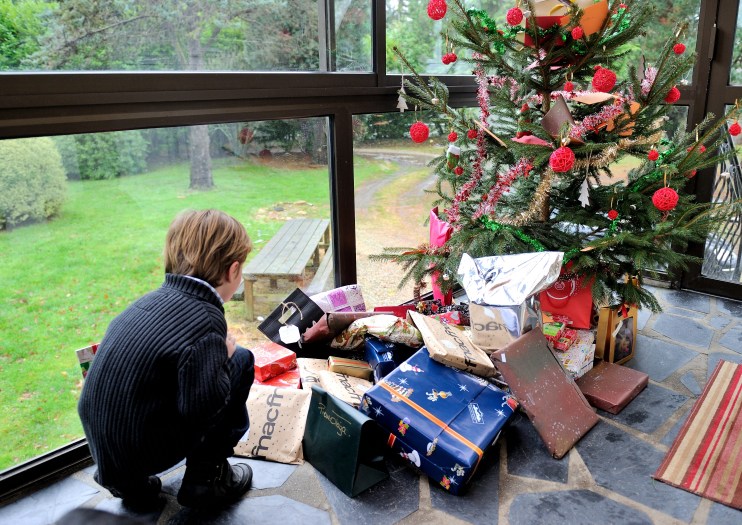
It is Christmastime, which means that on Tuesday I will be frantically rushing around doing some very last-minute shopping and attempting to wrap presents.
I have a pretty good idea what I’m going to buy people this year, although my young nieces are proving to be particularly tricky. As I’ve never been a four-year-old girl, I’m not entirely sure what they’d like.
I know they’re big fans of Frozen, but given that the youngest had her birthday last month, there is a very good chance that she has already been given whatever snowman or Disney princess themed gift I buy her.
I could, of course, check with their parents to see what they already have, but this would be time consuming, and I can’t rule out that someone else won’t buy them the same gift.
This festive conundrum highlights the economics of gift giving. It turns out that, from an economic perspective, we’re all lousy gift givers.
For example, in 1993 while at Yale (and distinctly lacking in festive cheer), economist Joel Waldfogel surveyed some of his students to gauge their attitudes towards Christmas gifts. He found that the students valued the gifts at 20 per cent less per dollar spent than items they bought themselves.
Waldfogel went on to calculate the deadweight loss of Christmas at between 10 and 33 per cent of the cost of the presents.
The crux of the issue is that we do not know the preferences of people we’re buying presents for as well as we think. This is even the case between parents and children, and also spouses. I know my preferences better than you do, and vice versa.
So, what can economics teach us about the perfect gift? In short, not much. If you’re looking to economics to help you pick presents for your nearest and dearest then there is probably something wrong with you. In strict economic terms, the most efficient gift to give someone this year is cold hard cash.
However, there is obviously more to gift giving than just efficiency. A gift can be an opportunity to show someone how much you know them. There is also the pleasure of seeing your loved one’s face as they open a surprise present.
And remember that people tend to attach a great deal of sentimental value to the gifts they receive, which suggests that there is more going on than just monetary value.
In short, it’s probably a good idea to get your loved ones jewellery, chocolates, or whisky collection, as you were likely going to, rather than stuffing the cash equivalent into their stocking.
But while economics teaches us little about gift giving, it does have implications for public policy. If it turns out that your loved ones don’t know your preferences that well, what hope do politicians and civil servants have?
Under our system, the government takes money from citizens in the form of taxation, and uses that money to provide them with services.
This system ignores the fact that we do not know the preferences of other people as well as they do. People spend their own money much more efficiently and effectively than the government does.
So instead of levying heavy taxes on people, the government should allow people to keep more of their own money and spend it on what they want and need.
At the same time, it should introduce real choice and competition at the heart of public services. Rather than provide monolithic health and education systems, the government should give people money in the form of education vouchers and health insurance.
This would enable people to choose the services which best suit the needs of them and their families. Such a system would lead to better outcomes and would be a much more efficient way to spend taxpayers’ money.
When it comes to gift giving this Christmas, you probably don’t know the preferences of your loved ones as well as you think. However, you’ll do a better job than the government.
Boris Johnson should give us all a Christmas present by allowing us to keep more of our own money.
Main image credit: Getty