The fall of Afghanistan: Western governments got bored and Taliban rule has been resurrected

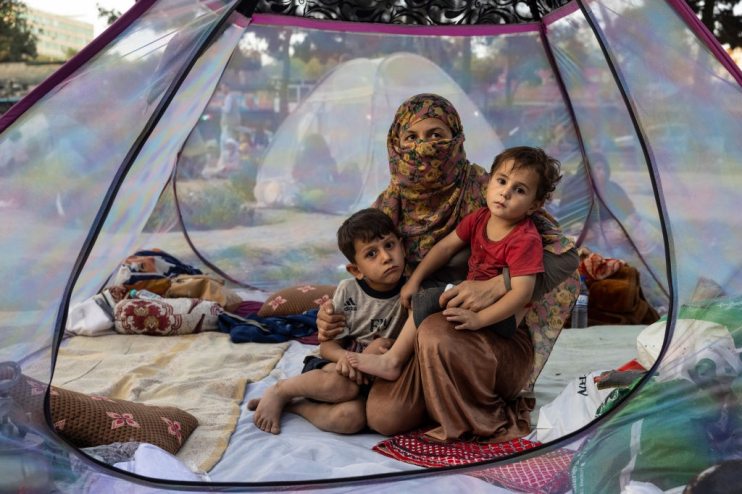
We are watching a strategic and humanitarian calamity unfold. We are watching it live on TV and social media and yet, despite its immediacy, despite information from the scene of unparalleled detail and accuracy, we are doing nothing. Nothing except, perhaps, trying to evacuate the last few thousand of our troops who are still in the path of the storm.
Four days ago—the end of the last working week—US intelligence estimated that Kabul, the beleaguered capital of Afghanistan, would be able to resist the onslaught of the Taliban for six to 12 months. On the optimistic end of their calculation, the showdown for the capital could be as far distant as August 2022. In fact, it is happening now or was – until I finished writing this piece, by which time Afghan President Ashraf Ghani had fled the country, and the “democratic” government of Afghanistan was already yesterday’s news.
It is hard to overestimate the damage which the rapid collapse of Afghanistan has done to the prestige of the US and its allies. International forces intervened in the country in October 2001, after the Taliban refused to hand over Osama bin Laden for trial for organising the 9/11 attacks on New York and Washington. Initially, success seemed easy: the Taliban were defeated within weeks, and al-Qa’eda had been ousted from the country by 2003. According to its initial objectives, the West had “won” in Afghanistan.
That was 20 years ago, and now our few remaining forces are desperately seeking a way out. The atmosphere is akin to Saigon in 1975, when cameras captured embassy personnel queueing on the roof of the compound for helicopters to evacuate them. Or it is Corregidor in 1942, where the last US and Philippine forces surrendered to the Japanese. Humiliating strategic reverses which will undermine our credibility for years.
For the Afghan people, however, it is much more like Berlin 1945, or the Turks at the gates of Constantinople. This is existential. This is the end of life as they know it. We saw what Afghanistan was like last time the Taliban were in control—mediaeval ideology imposing brutal control, with women veiled and confined to their homes, young girls denied education, widespread killings and cultural genocide—and that is what they know will return. Truly, the sun is eclipsed by darkness.
Some Western commentators are angry. They are enraged by President Biden’s decision to withdraw US forces by 11 September 2021 (could the Taliban have asked for a more significant propaganda victory?), they are appalled by the reckless haste of our departure, and they are furious at our blindness to the suffering of the Afghan people. Tom Tugendhat, chair of the House of Commons foreign affairs committee and a veteran of the conflict, was excoriating on Twitter last week when he spoke of a “rug pulled from under the feet of our allies”. His anger was palpable: “Training a man to fight with his eyes open and then blindfolding him before his title bout is going to have only one result.”
This failure is not a sudden development. Although President Biden will bear a heavy burden of responsibility for cutting and running, in truth the mistakes were made 20 years ago. For most of that time, we have never really been sure what our purpose in Afghanistan was. To defeat the Taliban? Done. To deny al-Qa’eda a “safe space” for training and operations? Done. Then we toyed with eradicating the opium trade, until we realised it was the only source of income for many Afghans. We have talked of denying Russia and/or China influence in this critical central Asian arena. Latterly, we have been trying to create a democratic government where none has ever existed. It has, predictably, failed, and while we have worked hard to train and equip the Afghan security forces, we have, or had, a long way to go before they could have operated independently.
We have failed in Afghanistan because we have never really known what we wanted, and we have always sought to do it with the minimum levels of deployment possible. At the height of the conflict, the US had 100,000 personnel in Afghanistan, but that was a momentary peak. We were, though, we denied the phrase, nation-building, but because we denied it, we doomed ourselves to failure.
Many have argued that it was time to go. Maybe. But US troops are still in Germany and Japan, 75 years after the Second World War; they are still in Korea, 70 years after the conflict there. It’s not simply a matter of time served. You must be effective and know what you are trying to do.
Even now, our politicians, cocooned from the realities of forward operating bases and close-quarters firefights, don’t get it. Nancy Pelosi, speaker of the US House of Representatives, has declared that the Taliban should be aware that the eyes of the world are upon them. As if they didn’t know, and relish the attention. Incredibly, Jen Psaki, the White House press secretary, intoned gravely that the Taliban must consider what role they want to play in the international order.
The truth is that we are bored of Afghanistan. We have failed and responded by creating new metrics. Now we have failed these. Afghanistan has fallen and we are to blame, but it is the ability of the West to intervene globally which is in turmoil, along with the lives of the Afghans. The country is known as the graveyard of empires. There is a freshly dug grave this week.