The green spirits revolution, and no absinthe in sight

There have been an uncountable number of words written about how the restaurant industry has had to adapt to survive, and altogether fewer on how the premium booze market is staying afloat. Like the hospitality trade, spirits distillers and winemakers have seen a huge portion of their trade wiped out over lockdown, unable to sell directly to bars and restaurants.
But like the hospitality trade, drinks companies have had to reassess their businesses and work out ways to connect directly with customers. One theme that’s emerged from this soul searching is the rise of eco spirits.
Today we wrote about how TV presenter Phillip Schofield has teamed up with eco-friendly packaging company Garçon Wines to market a wine in a recyclable plastic container that can fit through your letterbox.
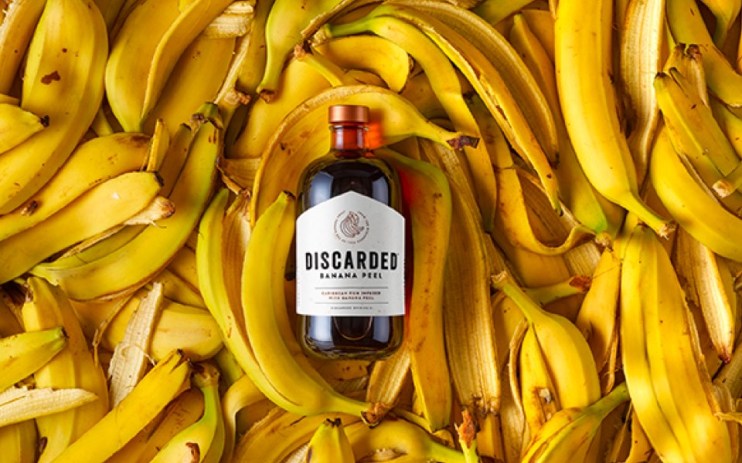
The age of disposability is also over for Scotland’s Girvan Distillery, which makes vermouth from “cascara” – the fruit of coffee beans – as well as a rum from discarded banana peel.
Discarded sources banana peel from a “flavour house” that uses the fruit and discards the peel. The peel is dried out and fermented to give maximum concentration of flavour. When the peel is ready, it’s steeped in alcohol for two weeks. The rum and banana peel extract are then married together for two more days.
A similar process can be undertaken by William Grant & Son with the fruits of coffee beans, which are usually sent to landfill despite two billion cups of coffee being drunk every morning across the world. The husks and the fruits give the flavour of the coffee berry to the brand’s new vermouth, made on the west coast of Scotland.
A little further afield, Japanese Revive gin is made from leftover Budweiser beer, while the Dutch are getting in on the game with “Baker’s Best” genever (a spirit sometimes called “Dutch gin”), which contains seven slices of bread. Describes itself as “The Taste of Waste”, Baker’s Best makes use of some of the 120,000 tonnes and €70m euros worth of bread that’s wasted in the Netherlands every year. The genever uses leftover bread from local bakers to create its malt spirit base.
The flavour of each batch is new and determined by the bread that has gone into it, with bread varieties including sourdough, multigrain, banquette, and brioche.
“Our genever is the first eco-friendly alternative to traditional genever,” says Chris Rijkenberg, co-owner of the start-up behind Baker’s Best. “We are now listed at more than 150 on-trade premises in Amsterdam, Leeuwarden, Utrecht, Rotterdam, and The Hague. In off-trade, we do our own distribution and have around 200 outlets. We are spreading the concept of “loafsaving” around Europe.
“When I was younger I had a strong interest in baking, and studied to be a professional baker. But when I started working as a baker I saw a massive waste of bakery products every day, and thought there must be a solution for recycling the leftover bread. Some years later, I made it happen.”
One days old bread comes from hotels and restaurants as well as bakeries in the Netherlands, with the stock frozen in between batches. All varieties of bread are used, including sourdough, multigrain, banquette, and brioche.
An architect and a scientist who built their own distillery, meanwhile, have produced the UK’s “first carbon-negative gin”. Dr Abbie Neilson and Chris Jaume own the Yorkshire-based Cooper King Distillery, where they craft Dry and Herb Gins that are officially classed as carbon-negative.
In addition to carbon offsetting, each bottle of spirits plants one square metre of native UK woodland in charitable partnership with the Yorkshire Dales Millennium Trust.
The Cooper King team recently planted 30 juniper bushes on their site, enough to produce juniper for around 15,000 bottles of gin. It’s a long-term plan, however, as it takes 8-10 years before the female plants will produce their first crop of berries ready for distillation.
The business has also signed the United Nations Climate Neutral Now Pledge and was the first distillery in Europe to join the environmental initiative 1% for the Planet.
“We were inspired by travelling around Tasmania and discovering its whisky distilleries and heritage,” says Neilson.
The distillery is England’s only self-built whisky and gin distillery, and one of only a handful in the country to run on 100 per cent green energy. To date, 11,000 square metres of native woodland have been planted by the company.