The London Stock Exchange has now passed the zenith of its global influence

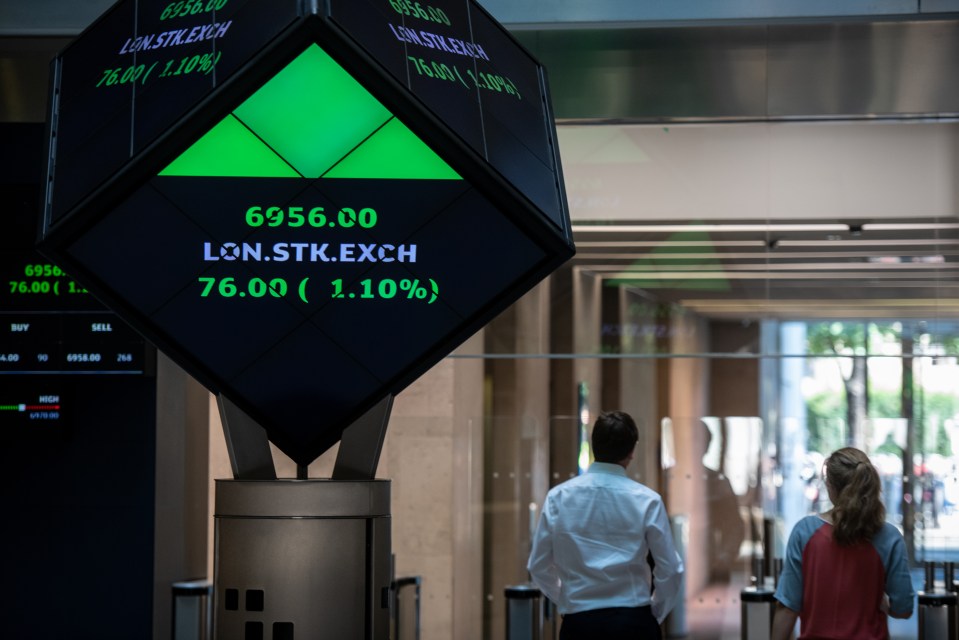
In an effort to eliminate financial risks through regulation, we’ve also eliminated returns. The London Stock Exchange is suffering the consequences of such a risk-averse approach, writes Roger Clarke
Rule changes announced by the Financial Conduct Authority, to encourage companies to list in the UK, suggest the watchdog is starting to understand that a culture that seeks to eliminate risk completely will succeed in eliminating returns completely, hampering UK investment appetite.
An unintended consequence of years of creeping regulation to remove risk for investors has also expunged the entrepreneurial spirit from the financial markets which once established London’s dominant position. Investors can and should be trusted to take responsibility for their investment decisions. Regulated markets are essential; risk-free markets are an illusion.
The FCA’s move follows the decision by the owner of the poster child for United Kingdom tech innovation, ARM Holdings, now owned by Japan’s SoftBank, to return to the stock market in New York rather than London.
The doom and gloom represented by the London Stock Exchange has only intensified. Last month top fund manager and co-founder of Lindsell Train, Nick Train fanned the flames by updating investors in his £1.9bn Finsbury Growth & Income Trust by saying the UK has an “unwelcome reputation as a backwater in 21st century equity markets.”
Train also pointed to our dearth of “significant technology champions” and the UK’s “dismal capital performance”, adding up to a few grim weeks, as bank and property stocks were hit in the wake of crises at Credit Suisse and Silicon Valley Bank.
But are we obsessing too much about an exchange which boasts of its“trust and innovation since 1698”, a timewhen John Castaing’s Coffee House in Canada started to publish a list of currency, stock and commodity prices including gold, ducats and pieces of eight? Twenty years ago it played a far more central role in national life and the investment world. In the early 2000s UK institutional investors typically saw 50 to 60 per cent of their holdings in equities, with two thirds of this money invested in British companies.
In 2002, former Chancellor Gordon Brown changed pension solvency rules to remove tax relief, which allowed pension funds to claim back the tax paid on dividends from companies in which they owned shares. This immediately raked in a £5bn annual windfall for the Treasury. Now it can be seen as the beginning of the end of UK equities investing which hit its zenith in the 1980s with the mass market flotations of the likes of British “Tell Sid” Gas and British Telecom.
This sum was partially offset by other tax reductions, but it did place a burden on pensions. We have since seen a slow decline in the value of the UK stock market since it reached an all-time combined market capitalisation high of $4.2tn in October 2007, according to CEIC data.
In March this year, the market cap of UK listed companies was $2.8tn, compared with $40.7tn in the US. First, we need to see more support for start-ups and growing companies rather than bemoaning the likes of ARM Holdings opting to re-list in New York .
The Quoted Companies Alliance has some strong ideas, calling for less of the onerous regulation of small companies which now sees the average annual report totalling 95,000 words and 173 pages.
An average listed company’s annual report is now longer than a Jane Austen book. Who is reading these tomes and how much are they, and red tape, hindering the creation of the ARMs of the future?
In their defence, the London Stock Exchange launched its UK Capital Markets Industry Taskforce in July 2022 and before this the government had announced reviews of the Financial Services Future Regulatory Framework, UK Fintech and UK Listing, feeding into the Primary Markets Effectiveness Review.
We also need to focus more on a sector where London continues to be the biggest in Europe: real estate. Over long periods real estate has proven to perform better than equities and gilts yet buying a stake in your local landmark building is only an option for the super-rich.
Here in London, we have created the world’s only dedicated stock exchange for real estate assets and portfolios where three companies are now admitted and one more is due to float. After this next IPO, there will be £600m of real estate assets across the United Kingdom traded on IPSX.
The UK is investable and can attract global capital: we just need to support and promote the innovators with new ideas, and government and regulators need to remember that the large cap main market of the London Stock Exchange is not all that matters in our capital markets.
We hope that the FCA’s moves are the first step in a long road back to throwing off the shackles that have enveloped the City over the last 10 years.