The numbers don’t lie: The UK’s renewable energy transition is going better than you think

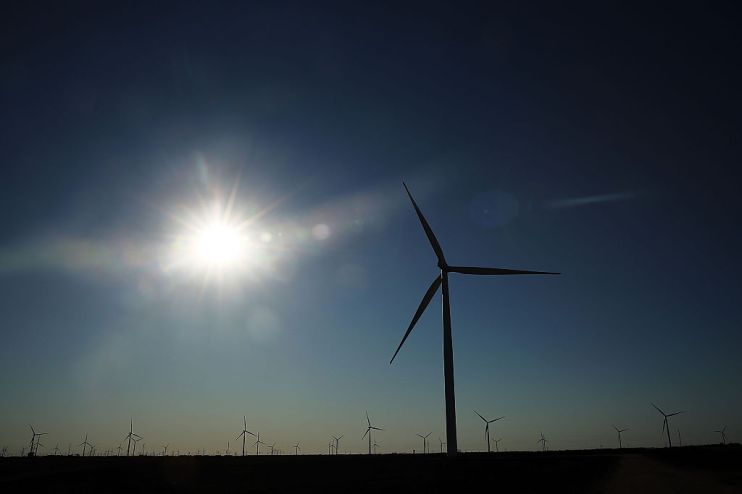
The use of fossil fuels for electricity generation in the UK has slumped over the past few months, according to sources tracking National Grid data, which have shown a substantial uptick in renewable energy generation.
National Grid owns and operates National Grid ESO, the electricity system operator for Great Britain.
According to live-feed numbers from iamkate.com, a website tracking publically available data from the power network, 56.3 per cent of Great Britain’s energy mix over the last 12 months has come from non-fossil fuel sources.
This has amounted to 36.4 per cent of energy from renewables, 19.9 per cent from nuclear and biomass and 34.6 per cent from fossil fuels. Thanks to the focus on renewable energy sources, emissions have fallen from 78g of CO2 per kw/H this time last year to 66g today.
Meanwhile, data from National Grid ESO showed the carbon intensity of electricity generation fell to 59g of CO2 per kw/H in the final week of 2023.
At the time of writing at 11 am on 29 December, wind power is generating just under 50 per cent of Great Britain’s energy demand with the carbon intensity of generation standing at 45g of CO2 per kw/H.
Furthermore, analysis released today from the Energy and Climate Intelligence Unit’s (ECIU) Power Tracker finds that power generated by wind, hydro and solar in 2023 is estimated to reach over 90TWh (terawatt hours); more than enough power for all of the UK’s 28m homes.
There are some caveats to these renewable energy figures. The country has been relying heavily on imports recently, and power demand has been lower than average due to the festive period.
But the overall trend is pretty clear. Indeed, for the first time ever, renewables met over 40 per cent of total UK electricity demand during Q3 of 2023.
The improvements have been driven by significant upticks in investment and development activity across renewable sectors as well as the closure of coal power plants.
Analysis from Drax Electric Insights released this month showed that in the 12 months to October 2023, coal supplied less than one per cent of Britain’s electricity for the first time.
As coal has retreated, new wind power records have been broken regularly. Earlier this month, British wind farms averaged a record 21.8GW of generation beating the 20GW record set in November last year.
These figures run contrary to the highly publicised recent struggles of the UK’s wind sector and Prime Minister Rishi Sunak’s apparently oil and gas-friendly outlook.
They demonstrate the country is, in fact, making significant progress in decarbonising its electric system.
So how do we as a country stack up against our European peers on renewable energy?
The answer is not as bad as might be first assumed. Data released last week showed in the last 11 years, the UK’s annual emissions from energy generation have dropped from 487.5m to 318.7m tonnes; a reduction of 35 per cent.
Within the European big four, Germany, France and Spain, the UK was the second most ‘carbon intensive’ polluter for 2023, averaging just over 5.3 million tonnes of carbon dioxide per month.
France and Spain sit at 3m and 3.9m monthly averages respectively.
In France’s case, nuclear power has been a government priority for years, dating back to a strategic pivot away from fossil fuels immediately after the 1973 oil crisis.
Over the last year, 60 per cent of French electricity has come from nuclear, 20 per cent from wind and 19 from hydro, the remainder coming from gas and biomass.
Spain’s grid is more diverse, but still heavily reliant on nuclear and other renewable energy sources. In the last year it generated 20 per cent of its energy from gas, 26 per cent from nuclear, 12 per cent from wind and 18 per cent from hydro sources.
What of Germany?
Data from power insights data tracker Electricity Maps shows that while producing just 8.7 per cent of the country’s electricity, burning coal for electricity produces 59 per cent of Germany’s emissions.
Over the past month, Europe’s largest economy has sourced 66 per cent of its total electricity from its 55.8 GW of land-locked wind generation capacity, but that hasn’t been enough to offset its coal emissions.
Every major European economy is set to expand renewable generation further each year, with many including the UK also vying to formulate strong nuclear frameworks to rival France.
The collective actions are likely to result in further de-carbonisation through the rest of this decade, of which there is little doubt.
And yet, there is still cause for concern in the game of playing catch-up with countless decades of over-pollution.
The UK government, irrespective of which party holds power, will continue to be held to daily, weekly and monthly public audits on energy usage, oil and gas investments to the extent that any progress on renewable energy would seem nascent.
And while the data certainly shows that is not the case, the speed at which the UK and others can achieve this progress in the face of terrifying environmental decline is what will determine the world’s short and long-term successes.