The Power of Capitalism: It’s easy to forget just how radical Margaret Thatcher was

Dr Rainer Zitelmann is a German historian, sociologist and author. His latest book is The Power of Capitalism. In our exclusive series, Zitelmann reveals a compelling body of evidence that capitalism and market economies have lifted billions out of poverty. Today he writes on the legacy of Margaret Thatcher
In 1966, the Beatles released a song called ‘Taxman’, which starts with the lines:
Let me tell you how it will be
That’s one for you, 19 for me…
Should 5 percent appear too small,
Be thankful I don’t take it all
The lyrics were written in protest against excessive taxation in the UK, which up until the 1970s was tantamount to expropriating high-earning individuals, with an income tax rate of 83 per cent for those in the highest bracket, while capital gains were taxed at up to 98 per cent.
In the UK, the victory of the left-wing Labour Party in the 1945 general elections had led to the implementation of a form of democratic socialism under the then prime minister Clement Attlee, at the core of which was a massive programme of nationalisation. Once banks, civil aviation, and the mining and telecommunications industries had been nationalised, the railways, shipping canals, road freight transport, power and gas soon followed, as did manufacturing industries including iron and steel.
Even after the Conservative Party returned to power after the general elections in October 1951, the new government under Winston Churchill retained most of the socialist policies implemented by its Labour predecessor. This post-war consensus lasted until the 1970s, with many Conservative politicians sharing the belief that the economy should be controlled by the state.
During the 1970s, the UK’s weaknesses became painfully obvious. The unions were very strong, and the country was riven by frequent strikes. Throughout the 1970s, the country saw over 2,000 strikes a year with an average loss of almost 13 million working days. Conditions escalated during the winter of 1978–1979, when the country was paralysed by yet another round of strikes by public service and transport workers.
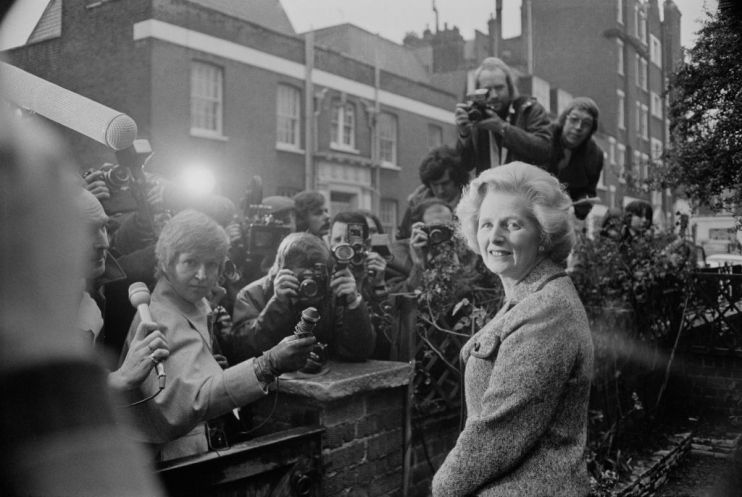
On 3 May 1979, the Conservatives, now led by Margaret Thatcher, won the general election with a majority of 339 of 635 seats. One of her first steps towards a more business-friendly economy was to cut marginal tax rates from 33 per cent to 30 per cent in the lowest brackets and from 83 per cent to 60 per cent in the highest brackets (followed by further cuts to 25 per cent and 40 per cent respectively in 1988). She also took steps to reduce bureaucracy by expediting planning permissions for industrial and office developments and simplifying or abolishing a range of planning controls.
During her second term in office, she pushed the privatisation of state-owned enterprises. Thatcher saw privatisation as “one of the central means of reversing the corrosive and corrupting effects of socialism”. Far from putting the people in control, public ownership was simply “ownership by an impersonal legal entity: it amounts to control by politicians and civil servants”, she argued. “But through privatisation – particularly the kind of privatization which leads to the widest possible share ownership by members of the public – the state’s power is reduced and the power of the people enhanced”. During Thatcher’s time in office, the percentage of Britons who owned shares rose from seven to 25 per cent.
Although Thatcher confides in her memoirs that there “was still much I would have liked to do”, her overall assessment of her time in office is positive: “Britain under my premiership was the first country to reverse the onward march of socialism. By the time I left office, the state-owned sector of industry had been reduced by some 60 per cent. Around one in four of the population owned shares. Over six hundred thousand jobs had passed from the public to the private sector”.
Thanks to the tax revenue generated by these increases in productivity, the UK was able to significantly reduce its public debt. In 1976, the country had been on the verge of a sovereign default and had been forced to borrow 3.9 billion US dollars from the International Monetary Fund. A decade later, in 1989, the UK economy generated a surplus of 1.6 per cent. Public debt fell from 54.6 per cent of GDP in 1980 to 40.1 per cent in 1989.
The stuffy socialist culture of envy was replaced by a pro-market and pro-business environment where ambition was richly rewarded, which in turn led to a sharp increase in the number of private businesses and self-employment. From 1.89 million in 1979, the total number of businesses registered in the UK rose to over 3 million by 1989, while the number of people registered as self-employed grew from 1.9 million to 3.5 million during the same period.
Rainer Zitelmann’s book is available on the book’s website