The price of war: Israel must fight for its economic resilience once more

As well as the combat in Gaza and the PR war in the West, Israel is fighting on a third front: its economy, writes Eliot Wilson
We don’t yet have a name for it. Wikipedia dourly calls it the “2023 Israel-Hamas war”, which is like calling Picasso’s Guernica “an oil painting of some people panicking”. Last week marked a month since Hamas’ brutal incursions into southern Israel, and it seems clear now that the conflict is not nearing a conclusion.
Setting aside the enormous emotional shock and the military resources which have been expended by Israel, there has already been an economic effect. Israel is one of the most successful and broad-based economies in the Middle East: GDP per capita of $55,000 puts it in the global top 20, its growth in GDP is 3.1 per cent and unemployment is managed at a respectable 3.5 per cent. It is home to more start-ups than anywhere except the United States, and more NASDAQ-listed companies than anywhere but the US and China.
Israel remains a small country, however. Before the first attacks were even over on 7 October, the Israeli Defence Forces had begun calling up the reserves in huge numbers, and it now has 360,000 reserve personnel deployed from a total of 465,000. The country may no longer rely on the citizen-army of old, when soldiers would rush from kibbutzim to the front line, but these are still men and women taken out of the workforce for more than a month now, from teachers and lawyers to software engineers and venture capitalists. In addition, it is calculated another 150,000 spouses and other family members have had to stop work to accommodate the call-up.
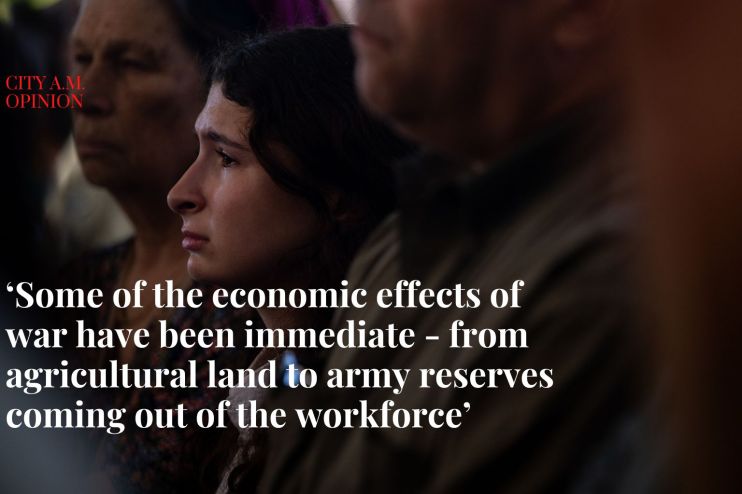
Some of the economic effects have been immediate. Agricultural land around Gaza has been heavily disrupted by the fighting, and the tourism industry, which contributes around three per cent of GDP and six per cent of employment, has collapsed by nearly three-quarters. The shekel fell for its longest sustained period in 40 years to an 11-year low. Everyone knows that fighting a war costs money, but these are the concrete effects.
There are, however, some signs of resilience. The Bank of Israel revealed last week that it had sold $8.2bn in foreign reserves during October to stop the slide of their own currency, and the shekel has not only ceased falling, but recouped almost all of its losses since the conflict began. This has bought Israel credibility metaphorically as well as literally, with approving nods from the likes of Goldman Sachs and Wells Fargo. In addition, the Development Corporation for Israel has raised $1bn from the sale of bonds in the US, equalling sales for the previous nine months of the year.
Part of this profit is being used to fund a new body, the Tekuma Authority, which will repair, rebuild and develop the areas around Gaza which have been most directly affected by the war. Headed by Moshe Edri, the head of the Israeli Atomic Energy Commission and a former special forces chief, it will report directly to the prime minister and should have an initial budget of around $260m.
Israel’s successful tech sector moved quickly and effectively, seeing the situation was not simply one of material loss. The Israeli Innovation Authority has rolled out a gritty and determined advertising campaign under the banner “No Matter What”, using the country’s resilience as a fundamental virtue and a vital – and distinctive – quality in times of adversity. They say: “Resilience isn’t just a slogan. It’s the enduring spirit that has made Israeli tech what it is today.”
Israel has seen regular bursts of violent conflict since its foundation The most recent sustained periods were after 2014 and 2006, and after both of these, economic recovery was relatively swift. The war in Gaza in 2014 nonetheless is estimated to have cost Israel 0.4 per cent of GDP, while 2006’s conflict in Lebanon cost 0.5 per cent, but the economy bounced back with alacrity. Now they must pull off the trick a third time.