The real reason young Albanians like me are coming to the UK illegally

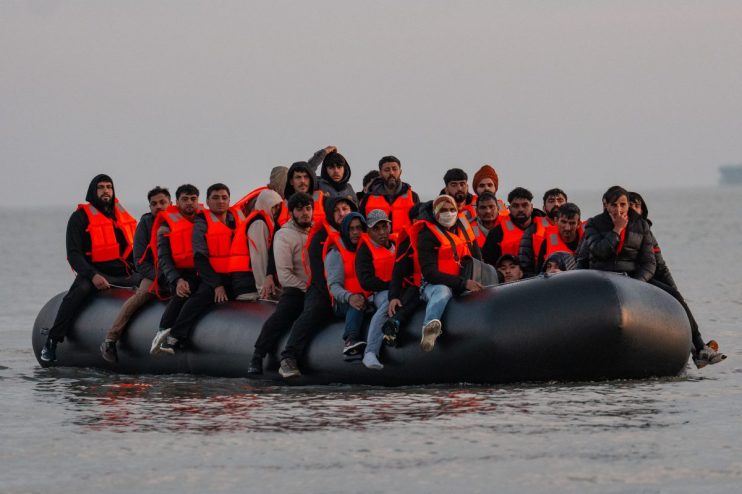
Growing up in Kukes in northern Albania, one of the poorest places in Europe, Gezim Hilaj watched as most of the young people he knew crossed to the UK in small boats. Here he argues that Keir Starmer’s return hubs won’t stop more Albanians doing the same
In 2019, while I was studying hard to go to university in a little village in Kukes, northern Albania, I watched as most of my classmates left the country. The majority migrated illegally to the UK.
Indeed, getting to the UK had become a daily topic of coffee chitchat for young people in Kukes. With its three towns Tropoja, Has and Kukes, the whole region has a population of around 60,000 residents, and has been ranked by Eurostat as the poorest place in all of Europe.
In 2022, when around 12,500 Albanians crossed the English Channel, there were fears Kukes would be left a ghost town.
In the same year, alarmed by these figures, the then Conservative government announced an £8.4m three-year project named the New Perspectives for the Kukes region, with the aim of creating more job opportunities for young people in order to stop illegal migration.
But since I left my hometown in 2022 to study and work in London and the project has come to an end, nothing has changed. While there has been a 95 per cent reduction in Albanian small boat arrivals to the UK, in Kukes the people are no better off and the same migration dream persists. Families are raising kids with the hope that one day they will migrate to the UK.
What was supposed to boost employment can be safely categorised as a failure, with £8m of British taxpayers’ money wasted mostly on a social media campaign telling people to stay in the country, with little discernible impact.
But for Albanians like me, it’s also a broken promise. The UK Ambassador to Albania at the time, Alastair King-Smith, told local media the project would be an “ambitious initiative in north Albania” and bring opportunity to the region: “Don’t run away illegally! My message to the parents and family members is that criminals and traffickers are exploiting your children and forcing them into the underworld. Please work with us to create hope and opportunities for this region,” he said.
The project is emblematic of the way UK politics too often delivers words and not actions.
Starmer’s doomed ‘return hubs’ plan
And the problem goes on. Last month, Keir Starmer became the first UK Prime Minister ever to visit Albania, where, during a joint press conference, he announced plans to set up return hubs for failed asylum seekers in the Western Balkan country. Given the outcome of the previous UK-funded project, the idea of return hubs feels out of touch with Albania’s legal and political reality. If £8m couldn’t even shift the mood in one region, how could forced return centres across the country succeed?
But there’s a bigger problem. Albanian Prime Minister Edi Rama said Albania will not take part in such a scheme due to its “loyalty to the marriage with Italy”, referring to the Italy-Albania migration deal signed in November 2023 – a controversial agreement to build detention centres in Albania, where up to 36,000 non-EU migrants a year would be processed.
Italy’s pitch was simple: instead of holding asylum seekers on Italian soil, it would outsource their detention and processing to Albania. But almost immediately, human rights organisations and constitutional experts raised the alarm.
In November 2024, the Italian government in Rome blocked the implementation of the Italy-Albania deal, arguing that the scheme could apply only legally to migrants coming from “safe countries”. It’s fair to say the scheme has not gone as Italian PM Giorgia Meloni had hoped, with only 49 refugees sent to Albania so far.
Albania needs more than performative policies
Meanwhile in Albania itself, the left-wing Edi Rama just won his fourth term as Prime Minister, having campaigned on the big promise of joining the European Union by 2028. In this context, agreeing a similar deal with the UK after the failed Italian scheme would not only anger Albanians, it could also risk the country’s reputation in its diplomatic stance with the EU.
Unlike Italy, the UK is no longer a member of the EU, and it doesn’t share the same legal frameworks or regional obligations. Any attempt to deport failed asylum seekers to Albania would likely be challenged both in domestic UK courts and by human rights watchdogs. And unlike Italy, the UK lacks the same political capital in Albania.
If Italy, an EU founding member with deep ties to Albania, cannot smoothly implement such a controversial migration scheme, how can the UK expect to do better? The British plan to set up return hubs for failed asylum seekers faces the same – and arguably even tougher – legal challenges.
And that’s not even to mention logistical ones. Albania is already struggling to offer reintegration support to its returnees. What kind of infrastructure or services would UK “return hubs” offer? If the Kukes project is anything to go by, we can expect very little.
If the UK genuinely wants to stop irregular migration from Albania, it must abandon performative politics and invest in real partnerships. That means helping develop long-term vocational programmes tied to UK labour shortages, legal seasonal work schemes and grants that go directly to local governments, not PR campaigns. And above all, it means treating Albania not as a policy tool, but as an equal partner.
Because what we’ve seen over and over again – from the £8m failure in Kukes to the doomed Italy-Albania deal – is that migration cannot be solved by outsourcing responsibility. It requires accountability, legal integrity and trust. Right now, Britain has lost money in Albania and will continue to do so.