Skip to content
Monday 24 August 2026London --:--Frankfurt --:--Zurich --:--
NewslettersSearchEN · DE · FR
MorningWire

European business, markets and politics

FTSE 100
10,854.32
+0.35%
DAX
26,106.60
-0.11%
CAC 40
8,453.01
-0.37%
STOXX 50
6,447.98
-0.22%
  • Europe
  • Markets
  • Business
  • Economy
  • Regulation
  • Politics
  • Opinion
More
GermanyFranceEU InstitutionsCompetitionPublic AffairsBankingTechnologyEnergy
  • Germany
  • France
  • Europe
  • Markets
  • Business
  • Economy
  • Regulation
  • Politics
  • Opinion
  • DE
Friday 28 April 2023 5:15 am  |  Updated:  Friday 28 April 2023 12:18 pm

The success of LVMH is a testament to the resilience of the super rich

By: Jose Caireta

Add as a preferred source on Google
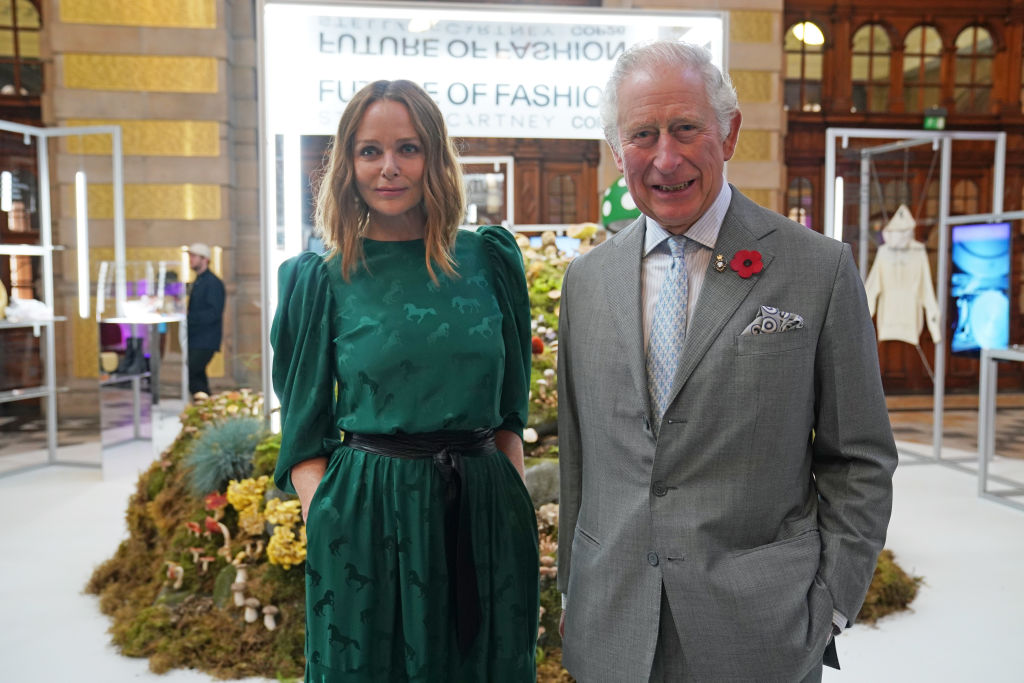
UK Royals Attend COP26 - Day 4
Stella McCartney, whose brand is owned by LVMH, with Prince Charles last year. (Photo by Owen Humphreys-WPA Pool/Getty Images)

The success of LVMH, the owners of Tiffany & Co, Christian Dior, Stella McCartney and a suite of luxury brands, is thanks to the success of the super rich, writes Jose Caireta

It is remarkable in an era of omnipotent technology companies, boundary-pushing electric carmakers and sprawling energy producers that the first European company to surpass a valuation of $500bn is a maker of premium luxury goods. 

Yet France’s LVMH, the powerhouse behind brands such as Louis Vuitton and Tag Heuer, achieved that feat this week and broke into the world’s 10 largest companies alongside giants such as Apple, Microsoft, Tesla and Saudi Aramco. 

In the short-term, the increase in value was driven by the re-emergence of wealthy Chinese shoppers following the end of pandemic restrictions. However, there is a deeper, more entrenched trend behind LVMH’s growth over the past decade and more: The resilience of high-end consumers to almost any setback. 

Even during the series of crises that have rocked economies around the world during LVMH’s period of rapid growth – from the aftermath of the great financial crisis to war in Ukraine and the rampant inflation that has followed – customers seeking the highest quality products and experiences have kept on spending. Last year, the value of the global luxury market increased by 21 per cent, reaching €1.4tn, according to the consultancy Bain & Co. 

The one exception is the pandemic, which saw the luxury market contract dramatically. But even then, it rebounded faster than many analysts expected, especially in Europe and North America. In January, for example, Louis Vuitton became the world’s first luxury brand with more than €20 billion in annual revenue – even before the Chinese economy reopened in full. 

This resilience is partly explained by the emerging super-wealthy in China, the Middle East and India in particular. But it is also attributable to the ability of companies and investors in the industry to constantly innovate to provide new products and experiences to the established luxury buyers in Europe and North America. 

The fact that LVMH is now among the world’s 10 biggest companies in a list dominated by American technology firms highlights the importance of truly understanding these high-end customers. Yes, the luxury market is buoyant, even in the face of adversity, but that does not mean it is an easy place to play. If it was, why is LVMH so far ahead of its rivals? 

The answer lies in knowledge and execution: Only by acquiring a deep understanding of high net worth consumers can you hope to build and transform luxury brands and assets. Where do consumers eat, sleep, shop and go on holiday? Where do they buy their cars and their yachts? Which architects, artists and chefs do they most admire? Being able to almost obsessively track this information is how luxury brands like LVMH continue to succeed. 

The prospects for the durability of high-end products certainly look strong: Bain forecasts that the luxury market’s consumer base – those able to afford the products and services on offer – will expand from 400 million people in 2022 to 500 million by 2030.

While no one can predict the future and all good things come to an end – especially with the prospect of a global recession on the horizon – high-end consumers have proved their resilience time and again over the past decade. Just ask LVMH.

Read more

Inside Formula 1’s £10,000 hospitality ticket on the back of a moving lorry

Black Formula 1 hospitality truck driving on a race track at dusk, bright lights and sponsor banners visible.

Share this article

  • Facebook
  • X
  • LinkedIn
  • WhatsApp
  • Email

Similarly tagged content:

Sections

  • Opinion

Categories

  • Opinion

Trending Articles

  • Can debt-ridden Morrisons become a Big Four supermarket again?

  • Ratcliffe’s Ineos saves Runcorn plant

  • As it happened: Stocks rally; US to unveil ‘economic D-Day’ Iran sanctions

  • Amazon says it buys books in bulk to ‘improve products’

  • HMRC mansion tax inspectors to target homes for property valuations

More from Morning Wire

  • Inside Formula 1’s £10,000 hospitality ticket on the back of a moving lorry

    Sport Business
    Black Formula 1 hospitality truck driving on a race track at dusk, bright lights and sponsor banners visible.
  • TOURISE and Oxford Economics Release New Global Report on Tourism Resilience in an Era of Permanent Disruption

    Business Wire
  • Conga Announces Netflix Documentary Star and Survival Expert Chris Lemons as Its Featured Speaker at Conga Connection 2026

    Business Wire
  • Industry chief warns ‘resilience not enough’ for growth

    Economics
    Shevaun Haviland, British Chambers of Commerce boss, speaking at a business event, emphasizing economic growth strategies
  • Britain needs to start designing for drought

    Opinion
    London cityscape from Primrose Hill showing dry, brown grass during drought with River Thames and skyscrapers
  • Iran war could ‘halt growth’ across UK economy 

    Economics
    Andy Burnham, Mayor of Greater Manchester, in a dark suit and glasses, listening intently at a wooden table.
  • Exclusive: Rugby League monitoring Henry Pollock amid £1m Hearn wage demands

    Sport Business
    A young man with blonde hair and a dark shirt, clenching his fist and smiling, likely celebrating or cheering.
  • Rehlko Defines What It Takes to Build AI-Ready Power Infrastructure as Data Center Energy Demands Evolve

    Business Wire
MorningWire

Independent European business, markets and political news for decision-makers.

Morning Briefing

Europe

  • Germany
  • France
  • EU Institutions
  • Europe

Business

  • Markets
  • Business
  • Economy
  • Regulation
  • Competition
  • Public Affairs

Editorial

  • Opinion
  • Editorial Policy
  • Corrections
  • Contact

Company

  • About Morning Wire
  • Privacy Policy
  • Terms of Use
  • Cookie Policy
© 2026 Morning Wire Ltd · Published by Morning Wire Media, Bahnhofstrasse 65, 8001 Zürich, Switzerland
Privacy · Terms · Cookies · Facebook