Skip to content
Tuesday 18 August 2026London --:--Frankfurt --:--Zurich --:--
NewslettersSearchEN · DE · FR
MorningWire

European business, markets and politics

FTSE 100
10,720.30
-0.28%
DAX
26,338.61
0.00%
CAC 40
8,579.60
0.00%
STOXX 50
6,530.45
0.00%
  • Europe
  • Markets
  • Business
  • Economy
  • Regulation
  • Politics
  • Opinion
More
GermanyFranceEU InstitutionsCompetitionPublic AffairsBankingTechnologyEnergy
  • Germany
  • France
  • Europe
  • Markets
  • Business
  • Economy
  • Regulation
  • Politics
  • Opinion
  • DE
Tuesday 25 February 2020 4:03 am  |  Updated:  Monday 24 February 2020 6:14 pm

The TfL junk food ad ban was clearly a recipe for failure

By: Saqib Qureshi

Add as a preferred source on Google
BRITAIN-LIFESTYLE-TRANSPORT-CULTURE
How many fewer children are obese thanks to the junk food ad ban?

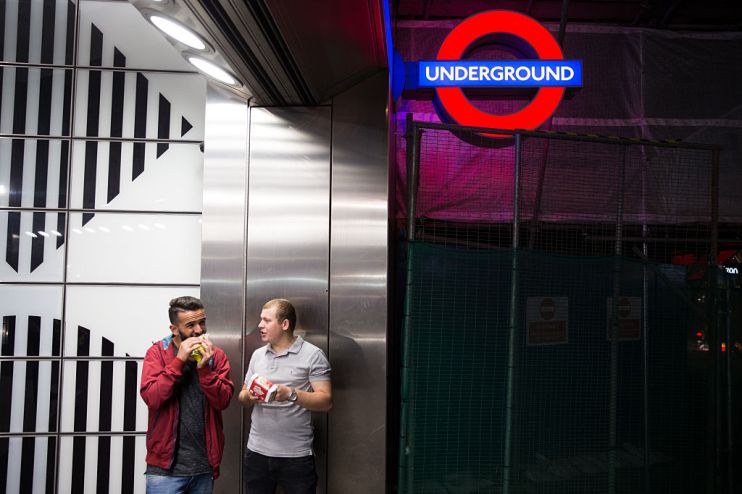
Today marks a year since Transport for London (TfL) introduced a ban on junk food advertising anywhere on its network.

But what impact has it had? And what are the lessons for London’s policymakers?

One year on, there is little evidence that the ban has achieved much beyond generating a few headlines. In fact, it looks like the perfect example of a poorly thought-through government initiative that hijacked an important issue in order to virtue-signal, rather than achieve real results. 

The ad ban was aimed at addressing London’s childhood obesity problem — often cited as spiralling out of control. That’s a noble goal.

But as the Royal College of Paediatrics and Child Health has made clear, before we can find a solution to the obesity crisis, we first need better data to adequately understand the problem in the first place. This research should have been commissioned at the outset.

In fact, both experience and research show us what the most proven methods for tackling childhood obesity really are. Amsterdam, for example, achieved a 12 per cent reduction in childhood obesity between 2012–2015 by adopting a whole systems approach that included investment in education campaigns, dietary advice, and extensive exercise and sporting activities for children.

The TfL ad ban, in contrast, resulted in uncertainty, confusion, and complexity. The rules have led to adverts for family staples like olive oil and nuts being banned, while allowing marketing of some chicken burgers, nuggets and fries.

As with all misguided top-down government policy, it ends up costing the taxpayer. The ban cost TfL an estimated £25m a year in lost advertising revenue according to industry experts. TfL’s own figures are more conservative, but still show an estimated £13m loss in revenue, shouldered by Londoners.

Read more

Row erupts over Tory plan to stop Soho pub goers standing up 

Bustling Soho street scene with vibrant storefronts, diverse pedestrians, and iconic London architecture under clear skies

The public should have some way of assessing what that £13m price tag achieved — but conveniently enough, they can’t. Because in typical public sector fashion, there are no key performance indicators, no metrics, and no measurables accompanying the ban, meaning that the policy cannot undergo any meaningful future review. 

So how many fewer children are obese thanks to the ban? We actually don’t know.

Encouraging organic grassroots action would have paid far greater dividends. Without involving schools, councils, community activists and even private actors, it is almost impossible to ensure that adequate programmes, facilities and nutritional guidance can be made available to those that most need it.

Worse of all, when the mayor is challenged about tackling childhood obesity, he just refers to the TfL policy. Not only has the ban failed to improve childhood health, but it makes further action on this issue unlikely, because the policy gives the false impression that substantive action has already been taken.

This policy is the perfect example of how a well-meaning idea concocted by intelligent officials can have disastrous consequences. 

Implemented via top-down diktat, decided without meaningful consultation with the private sector or civil society, and with no real way of measuring success, the TfL ad ban was always doomed to fail.

Main image credit: Getty

Read more

Verdiva Bio Initiates Phase 1 Study of VRB-103, a Selective Oral Amylin Peptide Analog With Weekly Dosing Potential

Share this article

  • Facebook
  • X
  • LinkedIn
  • WhatsApp
  • Email

Similarly tagged content:

Sections

  • News
  • Opinion

Categories

  • Business
  • Opinion

Related Topics

  • London business

Trending Articles

  • As it happened: FTSE 100 drops as oil prices rise after Trump makes Hormuz threat

  • US bond market jitters spark UK economy recession warning

  • Aldi boss wades into supermarket ‘price-gouging’ row

  • Monzo chair makes early exit after boardroom rift

  • New Premier League rules could see £11bn invested into new stadiums

More from Morning Wire

  • Row erupts over Tory plan to stop Soho pub goers standing up 

    Hospitality
    Bustling Soho street scene with vibrant storefronts, diverse pedestrians, and iconic London architecture under clear skies
  • Verdiva Bio Initiates Phase 1 Study of VRB-103, a Selective Oral Amylin Peptide Analog With Weekly Dosing Potential

    Business Wire
  • Kendall blasts ‘unacceptably slow’ online safety laws as VPN loophole grows

    Tech
    Work and Pensions Secretary Liz Kendall is in charge of reforming the state pension and benefits system
  • Verdiva Bio Appoints Cardiometabolic Leader Steve Marso as Chief Medical Officer

    Business Wire
  • Everton facing early termination of Stake sleeve deal as ban looms

    Sport Business
    Getty Images logo displayed on a digital screen, symbolizing media and stock photography industry presence
  • ITV hands shareholders £100m returns after £1.6bn Sky deal

    Media
    Studios revenue rose three per cent to £893m, driven by an 11 per cent jump in external sales to streaming platforms.
  • Meta glasses court ban sparks privacy warning for City businesses

    Legal
    Mark Zuckerberg smiling while adjusting smart glasses on his face, wearing a black shirt and two wristbands
  • Why do six Premier League clubs still not have front of shirt sponsors?

    Sport Business
    Without the article title or content, its challenging to provide specific alt text. Please provide more context or details...
MorningWire

Independent European business, markets and political news for decision-makers.

Morning Briefing

Europe

  • Germany
  • France
  • EU Institutions
  • Europe

Business

  • Markets
  • Business
  • Economy
  • Regulation
  • Competition
  • Public Affairs

Editorial

  • Opinion
  • Editorial Policy
  • Corrections
  • Contact

Company

  • About Morning Wire
  • Privacy Policy
  • Terms of Use
  • Cookie Policy
© 2026 Morning Wire Ltd · Published by Morning Wire Media, Bahnhofstrasse 65, 8001 Zürich, Switzerland
Privacy · Terms · Cookies · Facebook