The UK must lead a united front ready to tame the alarming global food crisis

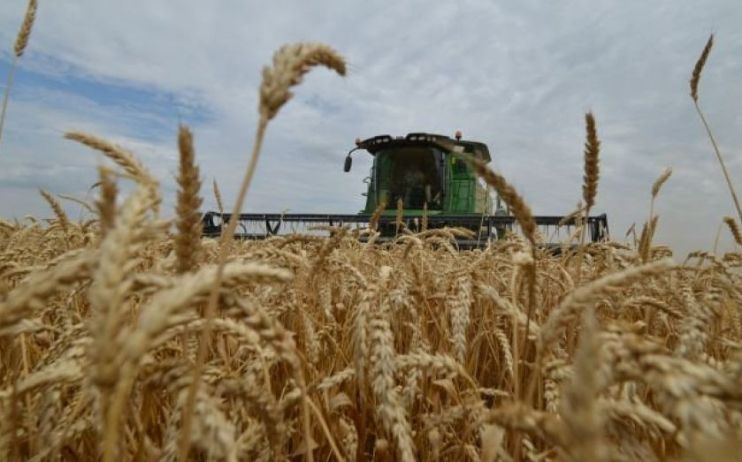
On Monday, the Russian ambassador walked out of a UN meeting after Charles Michel, the European Council president, accused Moscow of using food supplies as “a stealth missile against developing countries”. Michel was referring to the situation in Ukraine’s port of Odessa, where tons of wheat have been left to rot in containers because of the Russian military blockade, fuelling a global food crisis.
The shambles on Monday is illustrative of what happens when diplomatic relations – or what’s left of them amid a war – break down. The Russian ambassador later claimed he left because he couldn’t bear to hear Michel’s lies. But this crisis, actually, is very real, and its repercussions are reaching every corner of the global market.
Around 28 per cent of global exports of wheat are from Russia and Ukraine combined. And it’s not just wheat: it’s 75 per cent of sunflower oil – whose cost was up 27 per cent in the UK in April compared to 2021 -, 29 per cent of barley and 15 per cent of maize.
As wheat doesn’t reach markets and shortages abound, its price skyrockets – threatening to plunge millions of people into hunger. Countries are caught between a rock and a hard place: if they try substituting wheat for something else, they push the price of that substitute commodity up. It’s a crisis of price even more than a crisis of supply – a “price-cost affordability issue”, according to Dr Peter Alexander, a global food security lecturer at the University of Edinburgh.
Already scarred by a cost of living crisis and inflationary pressures, the UK has to bear high food prices. The country is more protected than others, as it’s close to France, a wheat exporter, says Carlos Mera, Head of Agri Commodities Market Research at Rabobank. An export ban out of France, similar to what’s happened in India, is fairly unlikely, as France “is very protective of farmers and wants these high prices”, Mera says. Yet because the UK imports so much of its food – it is far from being self-sufficient or resilient – prices are set to slowly but surely keep on rising.
India’s decision to usher in an export ban is another example of diplomatic failure. The country is the world’s second biggest wheat producer, so what it does heavily affects global trade, hurting especially countries in the Middle East and North Africa. Lebanon, for instance, has limited ability to store wheat after the 2020 port explosion in Beirut, which damaged many storage buildings, explains Nina Valente, Communications Associate at the World Food Programme. Its supply heavily depends on regular shipments. Before the ban, India was expected to export 10 million tons of wheat this year. Now anything close to that number looks unlikely.
It is China, however, that takes primacy across the board. About half of the world’s wheat stocks are now in its hands. Yet China is not a big exporter, and has an almost separate internal wheat market from the rest of the world. If it decides to step in, it could change the rules of the game, with important geopolitical consequences.
Russia has said it is ready to open corridors to let the wheat out of Odessa if sanctions against the Kremlin are lifted. This, of course, is an untenable position. The stakes are very high: Ukraine is currently “sitting on 8bn euros worth of wheat” that it cannot export, according to the head of the European Investment Bank. Professor Anna Nagurney of the University of Massachusetts Amherst expects “a tsunami of hunger in many vulnerable parts of the world”.
Domestically, targeted policies to help the poorest in society to afford the more expensive food make more sense than “broad-brushed measures”, says Dr Alexander. How to fund them has been the conundrum that’s seen this government squirm since the beginning of the cost of living crisis.
In foreign politics, if there’s one thing that this government has got right is its response to the war in Ukraine. It’s often been too slow, as with the delay in sending longer-range missiles to Kyiv, but it has proved unwavering where some European countries were dithering, leading them into action. It must now do the same with the wheat crisis – the consequences of this perfect storm cannot be reversed, but perhaps they can be tamed.
New logistical routes to get the wheat out of Ukraine are being devised, and coordination between different countries is needed to provide trucks and barges. Diplomatic action to ensure export bans don’t start mushrooming out of developing countries is also fundamental. And soon, countries will be called on the world stage to help others – Somalia and Benin, for instance, have basically no reserves of wheat left. The UK should take the lead – foreign policy might not interest voters as much as domestic issues do, but it’s what everyone remembers long after – a country’s legacy.