Thomas Cook goes bust: How did it end up like this?

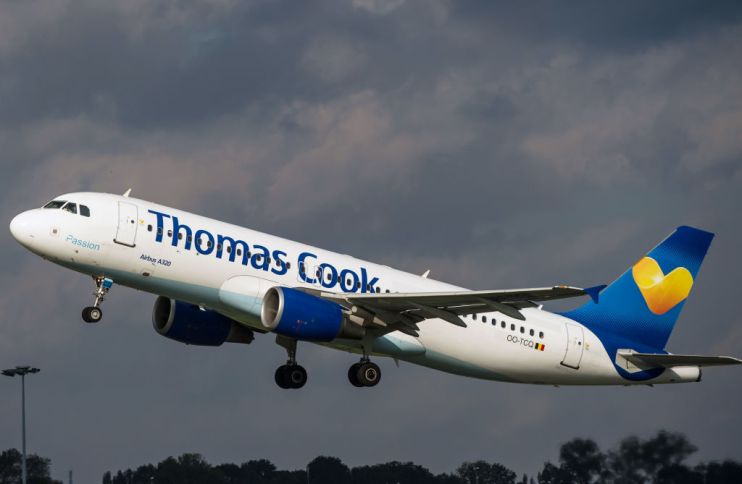
Britain’s 178-year-old travel firm Thomas Cook officially collapsed into administration in the early hours of this morning after last-ditch rescue talks with lenders failed.
The UK’s aviation regulator, the Civil Aviation Authority (CAA), is now in the process of escorting back home hundreds of thousands British holidaymakers who are abroad after booking with Thomas Cook.
Read more: Watch the last Thomas Cook plane land in Manchester after operator’s collapse
The road to Thomas Cook’s collapse has been a long and bumpy one, with the company first hitting the rocks last summer, when Britain basked in a record-breaking heatwave that kept many holidaymakers at home.
Here Morning Wire takes a look at the factors that led to the travel firm’s downfall.
Brexit uncertainty
Thomas Cook boss Peter Fankhauser repeatedly warned that uncertainty around Brexit had put customers off booking holidays abroad, out of the fear that airlines would not be able to fly freely in the event the UK left the EU without a deal.
“Political uncertainty related to Brexit over recent months has led to softer demand for summer holidays across the industry,” Fankhauser said in May.
As well as the turbulent political environment in the UK, Thomas Cook also suffered from a slump in tourism following terrorist attacks in Tunisia.
Helal Miah, investment research analyst at The Share Centre, said: “The group, like its peers, has suffered from a perfect storm of turbulence, from political unrest and terrorism at some of its most popular destinations, to unusual weather patterns seeing travellers taking staycations and the ever present Brexit uncertainty devaluing the pound and putting consumers off from booking holidays.”
UK heatwave
The UK’s heatwave last summer, while welcomed by staycation enthusiasts, was bad news for Thomas Cook.
Last November, Fankhauser said the period of prolonged hot weather led to a “larger-than-anticipated” decline in gross margins in what would have been its key summer trading period, and that it was battling domestic promotions that were enticing Brits to stay at home for the period.
Allegations of mismanagement
While many onlookers do not dismiss the fact that Thomas Cook was suffering a perfect storm of external factors, they argue that ultimately, the tale of Thomas Cook’s demise is one of financial mismanagement.
In May, the firm reported a £1.5bn half-year loss, while its debt pile reached £1.4bn.
Julie Palmer, partner at Begbies Traynor, said the finger may have been pointed at Brexit, political unrest and warm summers, but “questions to have to be asked of the management’s strategy”.
“Other competitors, such as Tui, have faced similar issues yet have weathered this storm and developed a more compelling product offering,” she said.
“Unfortunately the Thomas Cook model was heavily based on a legacy model of high street travel agencies combined with a lacklustre online offering.
“But whatever the reasons for Thomas Cook’s demise, the UK travel industry will be reeling for some time with the loss of one of its most respected and historic names.”
Mountainous debt pile
Russ Mould, investment director at AJ Bell, said: “Ultimately Thomas Cook failed because it didn’t have the cash flow to reinvent itself to fight off growing competition as so much money was going on debt repayments.
“Despite having 22m customers, the business only made £250m underlying earnings before interest and tax which equates to about £11 a customer. That’s barely anything given the amount of effort involved to run its business and market its holidays.”
Meanwhile Thomas Cook racked up a mountainous debt pile of £1.5bn. While main rival Tui has posted several profit warnings over the last year, it has a far smaller debt pile than Thomas Cook.
The 178-year-old UK company has paid £1.2bn in interest on its debt since 2011, cutting into its profits.
“Utimately the debt was the symptom of the ailment – Thomas Cook failed because it didn’t move with the times,” said Markets.com’s Neil Wilson.
A deal that would have seen Chinese majority shareholder Fosun pour in £450m of its own money, as part of a £900m package to rescue the firm, has now collapsed.
A last-ditch demand from lenders for an extra £200m was the final nail in the coffin for Thomas Cook, with its already teetering tower of debt meaning it could not find the extra capital required.
Slow shift to online
Thomas Cook, with its UK-wide string of travel agents, has been slow to make the jump online compared to its rivals.
That has seen the company overtaken by a swathe of online-only firms from On the Beach to Airbnb, as the package holiday giant lost out to more nimble competitors.
Read more: Don’t Thomas Cook it: What customers can do after tour operator’s liquidation
“Thomas Cook has got a shrinking market that wants the actual package product and it has not revolutionised its way of distribution,” Nick Hynes, co-founder of digital agency Somo said.
“It’s relied upon its brand for awareness but it’s not trying to dominate the distribution routes, which is where the online retailers have now moved into their market.”