The three geopolitical red herrings that won’t spook markets this year

EACH year, we release our Top Risks report, where we consider the ten biggest geopolitical threats to markets and economies, judged by probability and potential impact. What’s at the top of our list for 2014? Uncertainties about America’s foreign policy and China’s ambitious domestic reforms create the potential for volatility and surprises this year and, given the rise of demanding middle classes in so many emerging market countries, we’ll be watching for election-year risks and opportunities in Turkey, Brazil, India, Indonesia, South Africa, and Colombia.
But international politics and the global economy are also shaped by the risks that won’t live up to their billing, and we’ve identified three specific stories that we consider overrated. These are the year’s “red herrings”.
2013 was an ugly year for US domestic politics, especially for President Obama, who saw his popularity dive following a series of bruising showdowns with Republican lawmakers and the Obamacare rollout disaster. Republicans were harmed by a government shutdown that left them with most of the blame and brought to light the party leadership’s inability to keep its Tea Party wing in check.
Despite all this, the US economy proved more resilient than most predicted. The good news for markets is that the economy will continue to shrug off Washington’s dysfunction, and 2014 will be less politically volatile. A budget deal, though not significant in economic terms, will prevent another self-defeating fiscal policy duel until at least 2015.
This year’s fight will not be on policy, regardless of how much noise the two sides make in support of their agendas. Instead, the real struggle will be for the seven Senate seats currently held by Democrats in states won by Republican presidential candidate Mitt Romney in 2012. The predictability imposed by the November elections is good news for an economy driven by companies and investors that want a break from political surprises.
Europe has a red herring of its own. Those who predicted the collapse of the euro have always underestimated the willingness of those with the power to save it to make tough choices. Yet, given continued low growth rates in Europe’s periphery, France’s ability to slow progress on major structural reforms, continued uncertainty about Britain’s role in Europe, and rising populism fuelled by explicitly anti-EU sentiment, the doomsayers are again making noise.
We think they’re wrong. At the financial level, pledges from Europe’s Central Bank and German Chancellor Angela Merkel to take “any measures necessary” to defend the euro limit the potential damage to Europe’s finances in 2014. Yes, anti-European political parties are gaining traction, but they’re still not in a position to challenge for power, or even to determine the make-up of governing coalitions except in a couple of countries. They’ll likely win increased representation in the European Parliament, but these parties will have trouble pooling their influence because their agendas are almost entirely nationalist, and there is no great trust among them. Britain’s Ukip, France’s Front National, Hungary’s Jobbik, and Greece’s Golden Dawn, for example, just don’t have that much in common. Europe will remain very much in the “muddled middle” this year, with neither momentum for structural reform nor the sort of market crisis that might create it.
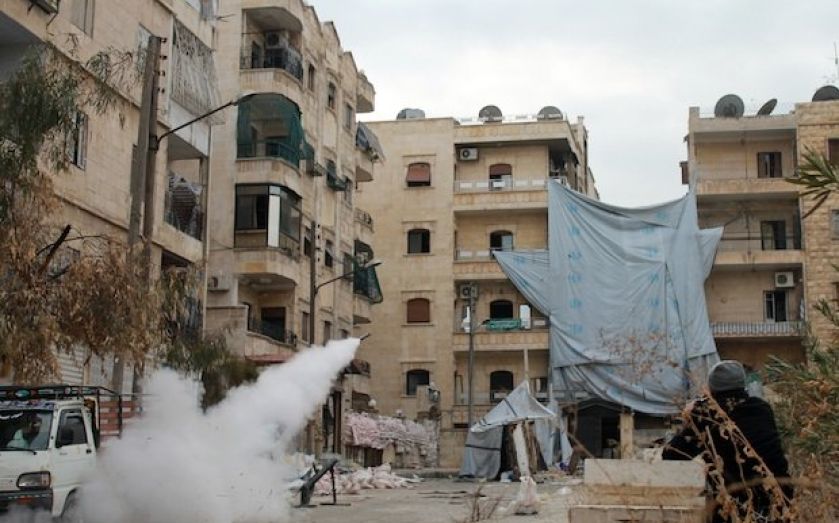
Finally, there is the Middle East’s most tragic quagmire. Syria’s civil conflict is leaking across the border into Iraq, Lebanon, even Turkey. Yet, though the neighbours are in for a few surprises this year, Syria itself is becoming much more predictable. Its civil war, which has ravaged the country for nearly three years, will continue in 2014 – but there’s little chance that Syria will become a larger global security or economic risk. The crisis over its chemical weapons in 2013 was never really about the future of Syria so much as the credibility of American threats and posturing in advance of endgame negotiations over the status of Iran’s nuclear programme.
There is no prospect for a decisive breakthrough by either the Assad regime or the opposition, and hopes that the Russian chemical weapons removal plan might create some momentum for diplomacy have evaporated. Al Qaeda-inspired groups inside Syria are likely to focus increasingly on targets of opportunity in neighbouring Iraq. Violence in Syria could even subside in 2014, if the rebels begin to accept that no international support is coming and cut deals with the Syrian military. Either way, Iran, Egypt, Iraq and other Middle East hotspots are likely to produce surprises in 2014, but Syria will remain locked in its awful, predictable stalemate.
Ian Bremmer is president of Eurasia Group and author of Every Nation for Itself: Winners and Losers in a G-Zero World. David Gordon is chairman and head of research at Eurasia Group. www.eurasiagroup.net