It’s time to recognise our businesses would benefit from devil’s advocates

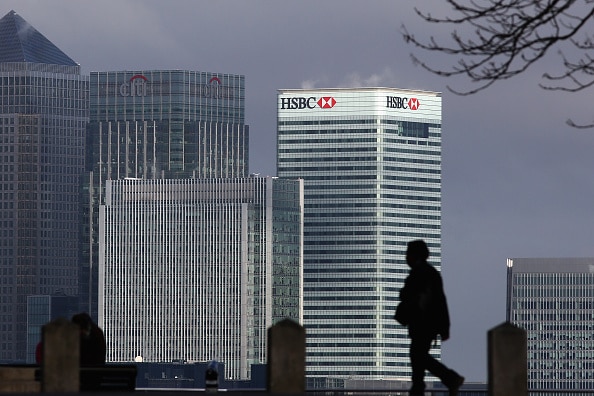
As corporate speeches go, it was eventful. Last week, Stuart Kirk, head of responsible investing at HSBC’s asset management division, delivered a provocative speech entitled “why investors need not worry about climate risk.”
One week and a media storm later, Mr Kirk is no longer a head of responsible investing. Instead, he has been suspended, facing an internal investigation by his employer.
Kirk’s crime was to question a string of sustainability shibboleths, and to do so in language more colourful than is usually heard at a corporate conference, let alone one focused on sustainability.
Delivering his speech in an exasperated tone, Kirk noted that throughout his career in finance “there was always some nut job telling me about the end of the world.” Climate change, in his telling, is simply the most recent suggested cause.
To understand Kirk, it should be noted that his dissent was limited in its scope. He did not question the science of climate change. Nor did he argue against a transition from dirty to clean fuel – in fact, he clearly stated that he supports a “just transition”.
Instead, Kirk argued that pessimism about the financial impact of climate change is misguided, and that focusing excessively on the issue draws attention away from more pressing, immediate ones, like rising inflation, squeezed growth and falling equity prices.
One can reasonably disagree with Kirk’s opinion and many have. By suspending him, however, Kirk’s employer disagreed with something different: his right to have one.
That is dangerous because dissenters are important to a business and to society itself, not just because they offer up new ideas, but also because they force us to reconsider our own.
In a seminal study on the subject, Charlan Nemeth, the foremost academic authority on dissent, analysed juries deliberating the outcome of a trial. In those where the dissent was liveliest, the decision taken, regardless of the verdict, was more deeply discussed and better informed.
The sociologist Brooke Harrington came to a similar conclusion when studying investment clubs in her book “Pop Finance”. The more dissent she saw amongst a group of investors, the better their performance, as each investment proposal was subjected to greater scrutiny.
The world of responsible investing, often referred to by the acronym ESG (environmental, social, governance), could use a similar dose of challenge.
Money is flooding into the sector. Bloomberg estimates that one third of all assets under management, some $53trn, will be invested under this moniker by 2025.
The sector’s intellectual underpinning, however, is shaky. Greenwashing is so rife that the US securities regulator, the SEC, has declared that it will crack down on the claims of ESG funds. A recent analysis of German ESG funds, meanwhile, found that just 10 per cent were avoiding all controversial investments, with 40 per cent investing ESG funds in the arms industry.
Stuart Kirk is not the only dissenter within the movement. Tariq Fancy, until 2019 the head of responsible investing at Blackrock, has recently become a high-profile critic, castigating the sector for over-promising and under-delivering.
Dissenters like these are the exception, not the rule, however. The rhetoric of responsible investing has become a consensus, albeit an ill-defined one. Money ploughs into funds that wrap themselves in a comforting acronym with little transparency about what they are investing in and why they are doing so.
Dissenters force us to think more deeply, asking the difficult questions that consensus encourages us not to ask. As Kirk has discovered, the dissenter is rarely a comfortable position to assume. In Charlan Namath’s study, dissenting jurors were invariably ostracised by the wider group, even if their arguments were later accepted.
You don’t have to agree with Kirk to appreciate him presenting an argument against the flow of the mainstream consensus. Dissenters like him will force everyone to consider more deeply their own points of view.
For that reason, HSBC ought to return Kirk to their fold. Should they be seeking a new role, there is a precedent they might consider. In the sixteenth century, the Catholic Church created the role of “advocatus diaboli”, who would argue against the canonisation of a saint. The devil is invariably in the detail, and ESG has offered far too little of the stuff. It is time it got its own devil’s advocate.