Time to restore true independence to the Bank of England

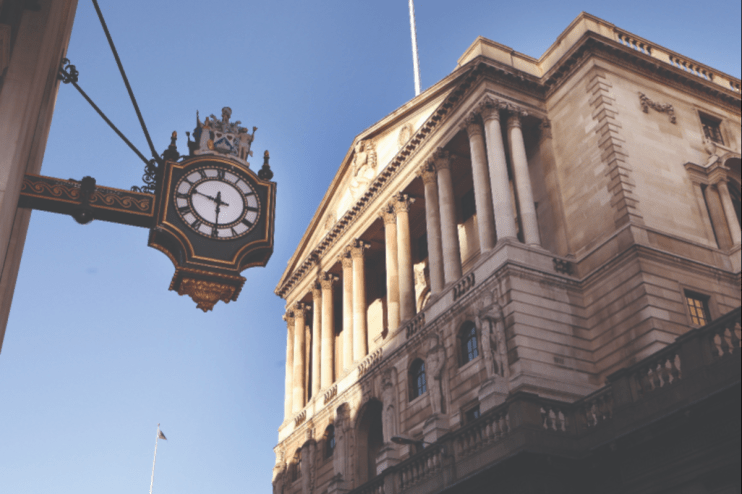
The Bank of England is no longer held directly responsible for inflation but must juggle multiple, sometimes competing objectives. As a result price stability, the Bank’s founding mission, risks being sidelined, says Jonathan Eida
While parliament took its summer recess, the Bank of England was busy. The Monetary Policy Committee (MPC) last month announced another interest rate cut. The base rate now sits at four per cent, down 1.25 percentage points from its August 2023 peak.
Latest data shows inflation remains at 3.8 per cent, almost double the Bank’s two per cent target. Since July 2022, inflation has only hit or fallen below target in three months and not once in the past year. This persistent failure raises questions about whether the Bank is delivering on its core responsibility of price stability.
Meanwhile, borrowing costs are climbing. The 30-year gilt yield has risen above 5.6 per cent, close to its highest level since 1998. Combined with loose fiscal policy and a higher neutral interest rate, the Bank’s four per cent base rate is not particularly restrictive, leaving limited room for further cuts without stoking inflation. Even the Bank’s chief economist, Huw Pill, has suggested that the pace of cuts has been too fast.
When the Bank of England was granted independence in 1997, its mandate was deliberately narrow: to maintain price stability through monetary policy. The tools were simple, setting interest rates and, later, quantitative easing. The principle was that monetary policy would be insulated from political interference.
Political judgement
But the legislation contained an important caveat. The Bank was required to pursue price stability “in support of the government’s objectives for growth and employment”. This compromise blurred the line between the Bank’s role as a central bank and the government’s responsibility for wider economic policy. It forces the Bank to weigh fundamentally political judgements alongside inflation, diluting accountability.
The structural changes since 1997 have compounded this problem. Successive governments have loaded new responsibilities onto the institution. The Financial Policy Committee (FPC), created after the financial crisis, monitors systemic risk across the economy. The Prudential Regulation Authority (PRA), responsible for supervising banks, insurers and building societies, was folded into the Bank in 2016. The PRA operates alongside the Financial Conduct Authority (FCA), whose head also sits on the FPC. Together, these changes have entrenched the Bank at the centre of the UK’s regulatory system, well beyond its original monetary remit.
Today, the Bank is tasked with an expansive set of objectives: monetary stability, prudential oversight, financial stability and systemic risk management. Monetary policy, once its sole focus, has become just one responsibility among many. The governor is no longer held directly responsible for inflation but must juggle multiple, sometimes competing objectives. Price stability, the Bank’s founding mission, risks being sidelined.
This issue is not unique to the Bank of England. At the TPA, we have compiled a comprehensive list of all arm’s-length government bodies, many of which face similar problems, pursuing conflicting objectives or extending their activities well beyond their original remit.
That is why reform and simplification is necessary. The Bank of England should return to its original remit of monetary policy and price stability. The PRA should be separated and made directly accountable to ministers for prudential oversight. The FPC’s macro-prudential role should also be transferred, ensuring systemic risk monitoring is tied to a regulator answerable to government.
The governor’s role should be clearly defined: maintaining control of inflation while minimising unnecessary harm to the wider economy. That was the rationale for independence in 1997.
By trying to be both a central bank and a super-regulator, the Bank of England has lost sight of its primary duty. Inflation is the simplest test of its performance. At present, it is failing. Unless the Bank is stripped back to its original role, accountability will remain blurred, risking elevated inflation.
Jonathan Eida is a researcher at the Tax Payers’ Alliance