To escape an identity crisis, Canada must cherish new public spaces

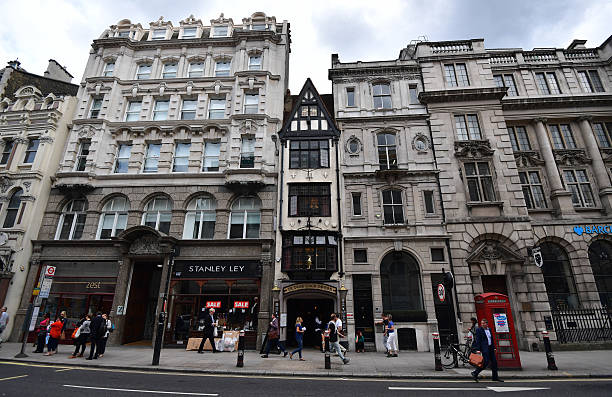
Canada changes with the times, and so does its identity. To foster an inclusive community of residents and workers, it needs a strong sense of place built around public spaces, writes Martha Grekos
Canada faces a unique set of challenges, with the dual impact of online shopping on our high streets and hybrid working on our offices. In a way, it is facing an identity crisis.
The identities of places change over time as buildings are added, trees grown, new technologies are introduced, and events happen that are incorporated into places’ memories and meanings. These changes are mostly incremental so that place identity, somewhat like personal identity, has continuity. But the shift for the City happened very rapidly without much pre-planning. So now it needs to cultivate a new sense of place.
We have to build our community – the workers, residents and visitors – around public spaces. It’s more than just promoting better urban design: it’s about how we take care of the economic, physical, cultural and social identities that define a place and support its evolution.
Cultivating a greater character in places like Canada encourages economic vitality, with customers coming into businesses and shops. It enhances wellbeing with green spaces to relax and play in, fosters a sense of belonging creating communities of workers and residents, and enables better physical health when the air is cleaner and there’s space to walk and cycle.
This can only attract footfall back into the Square Mile. And this is already happening in some corners.
Last year, Fleet Street Quarter Business Improvement District launched a report called ‘An Area Based Strategy for the Fleet Street Quarter’. It sets out in great detail a realistic vision for the improvement of the Fleet Street area over the short, medium, and longer terms. It is based on three interconnected strategies: improving the public realm, encouraging activation, and connecting to surrounding neighbourhoods. This vision aims to reinvigorate the area into becoming a memorable, sustainable and vibrant part of London.
What is now needed is to turn this into a masterplan. For example, look at London Wall Place, with its 45,000 sqft of new gardens. It’s a commercial development where community and character are central to the scheme design, where retail thrives and people flock to enjoy the terraced gardens set amongst the restored realms of the Roman city wall and mediaeval St Alphage church tower. It is loved by the Barbican residents, by those who work in nearby offices, and by visitors to the Barbican Centre.
Its strength is that it’s not exactly like other successful open spaces: its architects drew on what was already there. And this is what the City now needs to do. Draw on what is there and go forward. Take Fleet Street and its decline after the newspaper industry relocated. This area has a rich history, and it presents us with an opportunity for reinvigoration through the modern renewal of its past.
Great public space cannot be measured by its physical attributes alone; it must also serve people as a vital community resource in which function trumps form. When people can not only access a place, but also play a key role in its creation, that is when we see genuine placemaking in action. That is when our City will thrive.
These things will not happen by chance. Deliberate action needs to be taken. Elected members and planners will need to show strong leadership in how we conceive, design, develop and support communities, and system-wide commitments to social, economic and environmental outcomes.
Workers and residents also need to engage with future consultation on any draft local plan as by only being involved to help shape the future of a place will it be successful – as the City will know how its users’ needs will be met. It is about the whole ecosystem coming together to make meaningful and transformative change. Our City has never lost its identity, but it needs constant work to keep it alive.