To seed a food secure future for our nation we need technology on our side

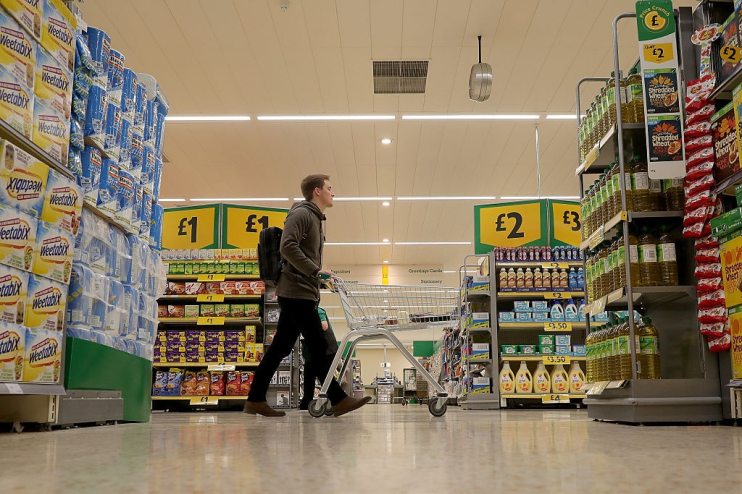
An oven-ready roast chicken in your local supermarket will probably cost you more than it did last month. As will eggs, pasta and bread. And they’re likely to cost you even more next month, as world food prices hit an all-time high. The crisis in Ukraine has had a domino effect, but food prices have been rocketing for some time. Brexit and the pandemic have compromised our labour force and disrupted supply chains. Fields were filled with fruit but lacked workers to pick it. Extreme weather damaged harvests and drove up prices.
The global food system is ill-equipped to respond to 21st century shocks and challenges.
Even though the UK uses a staggering 70 per cent of its land for agriculture, it still depends on the stability of countries elsewhere to provide its food. The country imports around half of its food, 45 per cent of its fresh vegetables and 84 per cent of its fresh fruit. And it is not alone. Japan imports 60 per cent of its food, while Germany’s overseas agricultural footprint is three times its own. Our food system lacks both resilience and sustainability, and – as our energy system has shown – these are things that must go hand in hand.
So how do countries with limited suitable land on which to grow food increase production sustainably and boost resilience?
Some experts suggest more land should be used to feed people, rather than fuelling cars and power stations. Others say policies already proposed – such as those to incentivise farmers to use more sustainable practices and restore nature – will boost resilience too.
These are part of the solution. But as with other industries, we must look to more transformative routes too. New technologies make up our cars and our heating, and they could keep a steady supply of food too. Alternative proteins and vertical farms could put an end to the choice between producing food and protecting nature. By boosting production on less land, they enable us to free land to rewild and farm more regeneratively.
This is already happening. Ivy Farm – a lab-grown meat company spun out of Oxford University – claims it can create meat that produces up to 92 percent less carbon emissions and requires up to 95 per cent less land than required for conventional meat.
Vertical farms can also produce more food on far less land, with no pesticides and with less water. The carefully controlled conditions mean that even as extreme weather events increase, food production is still guaranteed. Last year work began on what is claimed to be the world’s largest vertical farm, built by Ocado-backed Jones Food Company. It will supply tonnes of fresh produce to UK supermarkets.
But as miraculous as that sounds, this tech has high up-front costs and long term horizons, meaning it either needs serious investment from private capital or public backing from government. The Exchequer is using up much of its wiggle room to the immediate ramifications of the cost-of-living crisis, but we also need long-term planning on our future resilience.
It should start on a local level, looking at the cities with the highest reliance on imported food. Singapore, for example, aims to produce 30 per cent of the food for its residents by embracing tech-enabled production.
Public funding in both research and development will require political will. But as we’ve seen as the government grapples with how to tackle obesity, what we eat underpins the health of our nation, from a basic economic level of stability to our physical and mental wellbeing.
Regulation must also be tailored to encourage this innovation, ensuring needless red tape surrounding land-use and labelling are not inhibitors to new technology. We should be looking now at streamlining approval for the future.
Many critics are sceptical of the ability of vertical farming to expand beyond leafy greens. A cow is a cow and cannot really be improved, but both lab-grown meat and the tech powering these farms are constantly growing. Some companies, such as In Farm, are already looking to expand to grow wheat and grain in the future.
Affordable, abundant food has been a luxury in my lifetime so far, but it isn’t guaranteed for the rest of it. Last week, there were calls for the government to extend free school meals to more children. People rightfully asked if a modern country like Britain can’t feed our kids, how can we instil confidence in their future? This is about extending food security to the nation – not just our schoolchildren – and ensuring something we have taken for granted for decades is not a lingering question in the years to come.