Skip to content
Friday 28 August 2026London --:--Frankfurt --:--Zurich --:--
NewslettersSearchEN · DE · FR
MorningWire

European business, markets and politics

FTSE 100
10,792.54
-0.79%
DAX
26,367.24
+0.31%
CAC 40
8,319.87
-1.68%
STOXX 50
6,424.73
-0.71%
  • Europe
  • Markets
  • Business
  • Economy
  • Regulation
  • Politics
  • Opinion
More
GermanyFranceEU InstitutionsCompetitionPublic AffairsBankingTechnologyEnergy
  • Germany
  • France
  • Europe
  • Markets
  • Business
  • Economy
  • Regulation
  • Politics
  • Opinion
  • DE
Monday 04 January 2016 11:41 am

Travel disruption and delays? Why letting your staff find a better commute is better for business

By: Lynsey Barber

Add as a preferred source on Google

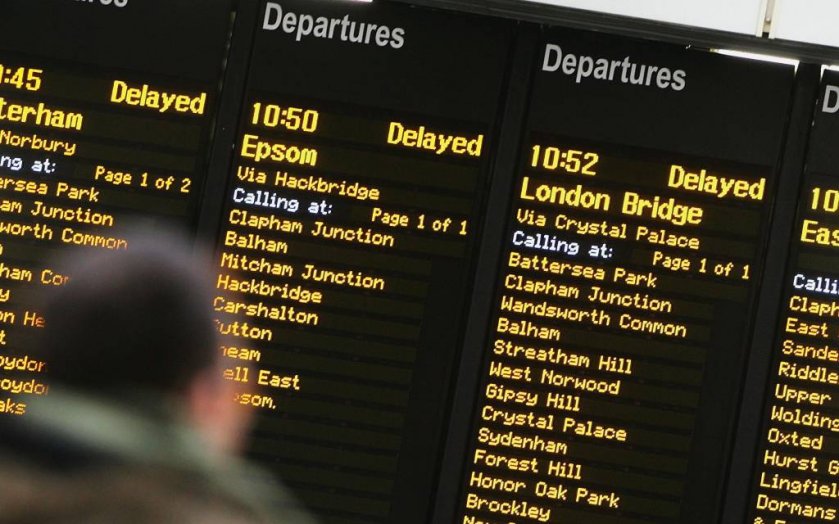
Returning back to work on the first day post-Christmas will have been a return to travel disruption and delays for many commuters. But, even minor morning train delays can have a detrimental impact on the rest of the working day.

The knock-on effect of train punctuality (or lack of it) is apparent in recently published research from the Open Data Institute and startup Fasteroute.

Our research shows almost half of trains arriving into London during the morning rush – between 8:30am and 9am – are delayed, of which 28 per cent are delayed between one and 10 minutes.

Although short delays are classified as minor disruptions by rail operators, even these are disruptive to commuters who have to deal with the knock-on effects to their journey. Missed connections can ripple through a commuter’s journey, such that small initial delays lead to significant lateness.

Our analysis shows that on average, the duration of delays become longer throughout the morning. The odds of boarding a punctual train are higher the earlier you travel. The open data analysed in this research can also be used by the public in the Fasteroute Delay Explorer web application that allows people to choose the best train service based on the reliability of services on their individual commute.

Boarding an earlier train to avoid delays may sound relatively straightforward but not all commuters have the flexibility to travel when they wish.

Outside pressures such as catching connections, road traffic, rigid working hours and scheduled school runs can leave people with a limited selection of train services and routes to use. City planners are working hard to develop rail infrastructure for a growing population but businesses today can play a key part in reducing travel delays for staff.

More flexible starting times should benefit both the team and the organisation, enabling staff to:

  • Choose more efficient travel times that result in less wasted time during the day

  • Decide to travel on more reliable trains, allowing them to arrive at work in a better frame of mind and boosting productivity

  • Travel at times best suited to their schedule, such as enabling them to manage childcare, which attracts a more diverse workforce

At the ODI, we offer flexible working to staff for many reasons. Some team members live as far as Bath, Bristol and Birmingham, some are parents responsible for school runs, and many people choose to work in a focused environment outside of the office away from our main space.

Collaborative technologies allow us to work together and remain connected beyond the office. More companies should embrace these changes in working practices, which are supported by new technologies and informed by access to data.

Share this article

  • Facebook
  • X
  • LinkedIn
  • WhatsApp
  • Email

Similarly tagged content:

Sections

  • News

Categories

  • Business
  • Transport & Infrastructure

Trending Articles

  • Pensioners to hand over bank statements in government benefits crackdown

  • Andy Burnham hints at tax rises in Autumn Budget

  • Brewdog founder James Watt hits out at ‘total silence’ over new venture

  • Lloyds Bank and Halifax users unable to use app in latest outage

  • Economists urge Bank of England to halt bond sales as borrowing costs climb

More from Morning Wire

  • As it happened: FTSE 100 drops as Antofagasta prompts miner sell-off; oil prices cool

    FTSE 100 Live
    Glencore floated on the London Stock Exchange in 2011 and is one of the largest members of the FTSE 100.
  • The UN treaty that’s been incentivising Britain’s blockers since 1998

    Opinion
    Stop HS2 banner with a train icon, displayed on a brick wall in front of a house, protesting the HS2 project
  • Winkworth delays legal drama for a month after family feud

    Legal
    Winkworth estate agent For Sale sign in front of a brick building, indicating property prices and availability.
  • Litigation funders need certainty to keep Britain’s class action regime fair

    Opinion
    UK Supreme Court building, London, with intricate stone carvings and statues, under a blue sky
  • TOURISE and Oxford Economics Release New Global Report on Tourism Resilience in an Era of Permanent Disruption

    Business Wire
  • The BBC shouldn’t push Londoners to accept antisocial phone behaviour 

    Opinion
    Passengers inside a graffiti-covered London Underground train car, some looking at phones, others observing the interior.
  • Freenow by Lyft is enhancing the taxi experience with unique tech innovations

    Partner
    Hand holding a smartphone displaying the FreeNow by Lyft app, with a smiling driver in a car background
  • UK economy’s rebound fails to stem two years of mass job losses 

    Economics
    LONDON, UNITED KINGDOM - JANUARY 31: The Shard is seen on the horizon as commuters cross London Bridge during the morning rush hour on January 31, 2023 in London, United Kingdom. The IMF reports that the UK economy will contract by 0.6% in 2023, as opposed to the previous prediction it might grow, and will perform worse than many other advanced economies, including Russia.The cost of living continues to hit households with grocery inflation for the first four weeks of 2023 rising to 16.7% which would add a further £788 per year to family food bills. (Photo by Leon Neal/Getty Images)
MorningWire

Independent European business, markets and political news for decision-makers.

Morning Briefing

Europe

  • Germany
  • France
  • EU Institutions
  • Europe

Business

  • Markets
  • Business
  • Economy
  • Regulation
  • Competition
  • Public Affairs

Editorial

  • Opinion
  • Editorial Policy
  • Corrections
  • Contact

Company

  • About Morning Wire
  • Privacy Policy
  • Terms of Use
  • Cookie Policy
© 2026 Morning Wire Ltd · Published by Morning Wire Media, Bahnhofstrasse 65, 8001 Zürich, Switzerland
Privacy · Terms · Cookies · Facebook