U-turn on ID cards reveals a deeper flaw in Starmer’s Labour

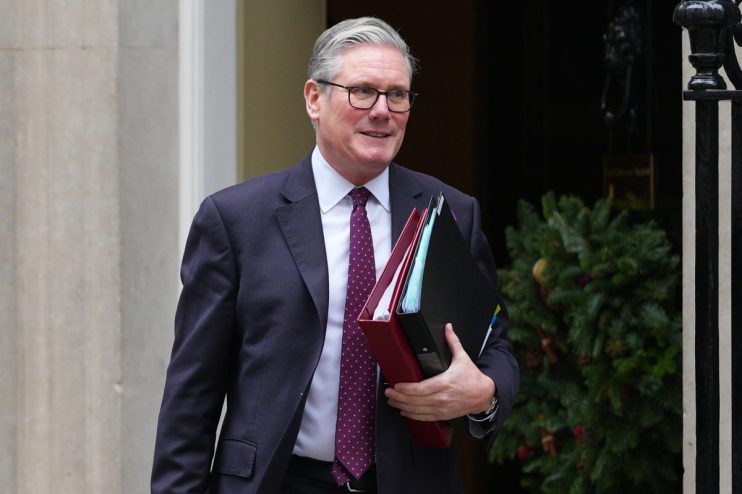
With his latest U-turn, Keir Starmer has taken a controversial policy which nonetheless had a substantial support base and made it deeply unpopular. It’s of a piece with his whole approach to government, says Eliot Wilson
Last week the government announced – or perhaps admitted? – that the digital ID unveiled last year will not be mandatory to prove the right to work in the UK, contrary to its original plans. Inevitably there were accusations that Labour had made a U-turn after encountering fierce public and political opposition to any scheme involving compulsory ID.
The Prime Minister did his best to brazen the situation out, insisting that there had been no fundamental change in policy and that this was merely a refinement of the detailed implementation in advance of a public consultation. Other forms of digital ID, like an ePassport or eVisa, will be accepted alongside the government’s new optional scheme, but Sir Keir Starmer was insistent that he was pursuing the same goal as before.
“You will be checked. Those checks will be digital. And they will be mandatory. What we’re now doing is consulting on exactly what that might look like.”
He might have been persuasive had he not burned through so much credibility with voters in the 18 months since the general election. Politico compiled a list of 11 policy U-turns in the face of opposition, and at Prime Minister’s Questions on Wednesday, Kemi Badenoch was dismissive of Starmer’s version of events.
“I welcome the Prime Minister’s latest U-turn – I feel like I say that every week. Mandatory digital ID was a rubbish policy, and the Opposition are glad to see the back of it. Yesterday, the Health Secretary said that the Prime Minister’s new year’s resolution should be to… ‘try to get it right first time’”.
Brouhaha
The brouhaha over digital ID is not just a matter of whether it represents a U-turn or a refinement of technical detail; it shows something more fundamental about Starmer and his government. Labour has not just made a number of bad decisions, though it has certainly done that, but it has undermined them by presenting them in exactly the wrong way or pitched to the wrong audience. There is a damaging tone-deafness about the government’s approach to public policy, and it is hard to believe that this does not originate with the department store mannequin-in-chief currently in Downing Street.
Digital ID is a case in point. Last August, before the policy was announced, an Ipsos poll showed that 57 per cent of voters favoured a national ID scheme and only 19 per cent were opposed to it. Whatever your personal views on mandatory identification, there is a respectable and coherent argument that digital technology could be used to make citizens’ interactions with the state and public services easier, more efficient and more secure. An ID scheme could consolidate employment information, medical records, welfare entitlement and nationality status in an encrypted system which was always up-to-date, reducing bureaucratic duplication and ensuring that accurate information was available to all service providers. Ministers could have sold a message of convenience, cost-saving and modernity.
That was not the case the government advanced. Instead, the Prime Minister, in whose mind Nigel Farage clearly has a grace-and-favour residence, presented a Reform-lite justification, the headline of which was that it would “help combat illegal working”. The Downing Street statement was frowningly minatory:
“This will stop those with no right to be here from being able to find work, curbing their prospect of earning money, one of the key “pull factors” for people who come to the UK illegally. It will send a clear message that if you come here illegally, you will not be able to work, deterring people from making these dangerous journeys.”
Labour’s plans were set out in September, and by the end of that month, another survey showed support had fallen to 27 per cent, while 47 per cent of respondents were now against the idea.
The pitch made little sense electorally: voters who were now backing Reform would hardly be swayed by a muddier, more hand-wringing interpretation of the same impulse to control the UK’s borders, while left-wing Labour supporters might well be pushed in the direction of the Corbyn/Sultana Our Party psychodrama or the revitalised Green Party. Starmer had taken a controversial policy which nonetheless had a substantial support base and made it deeply unpopular.
Non-existent feel for politics
This is not simply a reflection of the Prime Minister’s poor-to-non-existent feel for electoral politics. There have long been complaints, from both opponents and well-wishing but frustrated supporters, that Starmer lacks a “vision” and is unconvincing or simply at a loss when questions turn from “what?” and “how?” to “why?”. Consequently there is a strong impression that he approaches individual policies in isolation with poor and often contradictory results. This fragmented programme for government ends up as less than the sum of its parts.
Not every Prime Minister has a grand vision. Some promise simply the quiet hum of managerialism, making public institutions work for the citizens who pay for them and maintaining an orderly state. That requires a level of deftness and competence which has eluded Starmer and his ministers. Instead we are left with a misfiring state and no coherent offer of a better world – bad policies, made for bad reasons and communicated badly to a deeply sceptical public.
A recent poll put Labour in third position nationally on just 17 per cent of the vote, only one point ahead of the Liberal Democrats and two ahead of the Greens. Looking at the government’s erratic, irresolute and confused performance, it is hardly a surprise.
Eliot Wilson is a writer and historian; senior fellow for national security, Coalition for Global Prosperity; contributing editor, Defence on the Brink