UK addressing the EV battery recycling ‘elephant in the room’

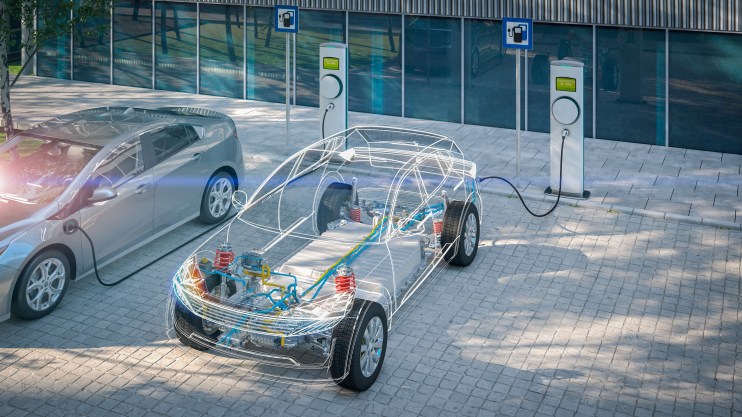
The conversion to electric is well underway and has something of the inevitable about it as a determined chase for the net zero economy gathers pace in the UK and Europe.
Laudable, of course, offering huge potential for the decarbonisation of the transport and industrial sectors in the UK and Europe, also improving air quality, but the onset of electric vehicles and industrial battery electrification also creates another ‘elephant in the room’ – end of life recycling.
As the early market adoption for the switch to Lithium-ion batteries accelerates we must also think about what happens at the end of their useful life. More so when they contain significant quantities of key metals such as Lithium, nickel, cobalt and copper, and source at mine globally has fallen well behind future projected demand. In addition, currently less than five per cent of these metals are currently recycled from end-of-life batteries.
The team at WMG’s Advanced Propulsion Systems at University of Warwick estimates that by 2040, the UK will require 567,000 tonnes of cell production and that over 339,000 tonnes of batteries will have reached end-of-life, the average weight of today’s EV battery pack comes in at between 500-600kg, and come 2035, most passenger cars will contain a lithium ion battery pack, before we even start to consider the heavy end of transport and the various industrial markets that have already or are in the process of adoption, as part of the travel to zero carbon.
According to David Greenwood, Professor of Advanced Propulsion Systems at WMG: “Investment is needed to create suitable recycling facilities in the UK within the next few years, and beyond that, research is needed to allow economic recovery of much greater proportions of the battery material. In doing so we will protect the environment, secure valuable raw materials, and reduce the cost of transport.”
Lithium-ion batteries are used in a multitude of applications and therefore, a number of different chemistries have been developed to match the performance with the requirement. A recycler will want to process a number of different chemistries to maximise value.
It’s clear that to support the scaling-up of UK battery production that commercial scale recycling needs to be developed and reduce the reliance on costly exports to mainland Europe and further afield, which would be counter-sustainable in itself.
UK-based Technology Minerals is developing the UK’s first listed (IPO London Stock Exchange 17 November), sustainable circular economy for battery metals, using cutting-edge technology to recycle, recover, and re-use battery technologies for a renewable energy future. The Group owns 49 per cent of battery-recycling business Recyclus Group Limited.
“There is a clear demand building as a result of this quantum shift to electrification,” says Alex Stanbury, CEO of Technology Minerals,
“We are focused on extracting raw materials required for lithium-ion batteries, whilst solving the ecological issue of spent Li-ion batteries, by recycling them for re-use by battery manufacturers.”

Recycling could address this bottleneck of the primary mine supply shortfall with recycled materials. In 2019, the automotive and industrial battery market was worth €15 billion in Europe and €75 billion worldwide. This is forecast to rise to €35 billion and €130 billion respectively by 2030 and rising.
As EVs replace the internal combustion engine, the strain on the battery metals industry will be significant. Lithium-ion batteries are a core platform technology for the 21st Century. The metal and mineral demand from the EV industry is already significant but will be 2x that of consumer electronics as the industry grows.
The battery supply chain – especially on the upstream end – is undercapitalised, and will be the bottleneck in the rollout of electric vehicles. Since 2015, more than $400bn has been committed to the electric vehicle supply chain. There are reserve shortages on the horizon for both cobalt and class 1 nickel, and it is already too late to bridge that gap in time.
As a result, major manufacturers are scrambling to secure long-term supply stability of the key materials such as Lithium, Nickel and Cobalt, with the resulting inflation in the futures curve for these key metals.
Alex Stanbury said: “While we can’t stop all primary extraction, recycling these batteries would recover non-renewable materials and reduce the cost of new batteries. Plus, the rare metals in these Li-ion batteries pose a risk to the environment if they aren’t disposed of properly, making the case for recycling even more convincing.”
“Investing in suitable recycling facilities is a must have solution, but we need to get a move on and that is why we have created our initiative to provide a national battery recycling network for the auto and industrial markets,” according to Alex Stanbury.
“It is predicted that by 2035, most UK vehicles will contain an Li-ion battery — that’s in addition to the range of industrial markets adopting Lithium-ion and of course portable devices and lead batteries.”
Assuming the average lifespan of a lithium-li battery to be 11 years, then the volume of batteries coming to ‘end of life’ is projected to be around 1.4 million packs by 2040. Unfortunately, the UK does not currently have the industrial capacity for this level of lithium-ion battery recycling. If we’re serious about addressing the EV crisis, capitalising on recycling is the best place to start. But more needs to be done.
Creating a circular economy for battery metals is a good first move, helping to eliminate battery metal waste and slow down the continual use of resources and will go some way to address this particular elephant in the room.