UK GDP shrinks: Economists warn worst yet to come as lockdown persists

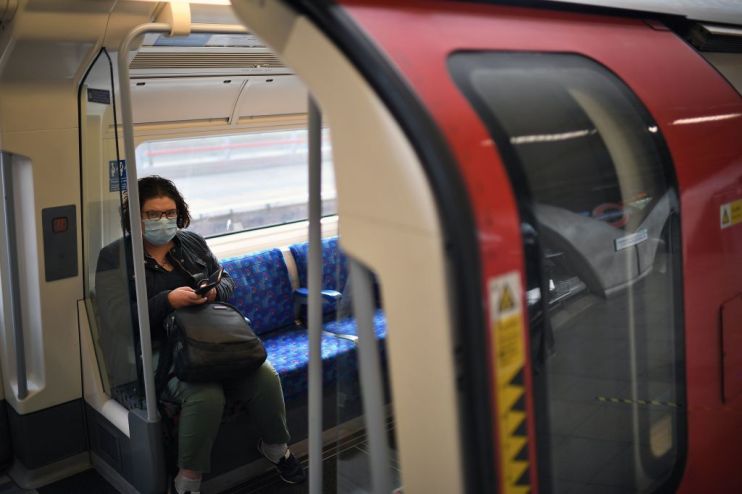
The UK economy shrank by a record 5.8 per cent in March, thanks almost entirely to just over a week of coronavirus lockdown that began on the 23rd.
In the first quarter as a whole GDP contracted by two per cent, the Office for National Statistics (ONS) said today. This was its worst performance since the financial crisis.
However, economists have said much worse is yet to come. April’s GDP reading will be truly dire, as the economy was in lockdown for the entire month.
Analysts also pointed out that some sectors were much more badly hit by the slowdown than others. Travel, accommodation and other similar service industries were battered during the March slump.
The future path of the economy now depends largely on the government’s decisions about the lockdown itself and its support packages, analysts said.
The worst is yet to come
Although the 5.8 per cent month-on-month drop in March was dire, economists have said that it does not tell the whole story about the dismal state of the UK economy.
“The economic damage from roughly only a week of lockdown is striking,” said Melanie Baker, senior economist at Royal London Asset Management. But she added: “Activity growth in April will be much worse.”
Economic activity that cannot be done from home all but stopped in April. Shops and restaurants closed, building sites halted work, and millions were “furloughed” or lost their jobs.
Chancellor Rishi Sunak was frank in his admission today that it “is now very likely that the UK is facing a significant recession”.
Ruth Gregory, senior UK economist at Capital Economics, said GDP could fall by 20 per cent in April alone month on month. She said UK GDP is likely to fall by 25 per cent “peak to trough”.
The Bank of England is even more pessimistic. It has pencilled in a 30 per cent contraction of the economy in the first half of the year.
The fall in GDP was uneven
Although all but one of the UK’s economic sectors suffered in March, not all were hit equally badly.
Gregory said: “Only the government sector managed a rise in output in March – and a paltry 0.1 per cent month on month at that.”
She pointed out that service sectors that rely on face-to-face interaction and travel bore the brunt of the pain. “Travel agencies registered a whopping 50.1 per cent month-on-month decline and air transport dropped by 44 per cent month on month.”
She added that food and accommodation posted a 31.1 per cent month-on-month fall. “Within that, accommodation was down by a huge 45.7 per cent.”
Yael Selfin, chief UK economist at KPMG, said that the outlook for sectors was equally patchy.
“We should expect sectors’ performance to alter significantly for the rest of this year,” she said, “with those that cannot function during the lockdown or are heavily affected by social distancing measures afterwards are most at risk.”
“These include the hospitality and travel industries, which could shrink by between 40 per cent and 50 per cent this year according to our analysis.”
Government support will be key
The government on Sunday unveiled its “roadmap” out of the coronavirus lockdown. Those who cannot work from home have been told to enquire about returning to work. But non-essential shops will not be open for another month at least.
Jing Teow, senior economist at PwC, said that even these tentative steps should mean that April represents the peak of the economic damage.
“The government’s announcement that workers in the manufacturing and construction sector should return to work this week where safe, as well as opening the housing market, could mitigate some of the disruption to business activity in the current quarter,” she said.
Yet she said a second wave of infections could derail any recovery. This could “necessitate the reimposition of these measures later on in the year”.
Chancellor Rishi Sunak yesterday extended the job retention scheme, which is paying millions of workers’ wages, until October.
Economists say that how and when such schemes are withdrawn will be crucial to the UK’s economic recovery.
Rain Newton-Smith, CBI chief economist, said: “Ultimately, keeping health at the heart of a recovery plan will be key to sustaining an economic revival.”
How fast can the economy recover?
James Smith, ING’s developed markets economist, said the drastic nature of the economic collapse means a swift recovery is unlikely.
“The period between April and June will see a much steeper decline,” he said. “It’s now very hard to imagine a rapid ‘V-shape’ recovery, and we don’t expect a return to pre-virus levels of activity until 2022 at the earliest.”
Baker of Royal London Asset Management said she is also doubtful about a quick rebound, largely because of the psychological effects of the coronavirus pandemic.
“Until businesses and households are confident that the virus poses little danger to lives and livelihoods, the recovery is likely to lag and activity levels will struggle to return to pre-crisis norms,” she said.