Skip to content
Wednesday 12 August 2026London --:--Frankfurt --:--Zurich --:--
NewslettersSearchEN · DE
MorningWire

European business, markets and politics

FTSE 100
10,833.15
-0.10%
DAX
26,331.07
-0.23%
CAC 40
8,674.94
-0.46%
STOXX 50
6,533.99
-0.26%
  • Europe
  • Markets
  • Business
  • Economy
  • Technology
  • Politics
  • Opinion
More
GermanyFranceBankingAIEnergyFintechPropertyCapital Markets
  • Germany
  • France
  • Europe
  • Markets
  • Business
  • Economy
  • Technology
  • Politics
  • Opinion
  • DE
Tuesday 09 December 2025 4:40 pm

UK property tax burden is fourth heaviest in OECD

By: Mauricio Alencar

Politics and Economics Reporter

Add as a preferred source on Google
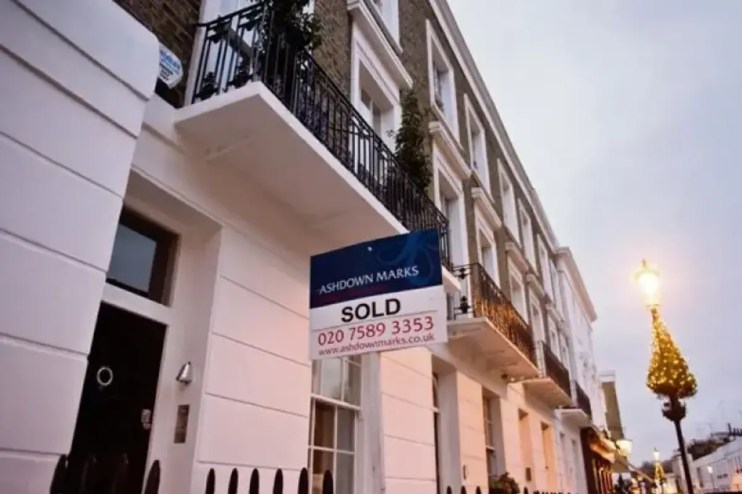
UK Property funds have been under pressure since the pandemic.
Property sellers risk waiting over five months to sell if pricing too high

The UK’s property tax burden is the fourth heaviest in the OECD’s list of 38 countries and it is more than double the average across the list of advanced economies. 

In a report on government revenue levels across most of the world’s largest economies, the OECD said the UK’s taxes on property as a percentage of total intake came behind just Israel, South Korea and the US. 

As a percentage of GDP, it was the highest in the OECD.

Property taxes including business rates and the stamp duty are the scourge of top growth-focused economists, with analysts claiming that property purchases and the cost of building were too expensive in the country. 

The UK’s average property tax burden as a proportion of intake amounted to 10.5 per cent while the OECD average was just 5.1 per cent. 

The report published on Tuesday was based on provisional data for 2024 and did not cover Rachel Reeves’ last Budget where she added an annual surcharge on homes worth more than £2m, raising some £400m by 2030.

It also did not cover wide-ranging reforms to business rates, widely criticised by pubs and restaurants as piling extra costs on the fledgling hospitality sector, nor a sweep of tax hikes on household income. 

Kristian Niemietz, editorial director at the Institute of Economic Affairs, said: “Britain does not just raise more revenue from property taxes than most other OECD countries. Britain also raises more revenue from property taxes alone than Spain, Norway and Switzerland (the only three European countries that still have wealth taxes) raise from property and wealth taxes taken together.”

He added that some left-wingers’ “obsession with wealth taxes” was “absurd” in this context.

The Centre for British Progress’ David Lawrence said took aim at the form of property taxation in the UK, specifically stamp duty, that is “bad for growth”.

Read more

London workers most exposed to AI jobs cull

London skyline with modern skyscrapers and lush green foliage in foreground on a clear day, highlighting urban nature balance

“It gums up the property market by taxing each sale, meaning that many properties don’t end up the market at all.

“This inflates housing cost and means that workers can’t afford to move to better job opportunities, while others cannot afford to move out and downsize. We need to move towards a more efficient form of property taxation, such as an annual proportional tax on property value.””

Brits pay more income tax than the French

Income taxes and other levies on individuals as a share of total revenue were higher for Britons than they were for Germans, Spaniards and French people, the OECD also revealed. 

The income tax burden is only higher in the US, New Zealand, Canada, Iceland and Denmark. As a share of GDP, however, the UK ranked above the US.

By comparison, value added taxes on goods and services was among the lowest across the OECD while levies on businesses also fell below the wider average. 

The overall tax burden as a proportion of the size of the economy was marginally higher in the UK than across the OECD as it ranked in 22nd place in terms of overall government revenue as a share of GDP, according to the Paris-based think tank.

The tax burden in the likes of France, Italy, Germany and Spain remains higher than in the UK. 

The report also uncovered how the overall tax burden across major economies has steadily risen over the course of the century, with the UK’s tax burden rising from 32.7 per cent to a high of 35.2 per cent in 2022. 

The latest figure stood at 34.4 per cent but the actual burden is expected to be much higher, with the Office for Budget Responsibility (OBR) saying after the Budget that national taxes as a share of GDP was set to rise from 34.7 per cent in 2025 to a “historic high” of 38.3 per cent in 2031. 

Read more

OECD sounds alarm on pension triple lock in challenge to Burnham

Andy Burnham discussing AI advancements at a business conference podium with delegates in the background

Share this article

  • Facebook
  • X
  • LinkedIn
  • WhatsApp
  • Email

Similarly tagged content:

Sections

  • News

Categories

  • Business
  • Economics
  • Property

People & Organisations

  • Keir Starmer
  • Labour
  • Labour Party
  • OECD
  • Rachel Reeves
  • Tax
  • tax burden
  • UK economy
  • UK Government

Trending Articles

  • Five-star Mayfair hotel hit with HMRC winding-up petition

  • Nottingham Forest owner Marinakis sues Crystal Palace for defamation

  • Back to basics: Sainsbury’s gradual retreat from the British high street

  • Hargreaves Lansdown orders staff back to office

  • As it happened: Intel, Arm shares slide; Oil climbs higher

More from Morning Wire

  • London workers most exposed to AI jobs cull

    Economics
    London skyline with modern skyscrapers and lush green foliage in foreground on a clear day, highlighting urban nature balance
  • OECD sounds alarm on pension triple lock in challenge to Burnham

    Economics
    Andy Burnham discussing AI advancements at a business conference podium with delegates in the background
  • The pensions triple lock is a travesty. Our politicians must fess up

    Opinion
    Young people face the risk of failing to save enough in their pension
  • Burnham’s high street tax plan carries £880m price tag

    Retail
    High streets emptied out as retail sales fell in May.
  • UK economy grows despite Iran war hit

    Economics
    Detailed view of a breaking news event related to general topics, showcasing key elements of the story in a business context.
  • Financial services activity ‘drops rapidly’ as investors alarmed by Burnham

    Economics
    Canada
  • Industry hits out at rumours as No 10 denies plan to abolish stamp duty and council tax

    Politics
    Two women view property listings in an estate agents window, one takes a photo with her phone. Real estate, stamp duty.
  • We should all get behind this wealth tax

    Opinion
    LONDON, ENGLAND - JUNE 01: A general view of a house along Kensington Palace Gardens, which has been named as Britain's most expensive street on June 1, 2011 in London, England. Many of the mansions are occupied by billionaire businessmen, embassies and ambassadorial residences. (Photo by Oli Scarff/Getty Images)
MorningWire

Independent European business, markets and political news for decision-makers.

Morning Briefing

Europe

  • Germany
  • France
  • Europe
  • UK & Ireland

Business

  • Markets
  • Banking
  • Technology
  • Energy
  • Property
  • Fintech

Editorial

  • Opinion
  • Editorial Policy
  • Corrections
  • Contact

Company

  • About Morning Wire
  • Privacy Policy
  • Terms of Use
  • Cookie Policy
© 2026 Morning Wire Ltd · Published by Morning Wire Media, Bahnhofstrasse 65, 8001 Zürich, Switzerland
Privacy · Terms · Cookies · Facebook