Skip to content
Tuesday 11 August 2026London --:--Frankfurt --:--Zurich --:--
NewslettersSearchEN · DE
MorningWire

European business, markets and politics

FTSE 100
10,844.19
-0.17%
DAX
26,391.42
+0.26%
CAC 40
8,714.94
-0.13%
STOXX 50
6,551.22
+0.24%
  • Europe
  • Markets
  • Business
  • Economy
  • Technology
  • Politics
  • Opinion
More
GermanyFranceBankingAIEnergyFintechPropertyCapital Markets
  • Germany
  • France
  • Europe
  • Markets
  • Business
  • Economy
  • Technology
  • Politics
  • Opinion
  • DE
Wednesday 04 March 2015 4:52 am

Cold snaps cost the economy £2.5bn, says Cebr research on UK weather’s impact

By: Lynsey Barber

Add as a preferred source on Google

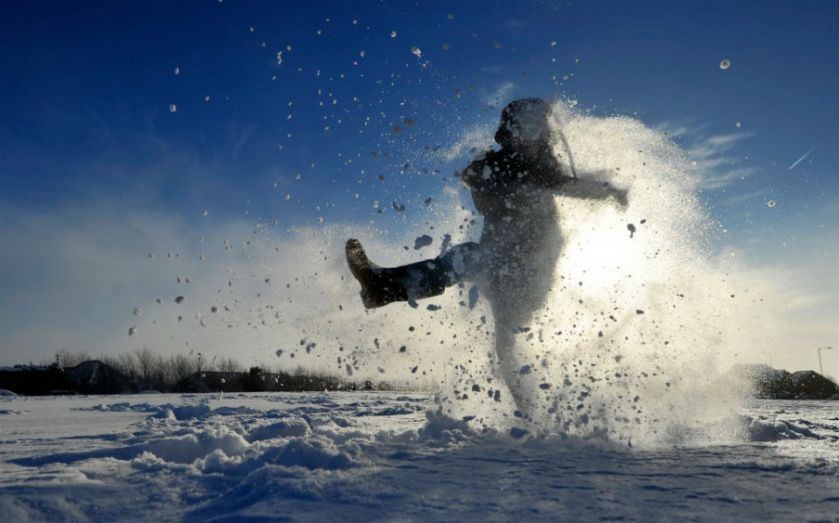
Freezing temperatures are not just bad for your bones, but cost the UK billions of pounds in lost productivity and output having the most severe impact on the economy than any other type of weather.

Just a single degree drop in the minimum average temperature costs the UK economy £2.5bn, and has a worse effect than even snow, flooding or heat waves.

Periods of extreme cold weather have lowered quarterly GDP growth by 0.6 percentage points since 2005, according to research by the Centre for Economics and Business Research (Cebr) which looked at economic growth and weather over the last decade.

Cold weather causes GDP to take a hit from lower output across more industries than other adverse weather conditions, as well as from lost productivity through poor conditions affecting transport and the number of people making it into work.

A single degree rise in the minimum average temperature no only makes people feel a bit cosier, it nets the economy an extra £66m, as does each day of extra sunshine to the tune of £12m.

For each day of additional frost, the economy loses £103m, while, conversely, low levels of frost can add £51m to the economy.

Each additional day of 10mm of rainfall reduces quarterly GDP by £86m, according to the Cebr research commissioned by cloud company 8×8 Solutions, but 10mm less rainfall than average benefits the economy by £22m.

Every cold cloud has a silver lining, however.

IT and communications suffered the least from the effects of cold weather and, in fact, experienced positive growth during poor weather, the only sector to benefit from the conditions. This is largely due to the high use of cloud computing in the industry which allows employees to continue working at home, according to the Cebr.

Nearly two-thirds of IT and communications businesses use some form of cloud technology, compared to between 15 and 30 per cent of other businesses.

Professional services are also mitigating the effects of a cold snap through remote working, while smaller businesses are more at risk from poor weather and hit harder than larger companies due to their lack of connectivity.

“Many small offices are unprepared for such events as they often lack remote access to their work due to security concerns and a lack of infrastructure.” said the Cebr’s head of UK macroeconomics Scott Corfe.

“This is compounded in many cases by inadequate internet connections or computing power at staff homes. In addition SMEs tend to suffer more than their larger counterparts who can spread the setup and maintenance costs of remote working infrastructure across many more staff.”

Share this article

  • Facebook
  • X
  • LinkedIn
  • WhatsApp
  • Email

Similarly tagged content:

Sections

  • Markets & Economics
  • News

Categories

  • Business
  • Economics

Trending Articles

  • Five-star Mayfair hotel hit with HMRC winding-up petition

  • Nottingham Forest owner Marinakis sues Crystal Palace for defamation

  • Back to basics: Sainsbury’s gradual retreat from the British high street

  • Hargreaves Lansdown orders staff back to office

  • As it happened: Intel, Arm shares slide; Oil climbs higher

More from Morning Wire

  • UK economy tipped to stall as Iran war chokes growth

    Economics
    Canada
  • UK economy to ‘reverse gains’ as construction drags growth

    Economics
    Retail sales slowed in September
  • UK economy grows despite Iran war hit

    Economics
    Detailed view of a breaking news event related to general topics, showcasing key elements of the story in a business context.
  • Singapore on Thames or the Sick Man of Europe?: The Economics of Brexit Ten Years from the Referendum 

    Opinion
    UK-EU Brexit negotiations meeting with officials discussing trade agreements and policy impacts in a formal conference room
  • Vance says ‘broken’ Britain must rebuild economy, not just change PM

    Politics
    Andy Burnham returns to Parliament
  • Pension pressure to help swell UK debt to three times size of economy

    Economics
    Two older women exercising at an outdoor gym in sunshine
  • Manufacturers overcome gloomy economy as output surge continues

    Industrials
    Manufacturing sector faces mounting tribunal pressures amid economic uncertainty
  • Businesses slam brakes on hiring over Burnham uncertainty

    Economics
    Andy Burnham speaking passionately at a public event, wearing a suit, highlighting his role as a prominent political figure.
MorningWire

Independent European business, markets and political news for decision-makers.

Morning Briefing

Europe

  • Germany
  • France
  • Europe
  • UK & Ireland

Business

  • Markets
  • Banking
  • Technology
  • Energy
  • Property
  • Fintech

Editorial

  • Opinion
  • Editorial Policy
  • Corrections
  • Contact

Company

  • About Morning Wire
  • Privacy Policy
  • Terms of Use
  • Cookie Policy
© 2026 Morning Wire Ltd · Published by Morning Wire Media, Bahnhofstrasse 65, 8001 Zürich, Switzerland
Privacy · Terms · Cookies · Facebook