UK workers still gripped by inflation despite better than expected near six per cent pay growth

UK workers are still being squeezed by a historic inflation crunch despite wage increases smashing expectations, official figures out today reveal.
The average pay increase including bonuses hit 5.9 per cent over the three months to February, up from the previous period and above the City’s expectations of a 5.1 per cent increase, according to the Office for National Statistics (ONS).
Regular pay growth, which strips out one pay off payments, jumped to 6.6 per cent over the same period from 6.5 per cent, also topping forecasts.
However, despite the overshoots, inflation, which has raced to a 40 year high, is still eroding workers’ living standards.
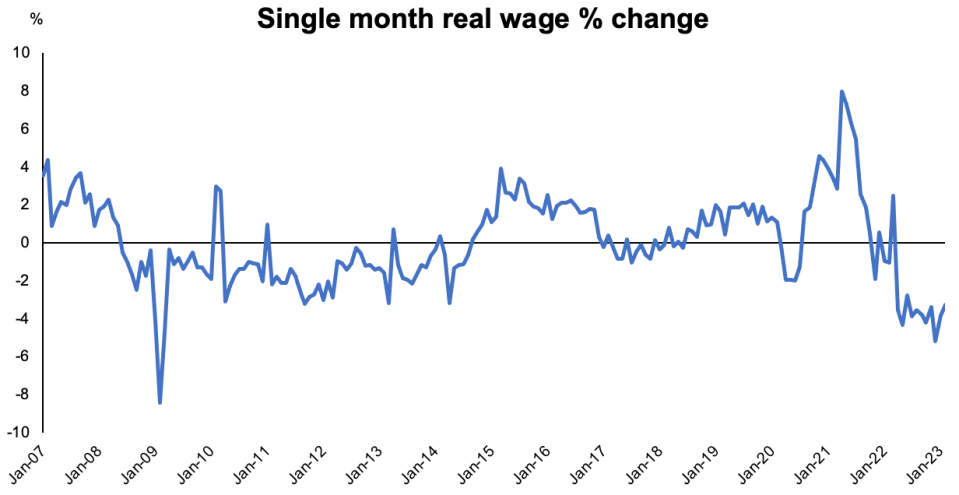
The ONS said real wages – which measures cash pay growth minus the rate of price increases – fell 4.1 per cent over the three months to February when accounting for the consumer price index, Britain’s official inflation measure.
Today’s numbers illustrate how sharply the inflation surge is knocking Brits’ spending power. Pay growth has for several months run at historically high levels, but price increases have eroded any gains workers have received over that period.
Jeremy Hunt, the Chancellor, said today that “rising prices continue to eat into pay cheques which is why halving inflation this year is one of our top economic priorities.”
He and Prime Minister Rishi Sunak have promised to slash the rate of price increases this year, alongside several other pledges. The Bank of England had forecast inflation would halve last November.
Stronger than expected pay growth has raised the risk of Bank Governor Andrew Bailey and co backing a twelfth straight interest rate rise at their next meeting on 11 May.
The central bank’s economists are worried future inflation could stay above their two per cent target due to bumper pay growth that isn’t offset by productivity gains strengthening incentives for businesses to raise prices.
Next month’s decision could hinge on whether tomorrow’s inflation numbers top expectations.
“Our hunch is that the Bank will raise interest rates from 4.25 per cent to 4.50 per cent in May, although a lot will depend on March’s CPI inflation data,” Ashley Webb, UK economist at consultancy Capital Economics, said.
Upward revisions to previous wage data by the ONS indicates inflationary pressures driven by wage growth could be a bit tougher than the Bank previously thought.
That upgrade has “raised the chances of the MPC hiking Bank Rate again next month; a further 25 basis points now looks like a toss-up,” Samuel Tombs, chief UK economist at consultancy Pantheon Macroeconomics, said.
Mounting expectations that the Bank will hike again next month prompted investors to pour into the pound today, sending it up around 0.5 per cent against the US dollar. The yield on the 10-year gilt, which moves inversely to its price, bumped higher.
Analysts said historically high pay growth has been driven by workers demanding pay increases from their employers to shield their living standards.
Analysts said historically high pay growth has been driven by workers demanding pay increases from their employers to shield their living standards.
“Pay growth picked up again to rates not previously seen outside of the pandemic. This reflects general inflation spilling into pay demands as employees seek to mitigate the cost of living squeeze,” Yael Selfin, chief economist at KPMG UK, said.
Unemployment over the three months to February ticked up 0.1 percentage points to 3.8 per cent, still historically low levels, the ONS said.
Economic inactivity – which measures the proportion of people in Britain not in a job or looking for one – slumped 0.4 percentage points to 21.1 per cent, although the number of people who have left the workforce due to long-term sickness climbed to a record high.
Vacancies fell to around 1.11m from 1.12m in response to slow down in the demand in the UK economy, the ONS added.
Private sector pay growth of 6.9 per cent topped the public sector’s 5.3 per cent increase.