
What is unconscious bias and how can it sabotage diversity?

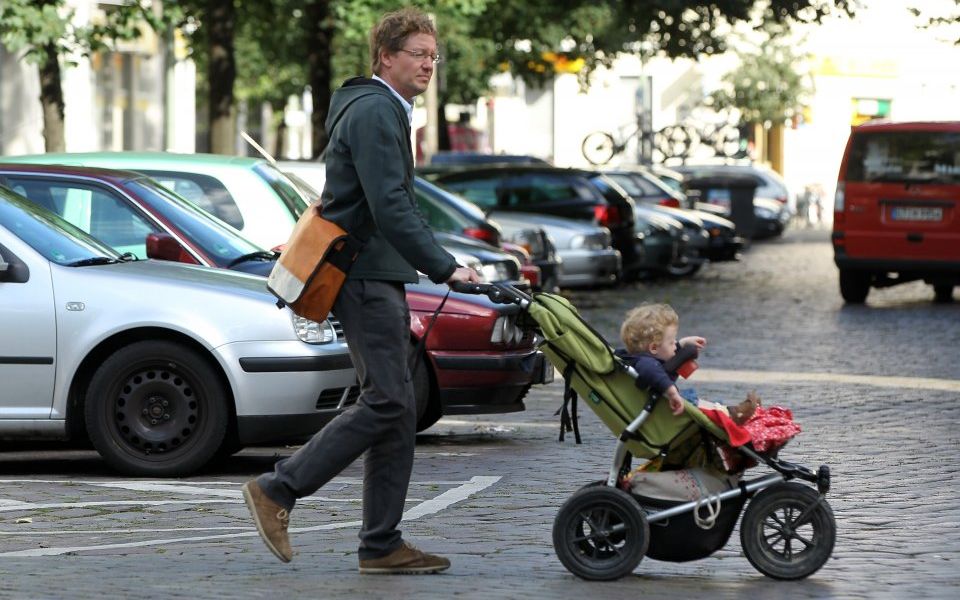
About a year ago, Sam became a proud parent. Sam was on parental leave for 9 months and is now back to work. Whilst reading those two sentences, what gender did you associate with Sam? Due to the fact that more women take parental leave compared to men, many of us spontaneously thought of Sam as a woman.
Let’s try again. You are the leader of a team and in charge of dividing assignments. Who will receive the analytical assignment? Juliet or Peter? Who will receive the communication assignment? In this situation, too, many of us unconsciously assume that men have better analytical skills and women better communication skills. Is there something wrong with this? Not necessarily. Although many unconscious assumptions can be helpful, they can also easily lead to ineffective decisions and discrimination, making ourselves and others the victim of our unconscious biases.
What is unconscious bias?
Every second, we receive about 11 million pieces of information. Only 50 are captured by our brain with just 7 of those processed by our working memory. How does the brain manage this? To process this mass of information, our brain filters and orders incoming information extremely quickly by using mental shortcuts. Although these shortcuts can be useful to act quickly when exposed to information overload, they can also unconsciously lead to bad or ineffective decisions. In the latter case, we fall prey to unconscious bias.
Unconscious biases are assumptions (e.g., ‘men are analytically more competent than women’), preferences (e.g., ‘I like Tom because he supports the same football team’) or habitual thinking patterns (e.g., ‘This has never worked out, it won’t work out this time’) that often surface as stereotypes and unconsciously can lead to incorrect decisions. Do these unconscious assumptions, preferences or thinking patterns always lead to false or ineffective decisions? No. If you are looking for a lunch partner, Tom might be the perfect choice. However, when giving out a promotion, our preference for Tom should not influence our decision.
Buy tickets to the 2017 CFA Institute European Investment Conferencein Berlin, where Karolien Notebaert will speak in greater detail about ways to overcome unconscious bias.
How does unconscious bias sabotage diversity at work?
People who we perceive as similar to us (e.g., Tom because he supports the same football team) are quickly and unconsciously connected with positive emotions. When these positive emotions unjustly influence our decisions (e.g., a performance evaluation or promotion), this is called affinity bias.
When performing interviews with a series of candidates, we quickly experience a positive or negative gut feeling with most of them. Although this gut feeling might actually be based on objective facts, very often this gut feeling is the result of unconscious processes irrelevant to the job interview.
For example, candidate X has grown up in the same village as you, which makes you feel you’re on the same wavelength as this person. Candidate Y has the same name as your child, which unconsciously makes you like this person a little bit more. It is alright for these gut feelings to pop up, but unhelpful to let them influence decisions in the hiring process.
In combination with confirmation bias, the affinity bias can do major damage to the efforts of an organisation to create a diverse working environment and a culture of inclusiveness. If I hire Tom because he is my mini-me (affinity bias), I will unconsciously try to confirm my hypothesis that Tom really is the best man for the job (confirmation bias). Behaviour that fits our hypothesis (Tom brings great contributions to a project) will be processed faster, whereas behaviour that does not fit our hypothesis (Tom makes a mistake) will be ignored or re-interpreted (‘I had similar difficulties starting the job, let’s support him a little more’). What happens? Tom gets the better assignments, better support and actually becomes the best man for the job. Tom gets promoted. As a result, this process leads to a management team that consists entirely of mini-mes with very little diversity.
How can we avoid unconscious bias?
Although a strategy needs to be worked out for individual cases, some general rules apply in all situations where unconscious bias can lead to discrimination or ineffective decisions. First, accept that you are also most likely driven by unconscious bias! You can check your biases with the Project Implicit bias tests. Second, it is important to consciously structure the decision process in the following ways:
1. What is the aim of your decision?
Set up well-defined criteria for making your decision.
2. What information do you have available to make this decision?
Make a distinction between externally available information (e.g., a CV) and information that is only internally available to you (your personal impressions, your gut feeling) as the latter can easily lead to unconscious bias.
3. Consciously decide which pieces of information are important for reaching a decision and which are irrelevant.
As an extra check, explain why you made the decision to a neutral person who should be able to logically come to the same conclusion based on the arguments you provide.
Karolien Notebaert is the founder and CEO of One Step Ahead—Notebaert Consulting, a company that translates the most recent findings of neuroscience into practise. At the 2017 CFA Institute European Investment Conference in Berlin, she will address ways to overcome unconscious bias in greater detail.