Skip to content
Sunday 23 August 2026London --:--Frankfurt --:--Zurich --:--
NewslettersSearchEN · DE · FR
MorningWire

European business, markets and politics

FTSE 100
10,816.56
+0.64%
DAX
26,136.56
+0.59%
CAC 40
8,484.43
+0.37%
STOXX 50
6,462.22
+0.63%
  • Europe
  • Markets
  • Business
  • Economy
  • Regulation
  • Politics
  • Opinion
More
GermanyFranceEU InstitutionsCompetitionPublic AffairsBankingTechnologyEnergy
  • Germany
  • France
  • Europe
  • Markets
  • Business
  • Economy
  • Regulation
  • Politics
  • Opinion
  • DE
Thursday 13 April 2023 3:57 pm  |  Updated:  Thursday 13 April 2023 4:10 pm

Unemployment must be higher to keep a lid on inflation, Bank of England’s Huw Pill claims

A greater proportion of the UK population than before the recent series of economic shocks may need to be unemployed in order to keep a lid on inflation, the Bank of England’s chief economist has claimed today.

Huw Pill, who succeeded Andy Haldane as the Bank’s top wonk, was speaking at an event hosted by Market New. Pill said the natural rate of unemployment has risen as a result of the Covid-19 crisis and Russia’s invasion of Ukraine choking the economy.

Pill, a former Goldman Sachs banker, said the Monetary Policy Committee (MPC), the group of experts who set interest rates in the UK, need to see an increase in joblessness to “reassure” them that inflation is headed back towards their two per cent target.

He agreed that the so-called “natural rate of unemployment”, a phenomenon in economics that tries to pinpoint the level of joblessness needed to ensure inflation doesn’t spiral out of control, has climbed due to a reduction in the UK’s economic potential since the pandemic.

Central banks tend to try to lift unemployment when prices are rising rapidly to reduce demand – which should, in theory, put downward pressure on inflation.
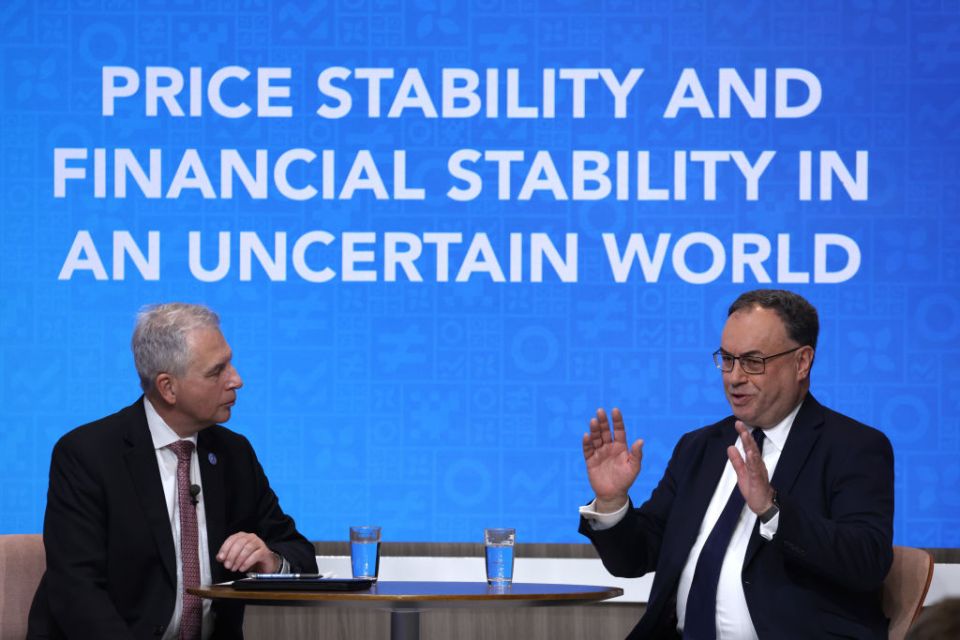
IMF And World Bank Group Hold Spring Meetings In Washington, D.C.
Governor Andrew Bailey has backed the last eleven rate increases alongside Pill (Photo by Alex Wong/Getty Images)

Banks do this by raising interest rates, which raises businesses’ costs and narrows their capacity to take on additional workers. The UK’s unemployment rate has been hovering around multi-decade lows for over a year.

Britain has suffered a severe terms-of-trade shock, meaning it has seen the amount of money it pays for its imports soar far above the income it receives from selling goods and services around the world.

That jump has been primarily been caused by Russia’s invasion of Ukraine which jolted international energy prices up sharply.

Read more

How patient can the Bank of England be?

Historic Royal Exchange building in London with modern skyscrapers behind, clear blue sky.

Higher import prices have also played their part in pushing UK inflation to its highest level in 40 years and far above the Bank’s target, rapidly eroding household and business finances. 

While projected to fall quickly this year, inflation has been in the double digits since September and is currently running at 10.4 per cent.

Pill said the Bank has hiked interest rates 11 times in a row – at the fastest pace since the 1980s – up to a post-financial crisis high of 4.25 per cent to prevent high inflation embedding in the UK for the long term.

At current rate levels, “we do think we are weighing against inflation,” Pill said.

He explained that firms and families are trying to “resist inflation” by bidding up wages and margins which, if successful, would protect their balance sheets.

Albeit a rational response to soaring living costs, this dynamic risks creating an inflationary cycle in which policymakers would end up having to impose a tough recession to hose down prices.

Markets reckon the Bank will nudge borrowing 25 basis points higher at its next meeting on 11 May. New numbers out next Wednesday are expected to show inflation dropped below 10 per cent in March.

Read more

Public sector makes wage growth higher than expected

London has defied national trends as job postings in the capital rose.

Share this article

  • Facebook
  • X
  • LinkedIn
  • WhatsApp
  • Email

Similarly tagged content:

Sections

  • Markets & Economics
  • News

Categories

  • Economics

Related Topics

  • Bank of England
  • UK inflation
  • UK interest rates

Trending Articles

  • Ratcliffe’s Ineos saves Runcorn plant

  • Can debt-ridden Morrisons become a Big Four supermarket again?

  • Mike Ashley’s Frasers offers to pay personal shoppers in Harvey Nichols takeover

  • Amazon says it buys books in bulk to ‘improve products’

  • Burnham predicted to raise taxes for ‘fundamental’ cost of living support

More from Morning Wire

  • How patient can the Bank of England be?

    AD
    Historic Royal Exchange building in London with modern skyscrapers behind, clear blue sky.
  • Public sector makes wage growth higher than expected

    Economics
    London has defied national trends as job postings in the capital rose.
  • Soaring energy bills set to fuel inflation spike

    Economics
    Smartphone displaying an energy bill notification with British coins and a banknote nearby.
  • El Nino heatwaves to ‘fuel inflation next year’

    Economics
    Firefighter in helmet and uniform watching a blazing forest fire at night, red glow in the sky
  • UK economy’s rebound fails to stem two years of mass job losses 

    Economics
    LONDON, UNITED KINGDOM - JANUARY 31: The Shard is seen on the horizon as commuters cross London Bridge during the morning rush hour on January 31, 2023 in London, United Kingdom. The IMF reports that the UK economy will contract by 0.6% in 2023, as opposed to the previous prediction it might grow, and will perform worse than many other advanced economies, including Russia.The cost of living continues to hit households with grocery inflation for the first four weeks of 2023 rising to 16.7% which would add a further £788 per year to family food bills. (Photo by Leon Neal/Getty Images)
  • Supermarkets ‘actively shielding’ shoppers as food inflation falls again

    Retail
    Shopper in a supermarket produce aisle browsing various packaged vegetables and fruits.
  • Brits think supermarkets are profiteering – despite slowing food inflation

    Retail
    Shopper with red backpack and blue basket walking through a supermarket aisle filled with groceries
  • Inflation leaps to 2.9 per cent in blow to Burnham 

    Economics
    Burnham cityscape showcasing modern architecture, bustling streets, and vibrant community life in a thriving urban setting
MorningWire

Independent European business, markets and political news for decision-makers.

Morning Briefing

Europe

  • Germany
  • France
  • EU Institutions
  • Europe

Business

  • Markets
  • Business
  • Economy
  • Regulation
  • Competition
  • Public Affairs

Editorial

  • Opinion
  • Editorial Policy
  • Corrections
  • Contact

Company

  • About Morning Wire
  • Privacy Policy
  • Terms of Use
  • Cookie Policy
© 2026 Morning Wire Ltd · Published by Morning Wire Media, Bahnhofstrasse 65, 8001 Zürich, Switzerland
Privacy · Terms · Cookies · Facebook