Skip to content
Tuesday 1 September 2026London --:--Frankfurt --:--Zurich --:--
NewslettersSearchEN · DE · FR
MorningWire

European business, markets and politics

FTSE 100
10,824.26
+0.29%
DAX
26,258.11
0.00%
CAC 40
8,334.50
0.00%
STOXX 50
6,420.16
0.00%
  • Europe
  • Markets
  • Business
  • Economy
  • Regulation
  • Politics
  • Opinion
More
GermanyFranceEU InstitutionsCompetitionPublic AffairsBankingTechnologyEnergy
  • Germany
  • France
  • Europe
  • Markets
  • Business
  • Economy
  • Regulation
  • Politics
  • Opinion
  • DE
Wednesday 17 February 2016 10:50 am

US recession risks are rising, so where does that leave the Federal Reserve?

By: James Nickerson

Add as a preferred source on Google

Since the Federal Reserve in the United States raised interest rates in December (albeit by a very modest 0.25 per cent), concerns have been mounting that the momentum of the US economy is fading, and that the US is in fact facing recession in 2016.

What is clear from recent data releases is that the industrial side of the economy, which includes energy-related activity, has been weak. However, consumption, including the housing sector and retail sales, has proved more robust.

Overall, the picture is certainly more uncertain than back in December, particularly as it concerns other major economies and regions, including China and Europe. So, the question must be asked: where does that leave the Federal Reserve (“the Fed”) as it considers how to adjust policy going forward?

Read more: Yellen – "We're taking a look" at negative interest rates

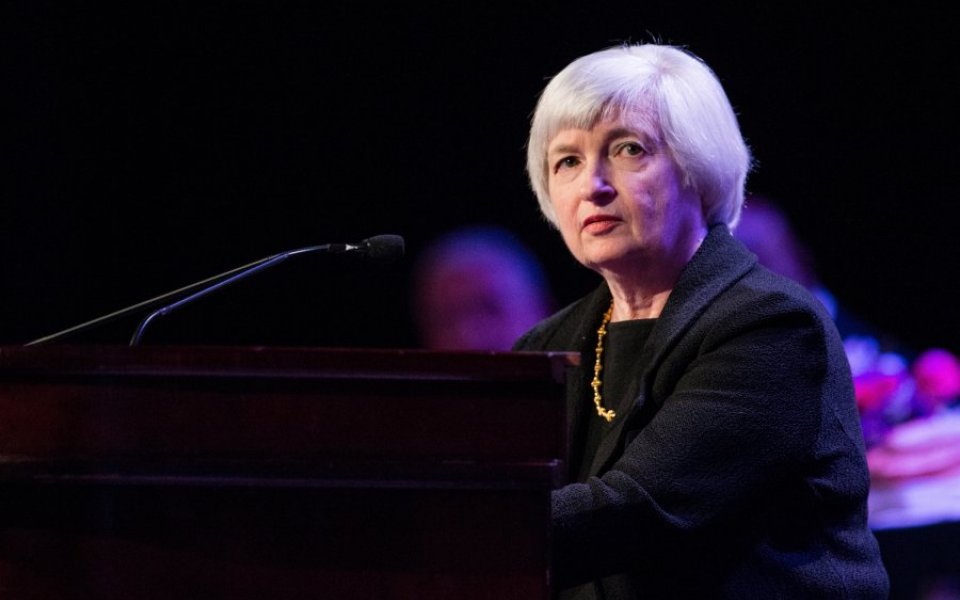
In her recent semi-annual testimony to congress, the Fed’s chair, Janet Yellen, acknowledged external risks had increased. However, she remained optimistic that US economic growth could be sustained by ongoing labour market improvements and the recovery in the housing sector, both of which would support domestic demand.

Despite the market pricing in no increase until mid-2017, she did not rule out an interest rate increase in March. Yellen did express more concern about the inflation outlook, however, which suggests that the Fed will be careful not to raise rates too aggressively.

There is much talk of a “policy mistake” by the Fed, that December’s increase was premature, and that another increase would compound the mistake. Our view is that a modest hike was justified at the time, justified by the improving labour market and stable core inflation.

Read more: Fed members concerned about slow inflation

Looking forward, the argument against further hikes at this point comes more from financial market volatility and the potential for further dollar strength, rather than because we see the US economy being quite as fragile as suggested.

For choice we think that the Fed would like to move rates higher, but is sensitive to the market effect, so at this point a March hike seems unlikely unless data releases in the coming weeks suggest that recent weakness is transitory.

The Fed is walking a tightrope between being seen to show confidence in the US economy and at the same time navigating the challenging global headwinds. The US economy is not yet in the doldrums. However, in recent years markets have relied too heavily on central banks and it seems time for governments to pull the fiscal lever and add support – not just in the US but elsewhere.

Share this article

  • Facebook
  • X
  • LinkedIn
  • WhatsApp
  • Email

Similarly tagged content:

Sections

  • Markets & Economics
  • News

Categories

  • Business
  • Economics

Trending Articles

  • Jaguar reveals the Type 01’s screen-free interior

  • Treasury ‘tells Healey’ to consider tax on banks and oil

  • Pensioners to hand over bank statements in government benefits crackdown

  • City firms mandate phone and face-to-face comms bootcamps for Gen Z lawyers

  • Jamie Carragher: HMRC petitions for Sky Sports star to be declared bankrupt

More from Morning Wire

  • US bond market jitters spark UK economy recession warning

    Economics
    Donald Trump delivering a speech at a podium during a formal event, emphasizing key points to an attentive audience.
  • UK borrowing costs soar as Iran ceasefire collapses

    Markets
    Rising borrowing costs depicted amid escalating tensions following the Iran war, illustrating economic impact on global ma...
  • Fed chair Kevin Warsh faces Jackson Hole D-Day

    Economics
    Kevin Warsh, former Fed Governor, in a suit and blue tie, attending Jackson Hole meeting.
  • Bank of England may set the stage for interest rate hikes this year

    Economics
    Bank of England recession warning
  • Interest rate cut is ‘off the table’, says Bank of England governor

    Economics
    Governor Andrew Bailey has launched a defence of the Federal Reserve's independence.
  • Doctors union tops up £1m reserve pot for strikes

    Healthcare
    GettyImages 2246649047: Business professionals discussing strategy at a conference table, highlighting teamwork and collab...
  • Natwest wins approval to beef up US presence

    Banking
    NatWest bank logo prominently displayed on a modern glass building, reflecting the financial institutions corporate identity.
  • Oil price climbs above $90 as Iran says US diplomacy ‘isn’t possible’

    Energy
    North Sea oil terminal with storage tanks and docking facilities under a clear sky, highlighting energy infrastructure.
MorningWire

Independent European business, markets and political news for decision-makers.

Morning Briefing

Europe

  • Germany
  • France
  • EU Institutions
  • Europe

Business

  • Markets
  • Business
  • Economy
  • Regulation
  • Competition
  • Public Affairs

Editorial

  • Opinion
  • Editorial Policy
  • Corrections
  • Contact

Company

  • About Morning Wire
  • Privacy Policy
  • Terms of Use
  • Cookie Policy
© 2026 Morning Wire Ltd · Published by Morning Wire Media, Bahnhofstrasse 65, 8001 Zürich, Switzerland
Privacy · Terms · Cookies · Facebook