We are on the precipice of a price war, and the losers will be workers

James Reed argues that nobody stands to gain from a price war in the long run – least of all Britain’s workers.
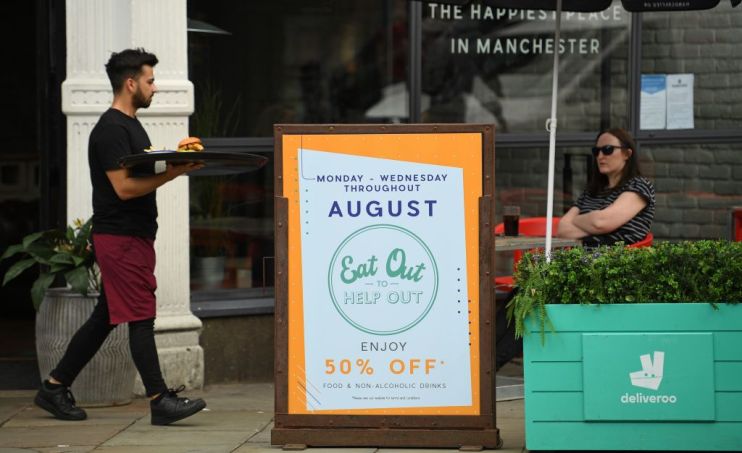
Over 100m meals were claimed on the government’s Eat Out to Help Out scheme last month, but the end of the measure on 31 August has left businesses in the hospitality sector split into two camps about the best way forward.
One side has maintained its previous prices, hoping customers will return regardless of the cost. The other – which includes industry heavyweights Toby Carvery and JD Wetherspoon – has enacted vast deals on a similar level to Eat Out to Help Out. This has fuelled concerns about an imminent price war in the sector.
However, the hospitality sector is not the only frontier in the Covid-19 price war. Morrisons has moved to cut prices by an average of 23 per cent on 400 products, acknowledging that “with the UK now in recession” family budgets are “under pressure”.
The supermarket was quick to note that the new prices were “here to stay”, and the move mirrored similar price deductions by competitors Sainsbury’s, Asda, and Tesco’s.
Although these price reductions in supermarkets and restaurants might attract price-conscious consumers, the long-term impact of a price war is potentially smaller revenue margins and wage deflation for workers.
In a price war, each side keeps cutting their prices in a race to the bottom. Profit margins quickly disappear as products continue to be sold at ultimately unsustainable prices for an extended period.
John Steinbeck wrote about this phenomenon in the Dust Bowl of the US during the Great Depression, in his haunting book The Grapes of Wrath. The moral of this story: no one ends up a winner during a price war if the economy goes into a death spiral of lower prices, lower wages, lower prices, lower wages.
Today with many businesses seeking to use discounts to maintain market share and encourage customers onto the high street, few will be in a financial position to increase wages.
In particular, with many retail and hospitality sector businesses already struggling financially, workers’ wages are set to decrease, certainly in real terms, as companies struggle to cover the cost of any extra deals.
The repercussions of a price war on wages should be of grave concern at any time. But during a pandemic, this could be particularly devastating for workers. Especially amid growing concern the UK government might not introduce the next minimum wage rise due in April – from £8.72 to £9.21 per hour.
The Treasury has claimed this delay is a result of the damage caused by Covid-19 and the lockdown but went on to say that the rise may happen “if economic conditions allow”.
Before the pandemic, British workers’ basic pay had started to grow for the first time in more than a decade – up 3.9 per cent in August 2019. But this positive upward trend has now been disrupted.
A toxic combination of a price war and a stagnating minimum wage could heavily impact customer-facing workers within the hospitality and retail sectors and in many other areas and create a ripple effect on other industries and the wider economy.
Many will see their wages fail to keep pace with inflation, and their jobs will be increasingly vulnerable as businesses seek to compensate for price reductions. In time, many people will be forced to look elsewhere for work.
One solution is to encourage an increase in customer footfall by putting more money in the consumers’ pockets, through tax breaks and other benefits. They will then be far more likely to shop and eat at a greater variety of venues.
Businesses too need to be confident that customers will continue to visit and pay fair prices, despite the end of Eat Out to Help Out’ and other government-backed discounts. However, consumers’ willingness to do so remains unclear.
Although the gradual return of office workers and the reopening of schools will stimulate further economic activity – especially in abandoned city centres – supermarket and restaurant chains that engage in a price war to cut out their competition may well live to regret it.
In the end, everyone will be a loser.
James Reed is the chairman of Reed Recruitment.