We shouldn’t be running out of tomatoes because we can’t sort out our supply chains

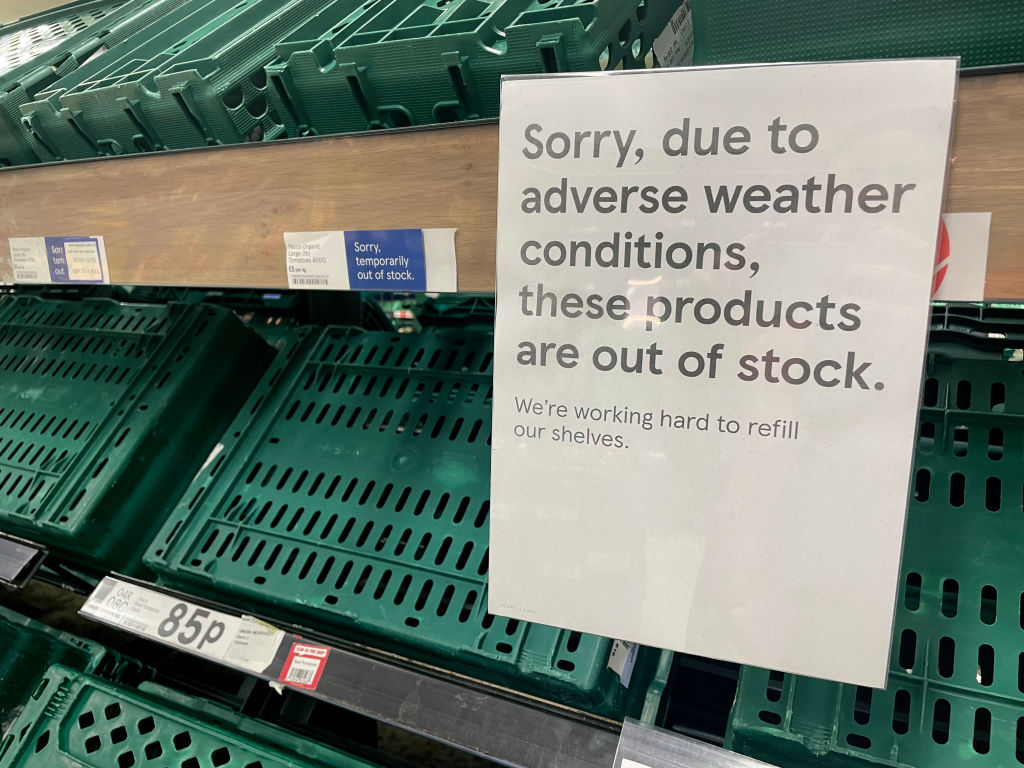
Over the last month, bad weather in Europe and Northern Africa led to certain salad items being in short supply across the UK. Leading supermarkets, including Tesco’s, Morrisons, Aldi and Lidl all limited the number of tomatoes, peppers and lettuce that consumers can buy.
Product shortages aren’t necessarily unusual, but since the pandemic, they have highlighted the lack of flexibility in global supply chains and the subsequent impact on retailers. The chief executive of EV Cargo, a company that carries goods for brands including Sainsbury’s and Asda, told Bloomberg last year that “the world needs to be prepared for more volatile and expensive global supply chains”.
From Boohoo and ASOS, DFS, Curry’s and the collapse of Made.com – retailers of all shapes and sizes have reported supply chain issues that have negatively impacted their businesses.
In January, Boohoo said extended international delivery times were a contributing factor to a slump in sales in the four months to the end of 2022. Last October ASOS was still feeling the impact of supply chain delays happening in 2021 in the form of holding too much stock. DFS cited Covid-related supply chain issues and double-digit cost inflation on raw materials, among other matters, as reasons for a 44.8 per cent drop in profit for 2021-22.
The warning signs for UK retailers are plentiful: it is do or die when it comes to transforming supply chain operations.
Organisations need to prioritise agility and flexibility to ensure resiliency in their supply chain. Amidst the fruit and vegetable shortages here at home, while tomatoes and peppers are in short supply, the demand for turnips has increased. Grocery retailers now have two fulfilment challenges: they need to quickly realign their fulfilment operation to meet this spike in demand and see and manage inventory in real time.
There are two main and interconnected barriers blocking greater automation adoption in the UK, according to think tank Retail Hive: building the business case for automation and integrating new technologies with the existing stack. With many of the UK’s retail supply chains running on out-of-date legacy technology, implementing automation is more a case of overhauling, than simply integrating, which in turn makes it a harder business case to build.
Despite the benefits of robotics and automation as a solution to help retailers being clear, we are lagging behind. The UK currently has the lowest level of automation in the G7, and although adoption is increasing, it’s the only country within the G7 that has a robot density – the number of automated robots per 10,000 employees – below the global average.
In this one area, the government appears to be actively trying to fix things. The recent budget announced £900m worth of investment to be spent on AI research, while also agreeing to reform data policy to make AI use – across industries – easier within the country. There is a clear drive to use the power of AI to drive economic growth. The challenge will be convincing retailers to take the plunge and invest in automation to transform their own operations.
Robotics and automation are the ace up the sleeve of retailers when it comes to solving these challenges. By enabling businesses to reallocate robots quickly and cost-effectively to different parts of the fulfilment centre, organisations can keep inventory up to date in real-time. As global socio-economic events are set to cause further inconsistencies and disruption in product supply, UK retailers must close the automation gap and evolve their supply chain operations, or face further financial uncertainty for years to come.