We’re about to pour billions into childcare, but is preschool really good for kids?
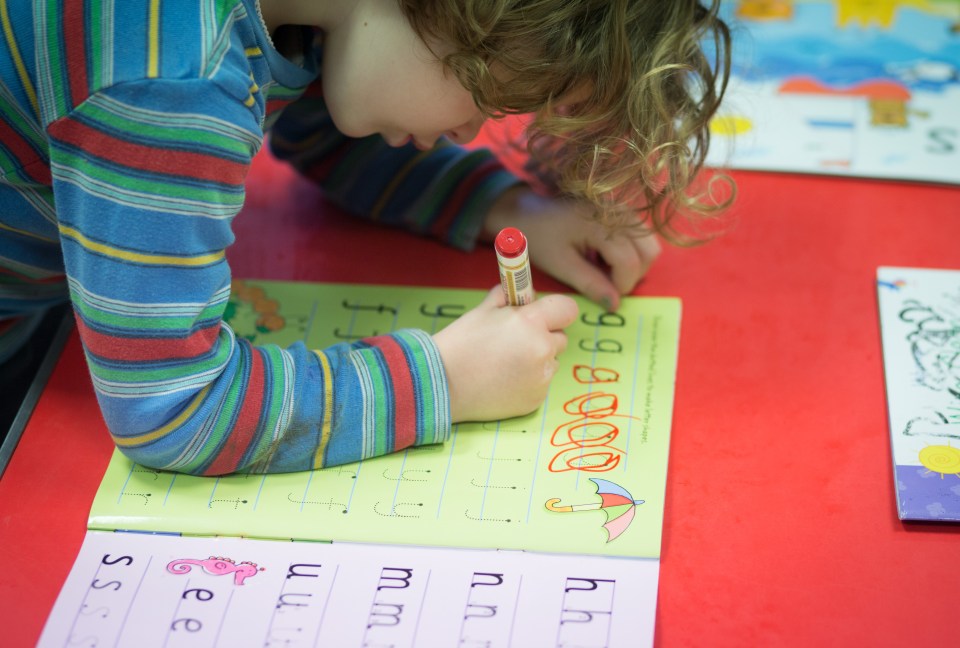
Investment into childcare is a really good thing, but must be done smartly. For instance, is pre-school beneficial? The evidence is mixed, writes Phoebe Arslanagic-Wakefield
Over the space of ten years, between 2010 and 2021, the cost of a part-time nursery place for a child under two has increased by 60 per cent in cash terms, twice as fast as average earnings. For many, these costs have intolerably transformed early years childcare from a necessary service that supports family life to a deciding factor in deeply personal decisions. A 2022 survey from campaign group Pregnant Then Screwed found that 17.4 per cent of women who have had an abortion in the past five years say that childcare costs were the main reason they chose to end a pregnancy.
At the same time, many new mothers are hit by the realisation that it makes more financial sense for them to leave the workforce rather than maintain a career and pay for pre-school care. Last year, of 26,962 parents of young children surveyed, 43 per cent of mothers considered leaving their job because of childcare costs.
Now, a convincing case has been made that an affordable early years childcare system will not only be a boon to parents but to our mutual prosperity, and politicians are listening. Chancellor Jeremy Hunt has expanded and extended free childcare hours for the under-fives and Shadow Education Secretary Bridget Phillipson has pledged to make reforming the childcare system her “first priority in government”.
In the midst of this cross-party consensus, we can imagine a parent raising their hand and asking a serious question: is pre-school care good for my child?
The evidence is mixed. In 2022, a randomised control study – the gold standard in experimental research – followed nearly 3,000 children who entered Tennessee’s state-run pre-Kindergarten programme in 2009 and 2010 all the way into sixth grade, our equivalent of Year 7. Students who attended pre-school had lower academic attainment in sixth grade than those who did not.
The bad news for pre-school doesn’t stop there. Much is made of the intuitive socialisation benefits of pre-school: we can imagine that a two-year-old in nursery, spending lots of time with other children, might get a head start on developing crucial pro-social skills such as sharing. Yet the Tennessee study found worse behavioural outcomes for children who had attended pre-Kindergarten: they were more likely than their peers to incur disciplinary infractions. Other studies have also found that children who attend pre-school display more aggressive behaviour later in school, though the effect appears to quickly fade out.
Homegrown evidence on pres-schools in the UK also casts the benefits of pre-school into dappled light. Department for Education-backed longitudinal research published in 2020 revealed an association between attending formal pre-school childcare and poorer socio-emotional outcomes in Year 1, including in terms of aggression and anxiety.
Yet there are also numerous studies that do show benefits of pre-school attendance for children, on a range of metrics including better verbal ability, better behaviour and even maths scores.
In many cases, the reason for this contradictory evidence is the vast variations in the quality of early years settings.
It is easy to support a commitment to high-quality pre-school care, but unfortunately there is also a lack of clarity as to what exactly characterises high-quality provision and how that quality can be measured. For example in Tennessee, the very state featured in the randomised control study that revealed links between pre-school attendance and worse academic and behavioural outcomes, has actually been lauded for the high quality of its pre-Kindergarten programme.
Our answer to parents is an ambiguous one: evidence for the benefits of pre-school for children is mixed and the debate over what constitutes good quality care is far from settled.
Don’t get me wrong, the investment into early years education from the government is a good thing. And will be a welcome policy for parents up and down the country, when they finally benefit. But we must be clear-eyed about the benefits of pre-school, and find a consensus on what is actually good for our kids.
Otherwise, in ten years time, we may find ourselves counting the cost.