Skip to content
Saturday 12 September 2026London --:--Frankfurt --:--Zurich --:--
NewslettersSearchEN · DE · FR
MorningWire

European business, markets and politics

FTSE 100
10,650.44
+0.39%
DAX
25,568.56
+0.82%
CAC 40
8,179.77
+0.78%
STOXX 50
6,325.13
+0.90%
  • Europe
  • Markets
  • Business
  • Economy
  • Regulation
  • Politics
  • Opinion
More
GermanyFranceEU InstitutionsCompetitionPublic AffairsBankingTechnologyEnergy
  • Germany
  • France
  • Europe
  • Markets
  • Business
  • Economy
  • Regulation
  • Politics
  • Opinion
  • DE
Wednesday 22 June 2022 6:15 am  |  Updated:  Tuesday 21 June 2022 5:30 pm

We’re not reliving the 1970s yet, but today’s decisions will keep us out or drag us back

By: Paul Ormerod

Add as a preferred source on Google
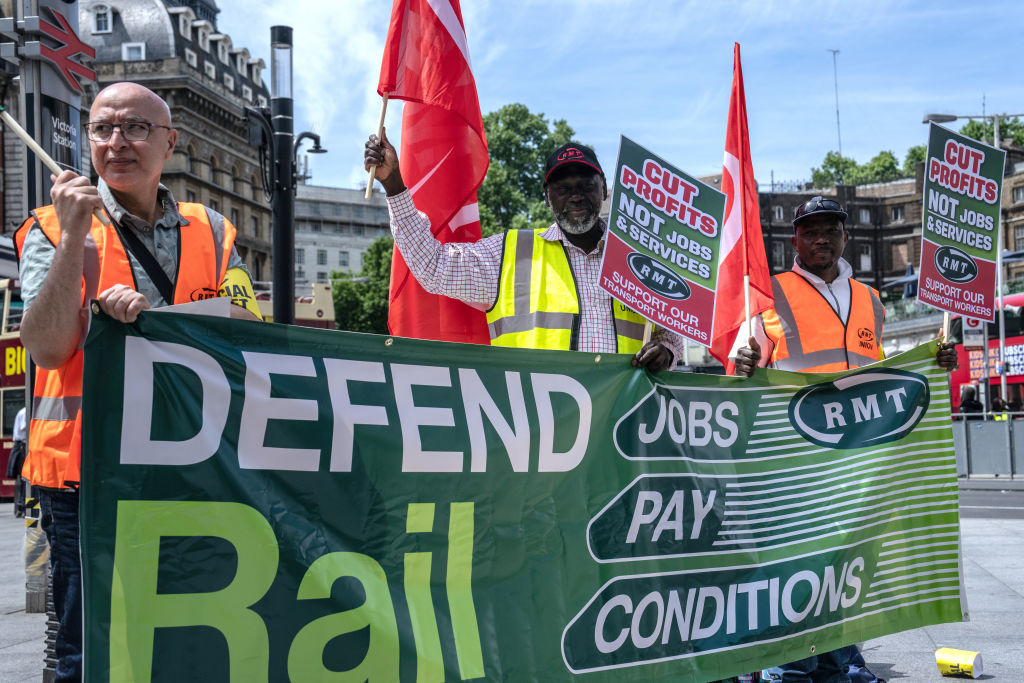
UK Faces Biggest Rail Strike In 30 Years
The biggest rail strikes in 30 years started on Monday night with trains cancelled across the UK for much of the week. (Photo by Carl Court/Getty Images)

At the end of June 1975, the weather was hotting up. Indeed, August of that year proved to be the warmest ever recorded.

Then, as now, there had been a massive rise in world energy prices.

There was trouble on the railways, where the unions were in an aggressive mood.  

The TSSA union and ASLEF behaved moderately. They settled, forty seven years ago to this very day, for the increase recommended by the Railway Staffs National Tribunal. A mere 27.5 per cent. The NUR grumbled on and were eventually bought off with a 30 per cent pay rise.

So we are still some distance from a full blown return to the 1970s. But the episode allows us to draw some valuable lessons.

Michael Foot, who went on to become a disastrous Leader of the Labour Party in the early 1980s, had spent his long Parliamentary career as a hard-line left winger firmly on the backbenches. In an attempt to placate the left, Harold Wilson had put him in the Cabinet as Secretary of State for Employment after the 1974 elections.

Despite his left wing background, Foot’s response in the debate in the House of Commons on the railways pay settlements, suggested an impeccable grasp of basic economics.

“Of course,” he said, “of course the cost of this settlement will have to be borne by increases in fares or by rearrangements in manpower”.

In 2022, the railways are already subsidised by the taxpayer to the tune of £27bn a year.  So “of course” any pay increase for the staff will lead to either or both higher fares and what Foot euphemistically called “rearrangements in manpower”. Again in plain English: job losses.

Read more

Soaring energy bills set to fuel inflation spike

Smartphone displaying an energy bill notification with British coins and a banknote nearby.

In the current wave of discontent, rail unions, along with teachers, NHS and other public sector unions, are asking for increases which match inflation. They are still, just about, in single figures and a long way from the 20 per cent-plus of 1975. But only eighteen months previously, at the end of 1973, inflation had still been in high single figures.  

The huge rise in world oil prices in the winter of 1973/74, along with a general boom in commodity prices, meant the UK was worse off.  

Real national income had fallen, as it had in every country which was a net importer of commodities, including energy.  Income had been transferred to the commodity producers.

Exactly the same applies now. It is not possible for the country as a whole to escape this reduction in real income by paying itself higher and higher money wages. In countries such as Germany in the mid-1970s, the workforce accepted real wage reductions, and inflation fell rapidly.  In 1975, it was only 4 per cent.

In countries such as Italy and the UK, workers did not. A wage-price spiral was put in place and inflation in 1975 was over 20 per cent.

Eventually, inflation was brought under control, though it remained high by international standards until the 1990s. This was Foot’s “rearrangement” and what Karl Marx described as the “reserve army of the unemployed”.

Unemployment rose steadily under the Labour government of 1974-79, and then rocketed to over 3 million in the recessions during Thatcher’s first years of office.

It was this which ultimately disciplined the workforce into making more reasonable money wage demands and accepting real wage reductions. It was Marx, again, who said “history repeats itself, first as tragedy then as farce”. The lessons of the mid-1970s are clear. We must learn from them or face the tragedy of mass unemployment.

Read more

Inflation expectations softer than predicted ahead of interest rate decision

The Bank of England is expected to hold interest rates at four per cent due to stubbornly high inflation.

Share this article

  • Facebook
  • X
  • LinkedIn
  • WhatsApp
  • Email

Similarly tagged content:

Sections

  • Opinion

Categories

  • Opinion

Trending Articles

  • Serie A won’t catch the Premier League by selling its rights better

  • Last Night, a Star-studded Evening Celebrating Moncler’s Fifth Avenue Flagship Ushered in a New Chapter in the Brand’s Enduring Love Story With New York

  • Crystal Palace agree deal with HSBC that paves way for new training ground

  • Lotus, Porsche and Corvette: the best sports cars to buy in 2026

  • Claridge’s swings to £10m loss as luxury hotel warns on ‘adverse impact’ of tax hikes

More from Morning Wire

  • Soaring energy bills set to fuel inflation spike

    Economics
    Smartphone displaying an energy bill notification with British coins and a banknote nearby.
  • Inflation expectations softer than predicted ahead of interest rate decision

    Economics
    The Bank of England is expected to hold interest rates at four per cent due to stubbornly high inflation.
  • Doctors union tops up £1m reserve pot for strikes

    Healthcare
    GettyImages 2246649047: Business professionals discussing strategy at a conference table, highlighting teamwork and collab...
  • As it happened: FTSE 100 dives as oil prices surge past $100 in blow to inflation

    FTSE 100 Live
    Diversified Energy Company said it would pay for the sale with a $35m share issuance.
  • Brits think supermarkets are profiteering – despite slowing food inflation

    Retail
    Shopper with red backpack and blue basket walking through a supermarket aisle filled with groceries
  • Ask the expert: Can I build a £1m pension by 60?

    Personal Finance
    Marianna Hunt discussing financial strategies at a business conference, wearing a professional suit, engaging with the aud...
  • Supermarkets ‘actively shielding’ shoppers as food inflation falls again

    Retail
    Shopper in a supermarket produce aisle browsing various packaged vegetables and fruits.
  • Virgin Trains gets green light for channel tunnel route

    Transport & Infrastructure
    Red Virgin high-speed train on tracks at a station platform, under an arched glass roof, with blurred people.
MorningWire

Independent European business, markets and political news for decision-makers.

Morning Briefing

Europe

  • Germany
  • France
  • EU Institutions
  • Europe

Business

  • Markets
  • Business
  • Economy
  • Regulation
  • Competition
  • Public Affairs

Editorial

  • Opinion
  • Editorial Policy
  • Corrections
  • Contact

Company

  • About Morning Wire
  • Privacy Policy
  • Terms of Use
  • Cookie Policy
© 2026 Morning Wire Ltd · Published by Morning Wire Media, Bahnhofstrasse 65, 8001 Zürich, Switzerland
Privacy · Terms · Cookies · Facebook