Skip to content
Friday 4 September 2026London --:--Frankfurt --:--Zurich --:--
NewslettersSearchEN · DE · FR
MorningWire

European business, markets and politics

FTSE 100
10,833.44
+0.02%
DAX
26,050.26
+0.18%
CAC 40
8,280.64
-0.07%
STOXX 50
6,395.66
+0.20%
  • Europe
  • Markets
  • Business
  • Economy
  • Regulation
  • Politics
  • Opinion
More
GermanyFranceEU InstitutionsCompetitionPublic AffairsBankingTechnologyEnergy
  • Germany
  • France
  • Europe
  • Markets
  • Business
  • Economy
  • Regulation
  • Politics
  • Opinion
  • DE
Wednesday 12 February 2020 4:01 am  |  Updated:  Tuesday 11 February 2020 5:22 pm

Western governments should have been ready for Huawei

By: Shanker Singham

Add as a preferred source on Google

In the late 1990s, I represented Lucent Technologies, a firm focused on delivering telecommunications equipment which had been spun out of AT&T. 

At the time, in addition to the more familiar competitors such as Nortel Networks and Alcatel, we faced an additional threat — a relatively new Chinese competitor called Huawei.  

Huawei was able to bid at a fraction of the western firms’ bids, because of the subsidies it enjoyed from the Chinese government. Nor were efforts for others to become market leaders in the US helped by the Chinese government’s relaxed attitude towards intellectual property theft.

The US government seemed powerless to act in the face of this Chinese threat, and in due course, Lucent and Alcatel were forced to merge, prior to their inevitable failure.

Had this threat not existed, or if Huawei had been subject to normal commercial forces, who knows how far the ecosystem of firms such as Lucent, Cisco and others would have evolved in providing the type of end-to-end 5G solution for which governments around the world are currently searching.  

Meanwhile in the UK, companies have spent a decade lapping up the low prices and buying all the Huawei kit. Gradually, Huawei became embedded in the UK’s 3G and 4G systems. The company recruited an army of former diplomats to clean up its image worldwide. 

It is crucial that we understand this history before we repeat the errors of the past when it comes to the development of 5G, 6G, and beyond.

In the last few weeks, UK government officials and politicians have been surprised by the strength of the US (and Australian and Japanese) reactions to Britain’s adoption of Huawei in our 5G system. Given the 20-year history of this issue, I am shocked by their response. They should have realised that, for our allies, this is no small issue.

Our leaders should also be aware that, regardless of what some have advised, the “core” and “periphery” functions of our 5G network cannot be so rigidly separated, so promising to exclude Huawei from the most sensitive elements is not an answer. 

Read more

Iceland boss Richard Walker vows to set up shop on Falkland Islands

Welcome to the Falkland Islands sign with Stanley harbor and Christ Church Cathedral in background.

With 5G, the UK has put itself in a position where it cannot go forward without a company it says itself is a high risk operator. This must not be allowed to happen again.

Instead, Britain and America should focus efforts on ensuring that alternatives do exist. The best way to achieve this would be to use the UK-US free trade agreement currently in discussion to create a genuine transatlantic defence market, with an advanced digital and e-commerce chapter. 

The two could also agree disciplines on competition policy that would develop a common approach to third-country distortions, and then seek to apply those in all their trade agreements, and at a global level.

The UK should also develop a government body such as the Office of Net Assessment (ONA) which the US has had since the 1970s. The ONA looks at long-range threats to the US. When we faced our issues with increasing China distortions in the mid to late 1990s, it was to the ONA among others that we went to try and develop a coherent and long-term US response. 

The UK needs a similar body to ensure that we are not storing up trouble for ourselves in the next 10 years and the next pieces of critical infrastructure. We need a mechanism so threats can be identified ahead of time, and joined-up government policy that can deal with them.

The Huawei issue should be a wake-up call for all of us to do more to anticipate the threats of the future and be much less naive about products offered almost as gifts.

As our Prime Minister might say, timeo Danaos et dona ferentes.

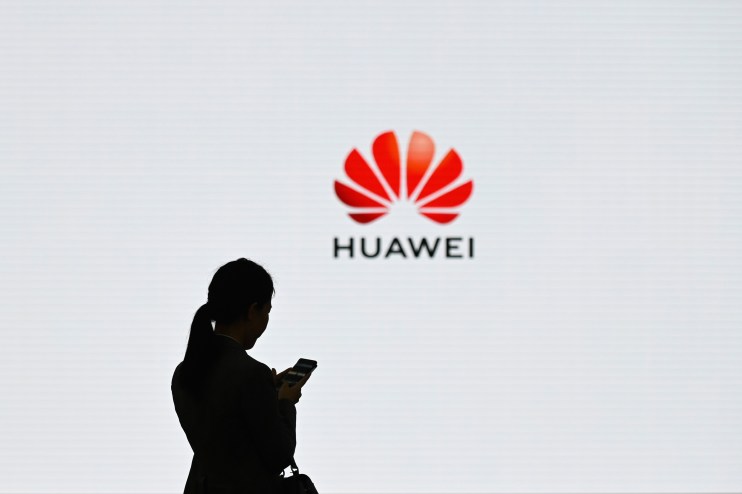
Main image credit: Getty

Read more

Farage: Foreign donations row is ‘loose pub talk’

Nigel Farage at a Reform UK conference, gesturing from a podium with the party logo and CONFERENCE 2026 in background

Share this article

  • Facebook
  • X
  • LinkedIn
  • WhatsApp
  • Email

Similarly tagged content:

Sections

  • News
  • Opinion

Categories

  • Business
  • Opinion
  • Tech

Related Topics

  • International

Trending Articles

  • Victoria Beckham owed £350,000 by Harvey Nichols

  • Jim O’Neill: Capital gains tax hike ‘looms’ as top option for Burnham

  • Vodafone and Deliveroo look to patch up Reform ties after Yusuf prison threats

  • M&G: FTSE 100 giant hits out at Rayner’s ground rent cap as it suffers loss

  • ‘Large tax hikes on the way’: How the global bond rout is boxing in Healey

More from Morning Wire

  • Iceland boss Richard Walker vows to set up shop on Falkland Islands

    Retail
    Welcome to the Falkland Islands sign with Stanley harbor and Christ Church Cathedral in background.
  • Farage: Foreign donations row is ‘loose pub talk’

    Economics
    Nigel Farage at a Reform UK conference, gesturing from a podium with the party logo and CONFERENCE 2026 in background
  • London snubbed as Formula 1 announces return of F1 Live show at new venue

    Sport Business
    Formula 1 75th anniversary celebration event with F1 cars and drivers on stage, surrounded by red lights and a crowd
  • Lawyer struck off for using fake AI evidence in his own disciplinary case

    Law
    The SRA has criticised law firms that handle high-volume consumer claims for poor practices
  • McGill and Partners staff to benefit from EQT’s $2bn insurance broker deal

    Insurance
    London skyline with iconic insurance buildings under clear sky reflecting the citys financial and business hub atmosphere
  • Inflation expectations softer than predicted ahead of interest rate decision

    Economics
    The Bank of England is expected to hold interest rates at four per cent due to stubbornly high inflation.
  • Gloomy outlook: Royal Parks charity bans ‘Optimism Picnic’ in Hyde Park 

    London
    Aerial view of London cityscape with Hyde Park, Serpentine Lake, and surrounding urban buildings
  • Don’t underestimate the free trade agreement Britain just joined

    Opinion
    A person holds small UK and Canadian flags, symbolizing international relations.
MorningWire

Independent European business, markets and political news for decision-makers.

Morning Briefing

Europe

  • Germany
  • France
  • EU Institutions
  • Europe

Business

  • Markets
  • Business
  • Economy
  • Regulation
  • Competition
  • Public Affairs

Editorial

  • Opinion
  • Editorial Policy
  • Corrections
  • Contact

Company

  • About Morning Wire
  • Privacy Policy
  • Terms of Use
  • Cookie Policy
© 2026 Morning Wire Ltd · Published by Morning Wire Media, Bahnhofstrasse 65, 8001 Zürich, Switzerland
Privacy · Terms · Cookies · Facebook