Skip to content
Sunday 9 August 2026London --:--Frankfurt --:--Zurich --:--
NewslettersSearchEN · DE
MorningWire

European business, markets and politics

FTSE 100
10,901.09
+0.31%
DAX
26,319.45
+0.69%
CAC 40
8,714.93
+0.17%
STOXX 50
6,523.86
+0.33%
  • Europe
  • Markets
  • Business
  • Economy
  • Technology
  • Politics
  • Opinion
More
GermanyFranceBankingAIEnergyFintechPropertyCapital Markets
  • Germany
  • France
  • Europe
  • Markets
  • Business
  • Economy
  • Technology
  • Politics
  • Opinion
  • DE
Morning Wire’s journalism is supported by our readers. .
Friday 14 February 2025 6:00 am  |  Updated:  Thursday 13 February 2025 3:49 pm

What do falling interest rates mean for my finances?

By: Alex Janiaud

Freelance Financial Journalist

Add as a preferred source on Google
A new paper by the free-market think tank IEA demands the Treasury to broaden its focus from inflation to total spending in the economy – which would account for both economic growth and inflation.
The Bank will be keenly looking over inflation before changing interest rates.

The Bank of England trimmed interest rates to 4.5 percent in February, the first of what could be multiple cuts this year aimed at kickstarting the UK’s weak economic growth.

This raises questions about what loosening monetary policy could mean for savers’ finances.

The BoE now expects GDP growth “to be notably weaker in the near term before picking up from the middle of the year”, said BoE governor Andrew Bailey on February 6.

The central bank halved its UK economic growth to just 0.75 per cent for this year. 

In January, Alan Taylor, an external member of the MPC, told Leeds University Business School that the UK could “need a more accelerated pace of rate cuts, perhaps 125 or 150 basis points in the coming year”. 

Falling interest rates may affect a number of key personal finance issues, including mortgage rates and savings returns. A lowered cost of borrowing could help to free up disposable income and lift consumer spending.

Good news for mortgages

Interest rates in the UK sat at historically low levels in the years following the financial crisis, eventually rising from a low of 0.1 per cent in 2021 to 5.25 per cent in 2023. 

Soaring post-pandemic inflation and former prime minister Liz Truss’s ill-fated ‘mini-budget’ have been blamed for rising borrowing costs in the UK.

A sustained lowering of interest rates could provide new mortgage opportunities for savers. “Homeowners nearing the end of a fixed-rate mortgage or those currently on a variable rate may benefit,” says Daniel Howard, paraplanner at GSB Wealth. 

Read more

IMF warns Bank of England against cutting interest rates

IMF Chief Kristalina Georgieva issues caution to Bank of England amid economic concerns

“Fixed-rate mortgage holders may have the option to refinance at a lower rate, while those on variable rates will likely see an immediate reduction in their monthly payments,” he continues.

Bad news for savings

When announcing its latest interest rate cut, the BoE said that it expected inflation to increase to a peak of around 3.7 per cent this year, before returning to its 2 per cent target. Inflation currently sits at 2.5 per cent.

Cash Investment Savings Accounts typically offer more compelling savings rates in an environment of higher interest rates. Arthur Hill, chartered financial planner at Citygate Financial Planning, urges savers to keep savings products under review.

“A lot of people will let banks and interest rate savings accounts roll over, and they won’t be necessarily aware that they’re going to get renewed on a much lower rate, especially with fixed-term products,” he says.

“Keep an eye on when products are going to mature, and think about securing a higher interest rate now while they’re still available.” Savers can use websites like Money Saving Expert to compare rates.

Lower interest rates – among other factors – can push up spending, leading to higher inflation that eats into cash savings. 

Joe Akik, wealth manager at Capital Planning Partners, emphasises the importance of “making sure your money’s doing something”. Savers should weigh up whether to move some of their savings from cash into investments, in order to prevent them being eroded away by inflation, he says.

“The best rate you can get on an account is constantly changing,” Akik says, although he warns that “you don’t really want people to be moving their savings around too much”, particularly older clients.

Read more

Mortgage approvals inch up yet gains to be ‘retracted’

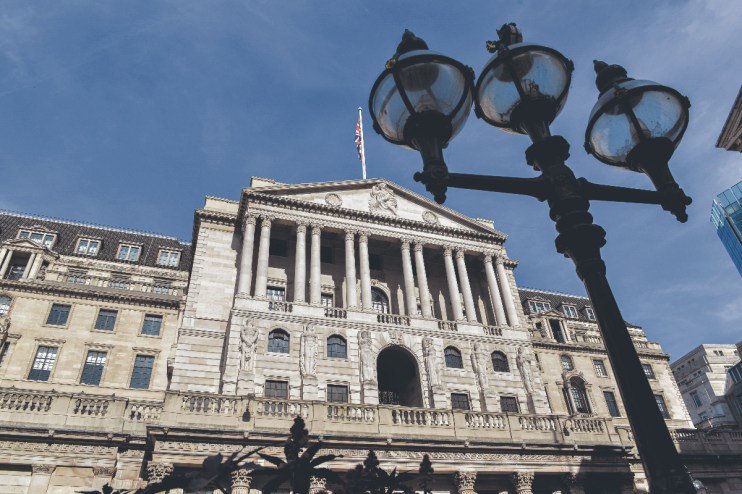
Bank of England headquarters in 2025, showcasing modern architecture and iconic London skyline in the background.

Share this article

  • Facebook
  • X
  • LinkedIn
  • WhatsApp
  • Email

Similarly tagged content:

Sections

  • News

Categories

  • Personal Finance

People & Organisations

  • Bank of England
  • interest rates
  • Personal Finance
  • UK economy

Trending Articles

  • Stop burying us in swollen corporate reports, says audit watchdog boss

  • Hargreaves Lansdown orders staff back to office

  •  Burnham to unveil new cost of living measures on UK tour

  • How Britain can stay clear of rivals as home of overseas sport club owners

  • Why the Loire Valley is about so much more than fairytale castles

More from Morning Wire

  • IMF warns Bank of England against cutting interest rates

    Economics
    IMF Chief Kristalina Georgieva issues caution to Bank of England amid economic concerns
  • Mortgage approvals inch up yet gains to be ‘retracted’

    Property
    Bank of England headquarters in 2025, showcasing modern architecture and iconic London skyline in the background.
  • Bank of England holds interest rates but warns of rises to come

    Economics
    Bank of England headquarters in 2025, showcasing modern architecture and iconic London skyline in the background.
  • Bank of England to hold interest rates as oil price surge threatens UK economy

    Economics
    Bank of England building on Threadneedle Street, London, showcasing its historic architecture and financial significance
  • Bank of England warns Burnham of UK economy’s ‘big issue’

    Economics
    Bank of England Governor Andrew Bailey said the future of interest rates was "more uncertain".
  • Healey faces £24bn spending squeeze as inflation puts tax rises in play

    Economics
    Bank of England headquarters in 2025, showcasing modern architecture and iconic London skyline in the background.
  • Four charts revealing scale of Andy Burnham’s economic challenge

    Economics
    Due to the lack of article title, content, categories, and tags, its impossible to create a specific, keyword-rich alt tex...
  • Hold interest rates but ‘sound hawkish’, Morning Wire Shadow MPC tells Bank of England

    Economics
    Andrew Bailey, Governor of the Bank of England, with the Bank of England building and Union Jack flag in the background
MorningWire

Independent European business, markets and political news for decision-makers.

Morning Briefing

Europe

  • Germany
  • France
  • Europe
  • UK & Ireland

Business

  • Markets
  • Banking
  • Technology
  • Energy
  • Property
  • Fintech

Editorial

  • Opinion
  • Editorial Policy
  • Corrections
  • Contact

Company

  • About Morning Wire
  • Privacy Policy
  • Terms of Use
  • Cookie Policy
© 2026 Morning Wire Ltd · Published by Morning Wire Media, Bahnhofstrasse 65, 8001 Zürich, Switzerland
Privacy · Terms · Cookies · Facebook