Skip to content
Tuesday 11 August 2026London --:--Frankfurt --:--Zurich --:--
NewslettersSearchEN · DE
MorningWire

European business, markets and politics

FTSE 100
10,852.87
-0.09%
DAX
26,321.35
-0.01%
CAC 40
8,721.98
-0.05%
STOXX 50
6,544.25
+0.13%
  • Europe
  • Markets
  • Business
  • Economy
  • Technology
  • Politics
  • Opinion
More
GermanyFranceBankingAIEnergyFintechPropertyCapital Markets
  • Germany
  • France
  • Europe
  • Markets
  • Business
  • Economy
  • Technology
  • Politics
  • Opinion
  • DE
Wednesday 30 October 2024 5:24 am  |  Updated:  Tuesday 29 October 2024 10:45 am

What will happen to wealth taxes?

By: Nick Pheasey

Add as a preferred source on Google
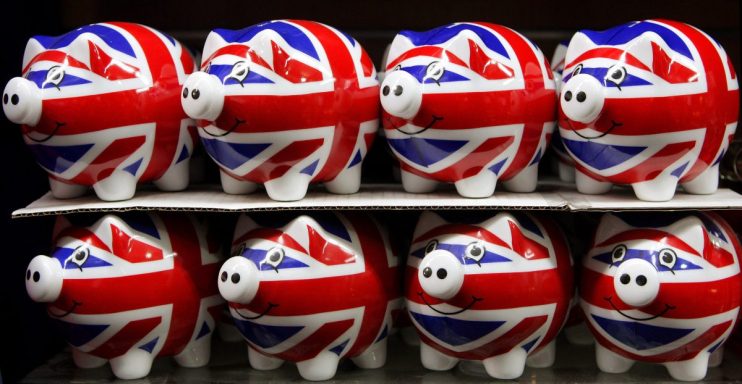
Inheritance tax (IHT) receipts total £5.7bn so far this tax year. (Photo by Oli Scarff/Getty Images)

The Chancellor is considering a range of tax hikes on wealth, but questions remain over how much revenue she can raise, says Nick Pheasey

The taxation of an individual’s wealth can be an emotive subject. 

Broadly, the UK imposes tax on wealth on two occasions. First, as it is generated, by income tax or capital gains tax (CGT). Second, as it is given away, during lifetime or on death, by inheritance tax (IHT). These taxes, levied at different rates, are subject to allowances, exemptions and reliefs. The result is that the overall effective rate of tax on wealth can vary significantly, depending on how the wealth is generated, the nature of the assets comprising the wealth and the recipient of the wealth. 

Leaving aside income tax, the so called “capital taxes” – CGT and IHT – have been the subject of various recent reviews by both the government and interested bodies like the Institute for Fiscal Studies (IFS). The Chancellor is not short of suggestions when it comes to increasing the country’s revenues from wealth taxation.

Looking forward to the Budget, increased revenues from capital taxes might come from an increase in rates, the narrowing of reliefs or potentially, albeit currently considered to be more unlikely, a new tax altogether.  

While increasing CGT rates to align with income tax may have been considered by the Treasury, any rise seems more likely to be relatively small given HMRC’s recent estimates that a 10 per cent increase in the higher rate would reduce tax receipts in 2027/28 by over £2bn.  If a rate rise is forthcoming, the Chancellor may choose to pre-announce the increase with the aim of triggering higher receipts in the short term.

A BADR idea?

A reform of business asset disposal relief (BADR) to better target entrepreneurial behaviour may also be under consideration.

Read more

IHT receipts hit record high as Rachel Reeves’ frozen bands raid plague Brits

Inheritance tax receipts are on track for a record breaking year

A wider range of options may be available on IHT. A move to progressive IHT rates could be under consideration to make the tax fairer in addition to raising more revenue. The think tank ‘Demos’ recently reported that the average rate of IHT in 2020/21 for estates worth between £2m and £7.5m was 25 per cent, while those over £10m only paid 17 per cent.

Play Video

Three IHT reliefs, business property relief (BPR), agricultural property relief (APR) and the IHT exemption for defined contribution pension pots could be targeted, following recommendations by the IFS that BPR be removed from shares listed on the Alternative Investment Market (AIM), BPR and APR be capped at £500,000 and the passing of pensions IHT free be ended.  

What is known with more certainty is that further detail will be provided during the Budget on the already announced transition of IHT to a tax based on an individual’s residence in the UK rather than their domicile. This will have no impact for most, but significant consequence for those who are affected.

It should also be remembered that broader changes to the taxation of wealth could be coming down the line. While the Chancellor has been reported as ruling out a wealth tax, discussions at a global level, including by the G20, could ultimately take precedence on this.  

The future taxation of wealth will inevitably involve change. What that change will comprise, may become a little clearer on Budget Day.

Nick Pheasey is head of family office and private client at KPMG UK

Read more

‘One-two punch’ – Families face huge capital gains death tax under Burnham

Andy Burnham supporters rallying with banners and signs at a political event, showcasing enthusiasm and solidarity

Share this article

  • Facebook
  • X
  • LinkedIn
  • WhatsApp
  • Email

Similarly tagged content:

Sections

  • Opinion

Categories

  • Opinion

People & Organisations

  • Autumn Budget 2024
  • Rachel Reeves
  • wealth tax

Related Topics

  • Budget

Trending Articles

  • Nottingham Forest owner Marinakis sues Crystal Palace for defamation

  • Back to basics: Sainsbury’s gradual retreat from the British high street

  • Hargreaves Lansdown orders staff back to office

  • As it happened: Intel, Arm shares slide; Oil climbs higher

  • Five-star Mayfair hotel hit with HMRC winding-up petition

More from Morning Wire

  • IHT receipts hit record high as Rachel Reeves’ frozen bands raid plague Brits

    Personal Finance
    Inheritance tax receipts are on track for a record breaking year
  • ‘One-two punch’ – Families face huge capital gains death tax under Burnham

    Politics
    Andy Burnham supporters rallying with banners and signs at a political event, showcasing enthusiasm and solidarity
  • Ask the expert: How do I avoid double tax on my pension?

    Personal Finance
    Marianna Hunt discussing financial strategies at a business conference, wearing a professional suit, engaging with the aud...
  • Here’s an idea for you Gary Stevenson: a 0 per cent wealth tax

    Opinion
    Gary Stevenson debates economist Dr Kristian Niemietz on wealth tax issues during a live event.
  • Top economists shun Burnham over wealth taxes

    Politics
    Andy Burnham speaking at a press conference, expressing confidence despite challenges, highlighting leadership and resilie...
  • Wealthy Brits fear Burnham tax consequences

    Personal Finance
    Andy Burnham, Mayor of Greater Manchester, speaking at a podium with microphones.
  • We should all get behind this wealth tax

    Opinion
    LONDON, ENGLAND - JUNE 01: A general view of a house along Kensington Palace Gardens, which has been named as Britain's most expensive street on June 1, 2011 in London, England. Many of the mansions are occupied by billionaire businessmen, embassies and ambassadorial residences. (Photo by Oli Scarff/Getty Images)
  • The Rest Is… for the Treasury: Gary Lineker backs wealth tax for rich

    Sport Business
    Gary Lineker in a suit and tie, smiling with glasses and a goatee, against a blurred background.
MorningWire

Independent European business, markets and political news for decision-makers.

Morning Briefing

Europe

  • Germany
  • France
  • Europe
  • UK & Ireland

Business

  • Markets
  • Banking
  • Technology
  • Energy
  • Property
  • Fintech

Editorial

  • Opinion
  • Editorial Policy
  • Corrections
  • Contact

Company

  • About Morning Wire
  • Privacy Policy
  • Terms of Use
  • Cookie Policy
© 2026 Morning Wire Ltd · Published by Morning Wire Media, Bahnhofstrasse 65, 8001 Zürich, Switzerland
Privacy · Terms · Cookies · Facebook