Skip to content
Wednesday 19 August 2026London --:--Frankfurt --:--Zurich --:--
NewslettersSearchEN · DE · FR
MorningWire

European business, markets and politics

FTSE 100
10,728.04
+0.07%
DAX
26,128.36
-0.80%
CAC 40
8,509.36
0.00%
STOXX 50
6,468.17
-0.95%
  • Europe
  • Markets
  • Business
  • Economy
  • Regulation
  • Politics
  • Opinion
More
GermanyFranceEU InstitutionsCompetitionPublic AffairsBankingTechnologyEnergy
  • Germany
  • France
  • Europe
  • Markets
  • Business
  • Economy
  • Regulation
  • Politics
  • Opinion
  • DE
Tuesday 11 June 2024 6:00 am  |  Updated:  Monday 10 June 2024 9:06 pm

What’s going on with Reform’s proposed overhaul of Bank of England reserves?

By: Chris Dorrell

Add as a preferred source on Google
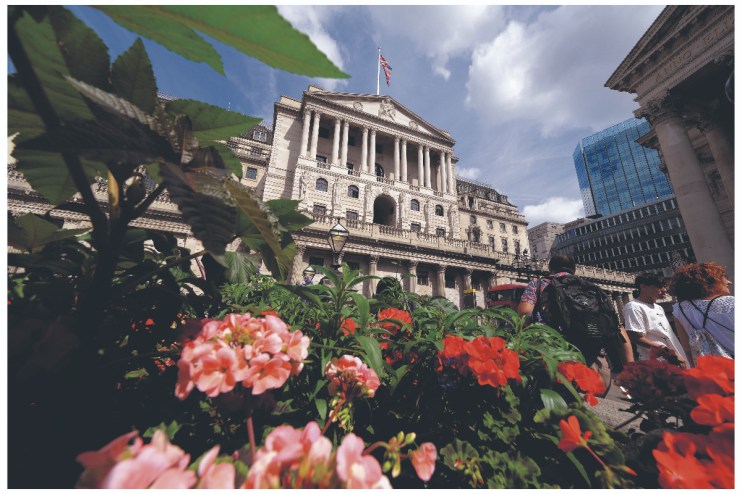
The Bank of England has made its decision on interest rates and revised forecasts.
The Bank of England is expected to keep interest rates on hold next week.

Reform UK announced plans to squeeze a bit of extra money out of the banking system on Monday through a major overhaul of monetary policy.

Reform’s suggestion is that the Bank of England could stop paying interest on the remaining £700bn of commercial bank deposits created through quantitative easing.

By paying Bank Rate on those reserves, the Bank of England – and ultimately the Treasury – is having to transfer money over to the commercial banks.

Cutting interest payments on those deposits is not a hugely radical suggestion. Two former Bank of England governors and a former Prime Minister, Gordon Brown, have suggested that the costs of QE could be reduced by moving to a tiered system of reserves.

This would mean some portion of commercial bank deposits would not receive any interest. The European Central Bank (ECB) stopped paying interest on a very small portion (around one per cent) of bank deposits last year.

However, stopping interest payments entirely, as Tice wants to do, is much more radical and much more dangerous.

Firstly, it would raise very big questions for the effectiveness of monetary policy. By stopping all interest payments to commercial banks, the Bank of England would effectively be left with a policy lever which is not attached to anything in the real economy.

“Paying Bank Rate on reserves anchors the implementation of monetary policy,” Andrew Bailey told the House of Lords in February. “We would have to be very careful how we implemented anything like that”.

Read more

Rupert Lowe axes pensions triple lock and pledges tax cuts in economic plan

Rupert Lowe, former Southampton FC chairman, smiles while holding files on a city street, wearing a suit and pink tie

Combining this with Tice and Farage’s £40bn tax cut could be quite the inflationary cocktail.

This impact could be mitigated if the Bank were to tier reserves – that is, only pay out interest on reserves which exceed a regulatory minimum – but this would also raise less money and, to repeat, is not Tice’s preferred option.

For what its worth, Bailey has never been keen on the idea, describing it as “tax on the banking system”. It’s also worth noting that consumers would likely have to bear the cost at some point down the line.

Leaving aside the technicalities, there’s big question-marks about how much the policy could raise. The short answer is that we don’t know because it depends on the future path of interest rates. As interest rates fall, the measure will be less lucrative.

Tice said the policy would raise £35bn over the next five years, a figure which leading tax lawyer Dan Neidle described as “magic”.

Different tiering systems would raise vastly different sums. For instance, Deutsche Numis suggested that moving to the ECB’s tiered system would raise £1bn per year.

Discussing his own proposals, Gordon Brown suggested the measures could raise a minimum of £1.3bn annually, potentially more.

Either way, it seems unlikely to fully fund Reform’s Great British tax cut (not that they’ll be bothered). Don’t be surprised though if sooner or later one of the major parties makes a move on bank deposits.

Read more

Bank of England to relax capital rules despite warning of economic threats

Bank of England building on Threadneedle Street, London, showcasing its historic architecture and financial significance

Share this article

  • Facebook
  • X
  • LinkedIn
  • WhatsApp
  • Email

Similarly tagged content:

Sections

  • Markets & Economics

Categories

  • Economics
  • Banking

People & Organisations

  • Bank of England
  • banks
  • quantitative easing
  • Reform UK

Related Topics

  • Bank of England

Trending Articles

  • As it happened: FTSE 100 drops as oil prices rise after Trump makes Hormuz threat

  • Jobless Banquet: Youth unemployment surge ‘sends Neets to KFC’

  • US bond market jitters spark UK economy recession warning

  • Monzo chair makes early exit after boardroom rift

  • Aldi boss wades into supermarket ‘price-gouging’ row

More from Morning Wire

  • Rupert Lowe axes pensions triple lock and pledges tax cuts in economic plan

    Politics
    Rupert Lowe, former Southampton FC chairman, smiles while holding files on a city street, wearing a suit and pink tie
  • Bank of England to relax capital rules despite warning of economic threats

    Banking
    Bank of England building on Threadneedle Street, London, showcasing its historic architecture and financial significance
  • IMF warns Bank of England against cutting interest rates

    Economics
    IMF Chief Kristalina Georgieva issues caution to Bank of England amid economic concerns
  • Bank of England warns Burnham of UK economy’s ‘big issue’

    Economics
    Bank of England Governor Andrew Bailey said the future of interest rates was "more uncertain".
  • Bank of England holds interest rates but warns of rises to come

    Economics
    Bank of England headquarters in 2025, showcasing modern architecture and iconic London skyline in the background.
  • Bank of England may set the stage for interest rate hikes this year

    Economics
    Bank of England recession warning
  • Bank of England to hold interest rates as oil price surge threatens UK economy

    Economics
    Bank of England building on Threadneedle Street, London, showcasing its historic architecture and financial significance
  • Exclusive: Government to reject Reform’s offer to cover Farage by-election cost

    Politics
    Nigel Farage speaking at a podium, dressed in a suit, addressing an audience at a business conference event
MorningWire

Independent European business, markets and political news for decision-makers.

Morning Briefing

Europe

  • Germany
  • France
  • EU Institutions
  • Europe

Business

  • Markets
  • Business
  • Economy
  • Regulation
  • Competition
  • Public Affairs

Editorial

  • Opinion
  • Editorial Policy
  • Corrections
  • Contact

Company

  • About Morning Wire
  • Privacy Policy
  • Terms of Use
  • Cookie Policy
© 2026 Morning Wire Ltd · Published by Morning Wire Media, Bahnhofstrasse 65, 8001 Zürich, Switzerland
Privacy · Terms · Cookies · Facebook