
What’s the best way to make up for the metals supply shortfall? Look down.
It’s been a rough couple of years for metal producers. Sky-high demand, factory closures, and supply chain disruption have resulted in a shortfall in supply. A quick post-Covid bounce back in demand should’ve resulted in producers scaling production back up to meet demand. However…
Inflation has taken hold of every industry worldwide: the cost of production is greater than the price buyers are willing to pay without infringing on their own profit margins. Where these prices can be offset by increasing prices down the chain, end-consumer purchasing power is already stretched to poverty-breaking point; ultimately, consumers are unable to shoulder the increased costs. With fewer consumers in a position to spend, products will remain on their shelves and contribute towards the metal market problems.
Where does the globe’s aluminium come from?
In 2021:
China: Despite harsh restrictions on industrial activity in a bid to meet climate goals, aluminium production topped 38.5 million tonnes (up 4.8% compared to 2020).
India: 3.9 million tonnes of aluminium were produced from primary sources.
Russia: 3.7 million tonnes.
The top 3 aluminium producing countries each have their ESG downsides:
Environmentally, China and India rely on coal to power their smelting process. The most environmentally friendly production in the top 3 is Russia, whose main producer Rusal uses renewable hydraulic power for 90% of operations.
In social and governance, Russia loses out. China’s recent attempt to meet climate goals has somehow resulted in more aluminium production. Methods of governance are questionable.
With the world’s boycott and banning of Russian raw materials and products, China’s continued industrial shutdowns, and the global trend towards everything green and sustainable, distancing production from coal-reliant processes and countries with serious questions of governance and social responsibilities, is a necessary way forward.
Metal Shortfalls
In order to achieve the goals set out in the Paris Climate Agreement, the green energy transition will hike demand for key metals, such as copper, aluminium, iron, lithium and rare metals. Consequently, a rise in demand means a rise in price. The metal market is already a volatile place, however with mineral and raw resources being focused in specific locations, supplying the green energy transition solely off of these resources creates a scenario whereby resource owners can monopolise the market and set their own prices. It also subjects the supply chain to large risks, such as those experienced during Covid lockdowns and the Suez canal blockage.
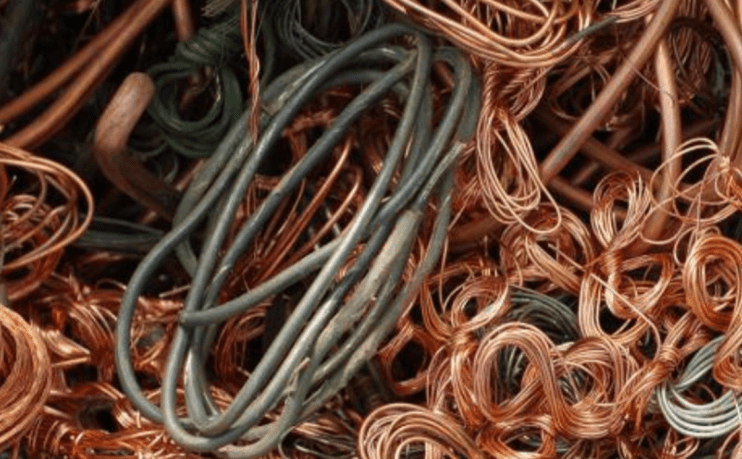
To mitigate this, metal production needs to be decentralised; which is easier said than done and also isn’t applicable to all metals. Non-ferrous metals, such as aluminium and copper, are able to be endlessly recycled with little to no loss of quality. Secondary production also comes with a much, much smaller price tag – both in terms of currency and environmental impact.
Changing consumer habits – during lockdowns and that have stuck around for the longer term – have contributed to aluminium’s stock shortage. Staying home and consuming individual items requires more product than going out and consuming wholesale stock; for example, a half-barrel keg of beer contains 165 cans. That’s a lot more material. Post-Covid, the cost-of-living crisis has consumers opting for cheaper foods in their weekly shops and unfortunately, including fewer fresh vegetables. Tinned foods on average are the cheapest, again, contributing to the demand for aluminium.
Worldwide governmental windfall taxes, levies, and policies aimed at accelerating the green transition are also increasing the need for electrical components, EVs, batteries, and technologies. Again, more aluminium is needed.
Sustainable Alternatives
It’s gotta be secondary production. We need aluminium. We need to preserve the environment and the Earth’s resources. We need to meet the Paris Agreement. We need more aluminium (limk to: Aluminium’s dirty secret: We’re gonna need a LOT of it, and it’s pumping out a LOT of CO2)
And we know the obvious place to start. Head South. That big mass of land below Europe. The one with mountains of scrap base metals.
By assessing the great shifts underway in Africa’s growing population, and thinking long-term (beyond the immediate economical benefits of mining from the continent’s mineral-rich resources), Africa has potential to become a powerhouse in global sustainability, as well as a dominant force in the global economic market. Overcoming the temptation of short-term returns will reap greater sustainability and societal rewards as well as raising projections for economic growth. Build green and only build once. Incorporate sustainability in initial growth – base growth in strong foundations and become a worldwide good example.
As of September 2021, there were only 50 recycling facilities on the whole African continent, inclusive of Romco’s own facilities in Nigeria and Ghana. Therefore it’s no surprise Africa is only leveraging 4% of its metal recycling potential. By taking advantage of potential feedstock, Africa can become a major player in a market that’s expected to double by 2025, from $163.5bn (2018) to $235.8bn. Romco plans to add 5 more recycling facilities, cementing its place as a market leader in Africa’s recyclable metals market. As a British organisation, with natural roots and partners in West Africa, we are not just looking beneath our feet, but looking beneath our continent for a real solution to a global metals and environmental problem.
To learn how we are rising to the challenge of meeting the global commodities supply gap, please subscribe to our news at https://romcometals.com/news-insight/, or visit romcometals.com