When will we have a UK general election?

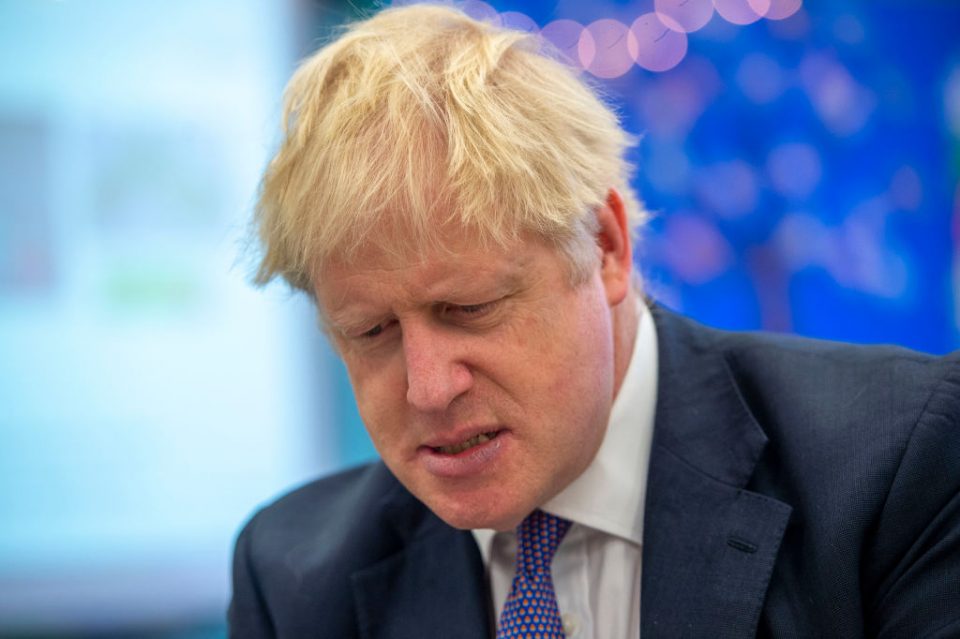
Boris Johnson announced plans for UK general election on 12 December to “get Brexit done.”
He’s tabled another vote in the Commons for today – and Labour have agreed to support the motion.
Last night, MPs failed to support the dissolution of parliament under the Fixed-term Parliaments Act – a motion which required a supermajority of 434 MPs to pass.
The Commons backed the motion by 299 to 70, well short of the number required. Johnson will now try to secure his election by introducing new legislation to the Commons fixing the date of the election.
This is the fourth time the Prime Minister will have tried for an election, having twice sought a 15 October poll in September.
Read more: The EU agrees Brexit must be delayed – what it can’t decide is for how long
But how do we get there?
In this article we’ll try and tell you everything you need to know about the next UK general election.
What is a snap general election?
A snap general election is one that is called earlier than scheduled.
The Fixed-term Parliaments Act (FTPA), which was passed by the coalition government in 2011, introduced timetabled elections to Westminster for the first time.
Under the legislation, elections are scheduled for the first Thursday in May of the fifth year after the previous general election.
The next election on this timetable would therefore take place on 5 May 2022.
How is a snap general election called?
1. The supermajority
The simplest way to call a general election is to pass a vote under the Fixed-term Parliaments Act (FTPA).
To pass, the vote requires a so-called supermajority – the support of two-thirds of all MPs. This means 434 MPs would have to vote for an election in the current session of parliament.
This has proved anything but simple so far: Johnson’s first attempt failed by 298 votes to 56, and his second by 293 to 47.
Last night Johnson’s third attempt went the same way as his first two, failing by 299 votes to 70. Johnson has now abandoned his attempts to dissolve parliament under this legislation.
2. Change the law
Instead, the Prime Minister has now tabled a motion to bypass the Fixed-term Parliaments Act by introducing its Early Parliamentary General Election Bill .
It could introduce a very short law fixing an election date for 12 December, adding “notwithstanding the Fixed-term Parliaments Act”.
This only requires a simple majority (50 per cent of MPs) rather than two-thirds of support.
After a meeting of the shadow cabinet this morning Jeremy Corbyn announced that Labour would support the motion.
However, the bill would have to pass through all the stages of both Houses in time. This process could see its wording altered by amendments, potentially changing the law.
Number 10 sources told PoliticsHome that Johnson was open to a 11 December date, in the hope of securing the support of the Liberal Democrats and the SNP, who introduced a bill setting the date for the 9 December.
3. Trigger a vote of no confidence
As the opposition party, Labour could also trigger a general election by proposing a vote of no-confidence – exactly what Johnson and co have been goading Jeremy Corbyn to try for weeks.
Again, this motion would only need a simple majority to pass.
If it did so, opposition parties would be given two weeks to form a new government. If this failed, a UK general election would automatically be triggered under the FTPA.
This would delay the vote for even longer – by seven weeks.
Technically, the government could bring itself down by calling a vote of no confidence in itself. Tory MPs would have to vote in favour of the motion.
The risk is that this would hand the initiative to the opposition parties to form an alternative government first.
It’s far from straightforward for Johnson – and the bookies agree. Latest odds from Ladbrokes indicate a 33 per cent probability of a British election this year, a 67 per cent probability of an election in 2020 and a four per cent probability of an election in 2021.
Spokeswoman Jessica O’Reilly said: “It’s looking like Boris Johnson will have to write a new letter to Santa Claus for his Christmas wishes this year.”
When will we have a UK general election?
Boris Johnson has named 12 December as his preferred date, although 5 December is also an option. Number 10 sources also said that 11 December would also be considered.
This is widely seen as an attempt to secure the support of the SNP and Liberal Democrats.
The 19 December is technically possible, although most consider it too close to Christmas to be realistic.
Once an election is called, there must be a gap of 25 days before polling day. This is a legal requirement under the FTPA.
So if Johnson is to get his chosen date, the election would have to be triggered before 6 November.
Read more: Sajid Javid admits October 31 Brexit deadline can’t be met
Elections are also traditionally held on Thursdays – hence the 12th. However, they do not have to be. Had Johnson’s earlier attempt succeeded, the 15 October election would have fallen on a Monday.
Why does Boris Johnson want an election?
At the moment the government has a working majority of minus 45. This makes it more or less impossible for Johnson to pass legislation.
Thus it has proved. The Tories, who lost their majority on the first day of Johnson’s leadership, did not win a single division (vote) until 15 October, six weeks into his premiership.
The Prime Minister hopes that by holding an election, he can restore the Conservatives’ majority and then push on with delivering Brexit.
Speaking on the BBC’s Today programme this morning, chancellor of the exchequer Sajid Javid summed up the government’s frustration with Labour:
They can’t have it both ways, they can’t, on the one hand, make parliament deliberately dysfunctional, turn it into a zombie parliament so we can’t get on with the business of governing, and, on the other hand, refuse to actually then have an election and bring an end to it.
Do Labour want a UK general election?
This morning Labour finally came out in support of a general election, saying that their condition of a no-deal exit being taken off the table had been met.
The EU approved a ‘flextension’ until the 31 January on Monday.
Throughout the May administration, Labour leader Jeremy Corbyn had one main policy: “Call a general election now and let the people decide.”
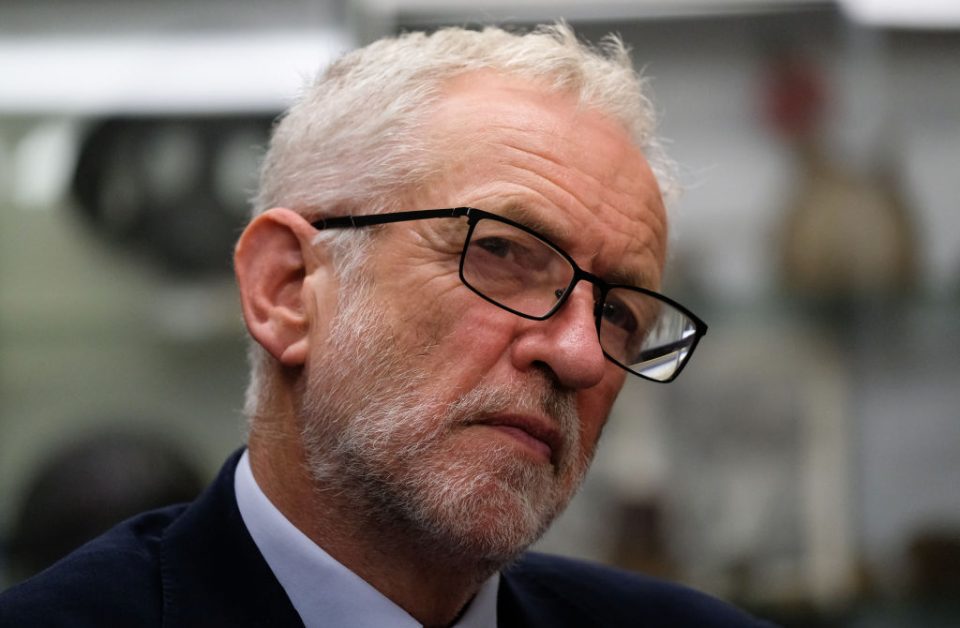
Corbyn had repeatedly refused to call a vote of no confidence without assurances that a no-deal Brexit was off the table.
In Monday’s vote, the majority of Labour MPs abstained from voting.
Yesterday the EU announced that they would provide a “flextension” up to the 31 January, with the possibility of an earlier departure if parliament ratifies the Johnson’s deal sooner.
So, who will win?
In the event that we do have a UK general election, all the signs point to one outcome: a clear Tory majority.
According to a YouGov poll conducted on 25 October, nearly half of Britons (46 per cent) expect the Tories to win the most votes, and an almost identical 45 per cent think they will win the most seats.
Just 12 per cent of people think Labour will win the most votes, with the same number thinking the same of seats. For the Brexit Party those figures are 5 per cent and 3 per cent respectively, and for the Liberal Democrats they are 3 per cent and 2 per cent.
Read more: Brussels delays Brexit extension decision
The bookies agree. The latest Ladbrokes odds have a Conservative majority at 10/11, with Labour slipping to 20/1. However, no majority was at 11/10.
Jessica O’Reilly of Ladbrokes said: “The Tories currently edge the betting to win an overall majority at December’s election, but it wouldn’t be a huge surprise if there isn’t an overall majority as the betting is incredibly tight.”
Main image credit: Getty