While you were working from home, the City kept going on haphazard casual hours

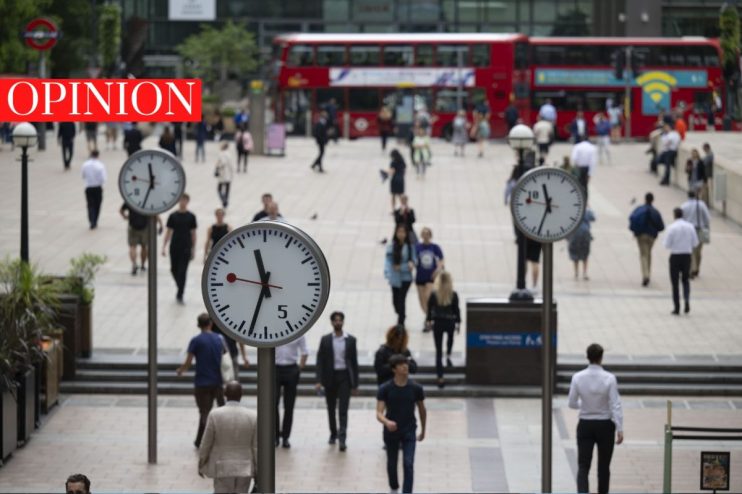
The split between office workers only in the office half the week, and hospitality staff in every day has created a cultural divide down the middle of London, writes Claire Campbell
If a drone flew over the City right now, it would capture a mixed picture. Some bustling offices, some at least partly empty. Fly over the coffee shops, building sites and nearest schools – these will be packed.
While 41 per cent of people in managerial and professional occupations gained flexible working options in the pandemic, just 8 per cent of people in more frontline occupations did the same. The people selling your suits, serving you that morning coffee, looking after your children so you can go to work. And that’s just the way it has to be – flex for those in office jobs, no flex for everyone else. Right?
Wrong. 8 million people work in everyday frontline jobs, that require them being at a specific location. They are our care workers, delivery drivers, nurses, bin collectors. The people who keep Britain running. There has been no flexible working revolution for them – and – no surprises – they are all roles from which more and more people resign every day.
We have to find a way to make these roles more manageable – unless we want to face catastrophic people shortages in key sectors. Where you cannot offer remote working, you can usually offer greater autonomy and input into the schedule, and plenty of notice, and this is exactly what people want. To be able to plan childcare. To be able to attend a weekly exercise class. To make that doctor’s appointment. The basic human right, to plan your life to some degree.
Making this work is challenging operationally. Many frontline roles are governed by intricate shift-based systems and rosters, that were designed on the basis of the individual fitting into the system, no questions asked. But what if there was a better way? Even in highly scheduled roles, in large workforces, it is usually possible to build in a degree of personal input into the schedule – to be able to influence or express a level of preference.
Advance notice of the schedule means people can arrange things like patterns of care more easily, and can avoid paying extortionate fees last minute minute for things like babysitting and transport. It also means you can offer someone an easier and more predictable life.
It is good to see that the government agrees with at least part of this.
The Workers (Predictable Terms and Conditions) Bill has recently attained Royal Assent. Meaning that shift workers now have the right to ask for regular hours and pay, which will particularly benefit those on zero hours contracts.
But I would like to see employers ensure all shift-based employees benefit too. Not just because it is the right thing to do (and it is) – but because it pays off in terms of the bottom line.
I have worked on pilots which have tested greater input into shifts in construction, retail, and nursing, with instant results on staff’s wellbeing. In construction alone, in a pilot backed by Build UK (the sector’s industry body) wellbeing rates rose from 48 per cent to 84 per cent by the end of a 1 year long trial in 2021. All the firms that took part – Skanska, BAM and Wilmott Dixon – retained the flexible working practices we instigated.
We need to look at how we can support staff’s work-life preferences on a mass scale, just as is now possible for people in office jobs. Many people cited greater staff retention in firms with flexible working practices, we need to retain the waiters, the nurses and the retail workers as much as we do the bankers and lawyers.