Why Britain must reject Miliband’s arbitrary economic jingoism

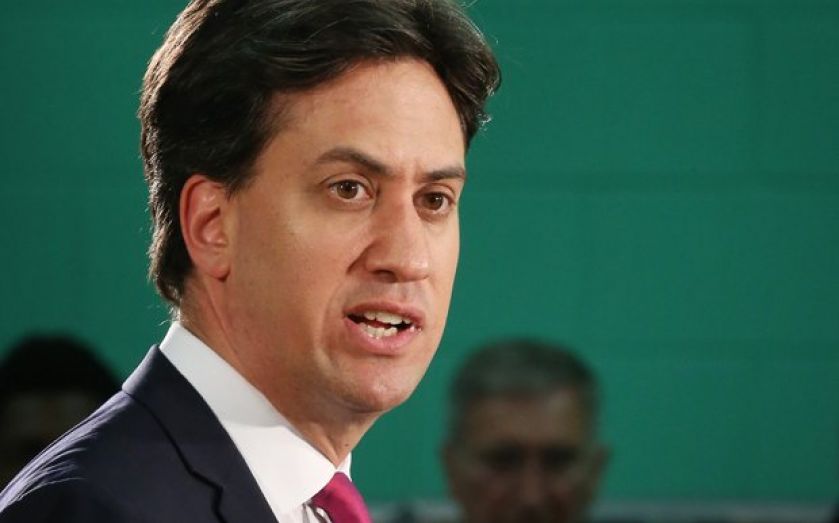
BRITAIN has a proud tradition of putting scientific inventions to commercial use – from the fire extinguisher to Beta blockers, used to treat high blood pressure. Both may be needed to defuse rising political tension over Pfizer’s bid to take over Astrazeneca. Ed Miliband’s shallow resort to populist protectionism threatens the rule of law, and risks poisoning the well of British competitiveness.
The Labour leader wants a “national interest” test applied to the takeover. Business secretary Vince Cable has let it be known he’s mulling it over. Both should be mocked for pretending there is any legal power to block the deal. Miliband must know this – he was special adviser to Gordon Brown at the Treasury when they passed the Enterprise Act 2002, which lays down the current rules. Beyond competition law designed to prevent monopolies, the only “public interest” vetoes cover national security, media and banking cases, with the 2002 legislation crafted to minimise political interference. Nor, contrary to what Labour peer Lord Sainsbury suggests, does EU law’s “legitimate interests” test provide wider grounds. So either Miliband is taking the public for fools, or calling on the government to flout the law.
The spectre of a predatory US firm asset-stripping a thriving British business is overblown anyway. No-one can guarantee the length of any foreign investment. But Pfizer is principally attracted to Britain because UK corporation tax is 21 per cent – compared to 35 per cent in the US – and is searching for new products as existing patents expire.
Likewise, Ed Miliband’s jingoistic rhetoric plays on a tired caricature of reality. Astrazeneca is not a home-grown national champion, but the fruit of globalisation rooted in the UK. The product of a UK-Swedish merger, its chairman is a Swede, its chief executive a Frenchman. Most of its turnover derives from abroad, and less than 15 per cent of its employees live in Britain. Equally, Pfizer’s boss was born in Scotland and its most successful drug, Viagra, was pioneered by a British scientist from Kent.
The real issue is competition. In the past, too many mergers and acquisitions squashed rivals, but produced no tangible efficiencies. The rules are tighter today – and no-one is complaining that this deal would choke off smaller rivals.
Tomorrow, Labour will argue in Parliament for grounds to block takeovers according to some wider, undefined, public interest – a vague concept that would invite arbitrary abuse. In any case, it would require a change in the law, so it couldn’t apply to the Pfizer deal. No self-respecting liberal democracy would tailor legislation for a case already before the authorities. It is astonishing that Britain is even having this debate, eerily reminiscent of Venezuelan-style Chavismo, the kind of state interference in business that sends foreign investors packing.
An opaque public interest veto on foreign firms acquiring UK-based firms would be damaging for Britain, which is increasingly well-placed to attract the kind of investors that boost jobs, revenue and pension funds. The role of government is not to meddle in business deals or pick winners. It should ensure Britain is a fertile climate for investment, rather than choose which companies to grow.
For all his hand-wringing, investment in the kind of UK research and development that draws in sustainable investment is £3bn higher than when Ed Miliband left his post at the Treasury in 2002. Thanks to George Osborne, we are heading for the lowest corporation tax rate in the G20, with new incentives to encourage pharmaceutical research. If we want to build on this, regulation on the evaluation of the cost-efficiency of drugs should be improved, and the process for clinical trials expedited.
More broadly, Britain needs to continue to attract, not repel, foreign investors – by improving infrastructure, sharpening its skills base and promoting patent innovation. If the concern is to encourage sustainable investment, the carrot of tax breaks and stronger voting rights for longer-term equity investors would be more effective than waving political sticks. You only have to consider the impact on the British car manufacturing revival – largely UK-based, but foreign-owned – to see the folly of Miliband’s intervention.
Pfizer-Astrazeneca is not just another deal. It is a test of the UK’s commitment to prepare for, and embrace, globalisation. Despite dire public finances, the UK has crept back into the top 10 of the World Economic Forum’s international competitiveness rankings under this government. David Cameron has made it his mission to prepare the UK for the global race, George Osborne is making Britain more attractive to investors, while William Hague has re-oriented the Foreign Office to focus on trade. All this would be imperilled by Labour, now irredeemably anti-business. The takeover we should fear is not Pfizer of Astrazeneca, but Miliband of Downing Street. Nothing could be more contrary to this country’s long-term national interest.
Dominic Raab is Conservative MP for Esher and Walton.