Why can’t we level up? It takes years to start new infrastructure

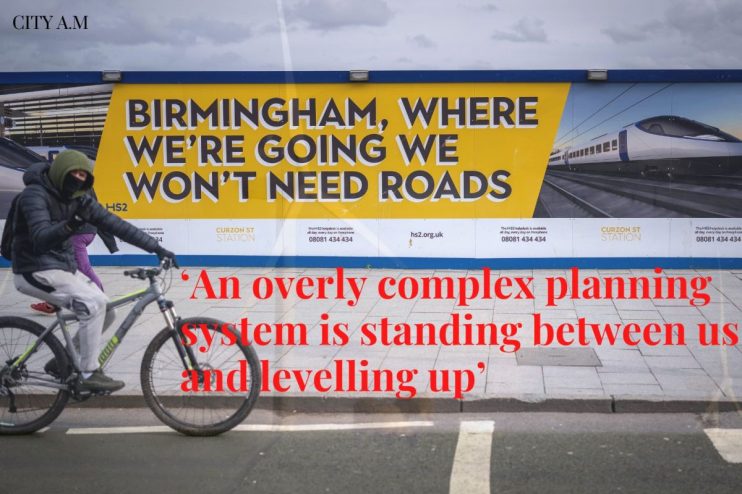
As much as 80 per cent of the lifespan of a regeneration project is spent securing planning, rather than building, writes Tracy Blackwell
Levelling up is a great piece of political communication in part because it is difficult to define. For some it’s about tackling economic and health inequalities that exist between different areas of the country. For others it’s about trying to raise productivity levels outside London. As the chief executive of a long-term institutional investor, I see my particular role in the debate as helping local authorities bring forward regeneration projects.
There is no shortage of capital available to invest in new housing developments, energy infrastructure, and urban regeneration projects. With close to £600bn of assets expected to pass from pension schemes to us and our competitors over the course of the next decade, we will be seeking to invest around 30 per cent of this number in UK infrastructure.
There are many places in the UK that could be more successful at bringing forward these types of projects. Proposals to close the gap over recent years have ranged from reform of the planning system, the development of freeports, and the movement of civil servants outside of London.
If the benefits are clear, there is money to invest, and there is the political will, why aren’t there more regeneration projects? That is a question the Purposeful Finance Commission is trying to address. A new report, published today, follows a series of roundtables across the country with individuals and companies representing all parts of the regeneration lifecycle. We have deliberately gone beyond the confines of the Square Mile and Westminster.
The first significant finding is a lack of capacity and expertise within local government. One attendee said regeneration leads are often so stretched that they don’t have the time to engage with investors at all, let alone formulate investable regeneration propositions. In my experience, a lack of planning expertise leads to planning delays, which in turn then increases the cost of developments and reduces returns for investors, making them less likely to invest in that region.
The second is termed as unproductive funding structures, meaning that funding arrangements for local government are too numerous, too short-term and too ringfenced to enable comprehensive regeneration programmes to be launched.
The third is the complexity of navigating the planning process. One developer reported, due to duplicated work, spending approximately 80 per cent of the lifespan of a regeneration project securing planning, and just 20 per cent of time on the construction itself. This can’t be right.
Urban regeneration is hampered by a lack of quality data on investment levels into regions. For example, through the course of this project, the publicly available data we have analysed made no distinction between public and private investment sources,
So what needs to change? We need a coordinated, bottom-up approach. This means local authorities working in tandem with employers, education institutions, and other civic society groups to work up local growth plans, in conjunction with institutional investors, where that expertise is lacking. These regeneration projects can then be marketed effectively to ensure long-term finance is available.
We also have to address the planning system. It is overly complex and burdensome. I understand the political sensitivities, but we simply have speed up the process. What is required is a new public-private partnership built around identifying gaps in capacity and expertise in some local authority planning departments which is hindering investment. That will require funding – from businesses as well as government – to plug shortfalls and ensure that planning applications can be processed and assessed quickly.
These are just two practical solutions to a vast problem the country faces. It’s common sense to say every part of the country needs the same opportunities to access capital, it’s another thing to actually make it happen.