Why cutting spending is now the only way to revive the economy

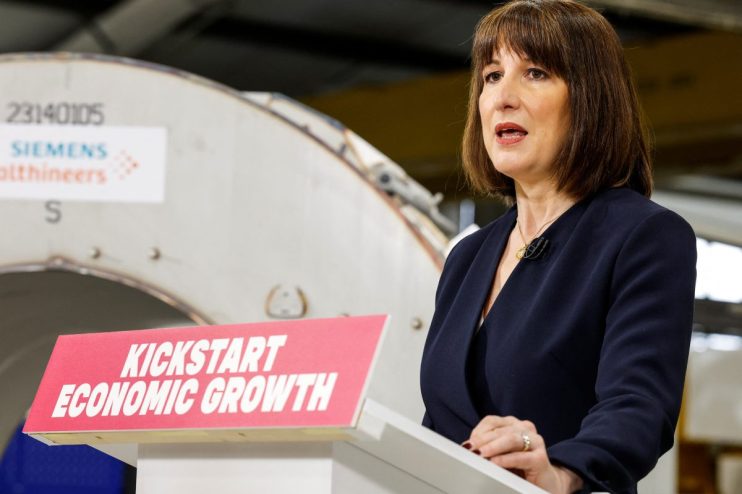
With Brits stashing away cash in fear of further tax hikes under Labour, cutting spending is now the only way forward to grow the UK economy, writes Paul Ormerod
Economic growth has been very low over the past year or so in the UK. A key reason is the reluctance of consumers to spend.
Spending by households account for around 60 per cent of total GDP. So when people save rather than spend, it is much harder for the overall economy to register growth.
The latest estimates from the Office for National Statistics (ONS) show that in the summer the proportion of after-tax income being saved stood at 10.7 per cent. It has been over 10 per cent since Labour came to power in July last year.
To put this in context, in the quarter beginning July 2023 it was seven per cent, and as low as five per cent in July 2022.
In cash terms, an increase in savings from five to 10.7 per cent takes over £20bn out of overall spending in the economy each quarter.
The current level of savings is high not just in comparison with the very recent past, but historically. It was at similar levels during the financial crisis and its immediate aftermath in the late 2000s. But apart from that, we have to go back to the early 1990s to see the percentage of personal income saved being so high.
The economics of savings
There is a large literature in economics on why people save. A key reason is the level of uncertainty.
An important study published by the European Central Bank in 2022 concluded that “higher macroeconomic uncertainty induces households to significantly and persistently reduce their total monthly spending”.
A member of the Bank of England Monetary Policy Committee (MPC), Catherine Mann, seized on this in a speech last week. Mann argued that households have been “rebuilding savings as a precautionary buffer against emergencies, particularly in light of higher uncertainty and volatility”.
But this simply raises the wider question: why has uncertainty increased under Labour? More specifically, why have people felt the need to build up a “precautionary buffer” over the past year or so?
At a practical level, there is an obvious answer. The Chancellor has allowed all sorts of rumours to circulate about all sorts of tax rises. People are uncertain about which taxes will increase and by how much.
The key point, however, is that it is widely believed that taxes are going to rise. It is therefore perfectly rational for individuals to make provision for such increases by saving more now so they have the funds to pay the higher taxes.
The lessons of Ricardian equivalence
This idea is an important one in economic theory which goes all the way back to the great English economist David Ricardo in the early 19th century.
At the time Britain was fighting the Napoleonic wars, by far the biggest conflict in our history until then. It was extremely expensive, and the government had to find unprecedented amounts of money.
Ricardo, a self-made millionaire even in the prices of his day, asked the question: did it matter whether the government borrowed to raise the cash or whether it increased taxes?
He argued that it made no difference. Increased borrowing implied a future stream of higher taxes to pay for it. So people would simply save more. The overall effect would be just as if they had been taxed now.
Modern economics has introduced nuances and qualifications to Ricardo’s basic theory, but in essence it still remains valid.
High government borrowing means higher taxes either now or at some point in the future.
Consumers will not have the confidence to spend until government borrowing, and the consequent threat of higher taxes, is seen to be firmly under control. Cutting public spending to reduce borrowing will stimulate private spending. It is the only way to really revive the economy.
Paul Ormerod is an honorary professor at the Alliance Business School at the University of Manchester and an economist at Volterra Partners LLP