Why long-term sickness will be on Hunt’s agenda in the Autumn statement

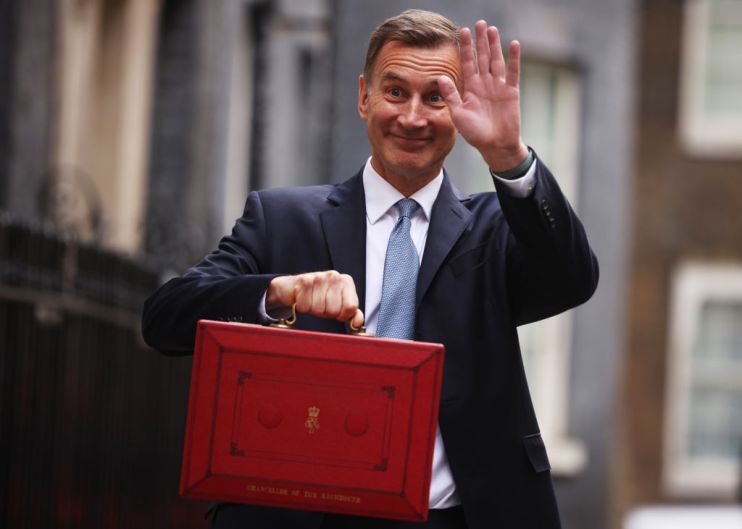
Chancellor Jeremy Hunt is expected to announce new measures to boost participation in the workforce in next week’s Autumn statement in a bid to address the rise of long-term sickness in the UK.
According to the Office for National Statistics (ONS), the number of people that are currently economically inactive because of long-term sickness has risen to over 2.5m people, an increase of over 400,000 since the start of the pandemic.
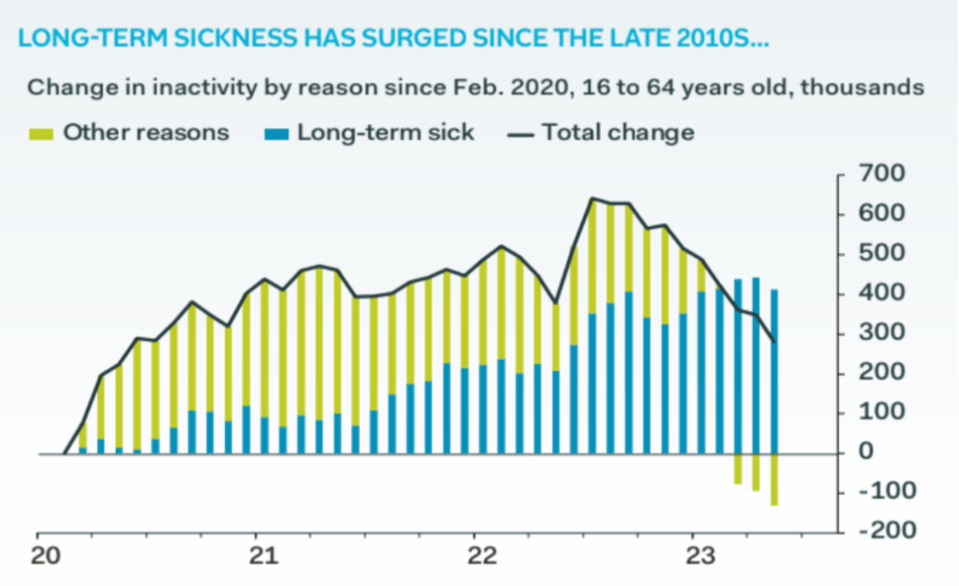
This means long-term sickness is the main contributor to the UK’s inactivity rate, which stands at 20.9 per cent according to figures released earlier this week.
Neil Carberry, chief executive of the Recruitment and Employment Confederation, said “our stubborn economic inactivity rate shows why the autumn statement must deliver on welfare to work if we are to encourage more people to enter or re-enter the jobs market”.
The Chancellor is widely expected to announce measures to address the UK’s long-term sickness problem.
This could include offering incentives for firms to offer occupational health benefits and encouragements to hire those who have been out of the workforce for a long time.
Hunt could also make it harder for people to claim disability benefits – a move that the BBC reported could save £4bn.
He has previously attempted to address the UK’s tight workforce. In the spring budget, Hunt expanded free childcare to include all preschool children, a decision that cost around £4bn.
The intention was clear: try and get more mothers into the workforce.
But experts told Morning Wire that addressing the UK’s long-term sickness problem was a more challenging issue.
“There’s lots of different things going on which all need different solutions,” Stephen Milliard, deputy director at the National Institute for Economic and Social Research, told City A.M.
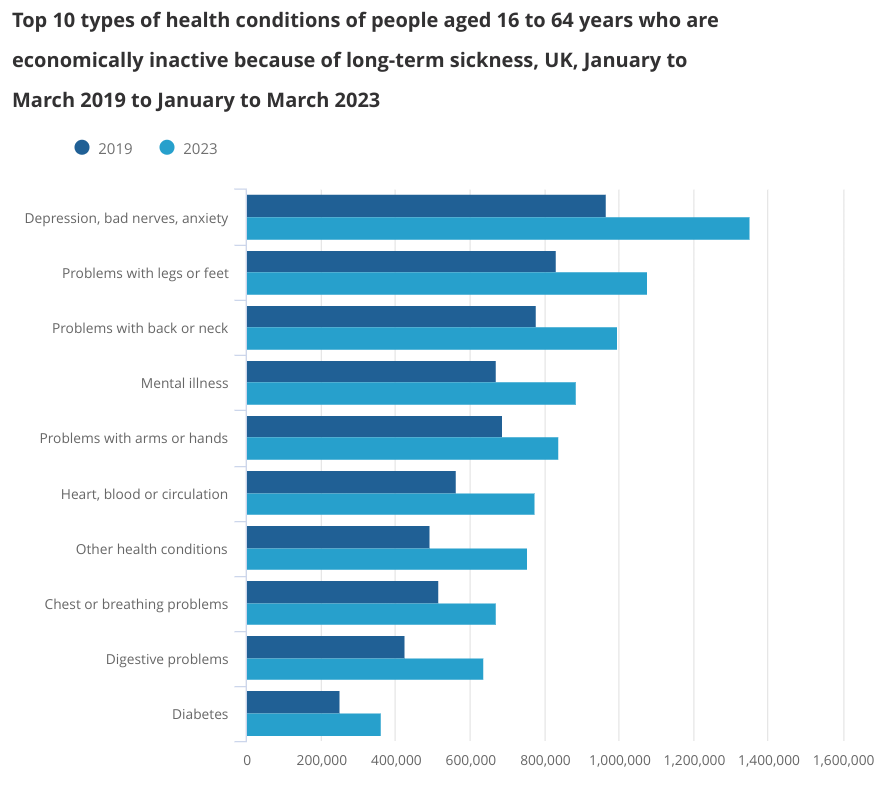
ONS figures suggest that nearly 40 per cent of the 2.5m long-term sick have five or more health conditions.
Depression and anxiety are the most prevalent health condition reported by those inactive due to long-term sickness, accounting for 1.35m people in 2023, according to the ONS.
Milliard said that measures to boost in-work benefits would be most effective at attracting people with less serious conditions back into work.
However, stricter criteria on benefit claimants would likely do little to reduce inactivity, Milliard said. “For the long-term sick the stick [of curbing benefits] is cruel… they shouldn’t be penalised for something they can’t control,” he said.
David Finch, assistant director at the Health Foundation agreed that there was no silver bullet for tackling long-term sickness. “Barriers to returning to work can vary by health condition and severity,” he said.
While the pandemic certainly exacerbated the UK’s long-term sickness problem, Finch argued it was not the root cause. “There’s been a gradual rise in long-term sickness over the past decade,” he pointed out.
Lengthening NHS waiting lists were also not at the heart of the issue, since those on waiting lists tend to be older than the long-term sick.
The UK’s policy failure in recent years, Finch argued, was its inability to keep people connected to the workforce if someone’s health worsens.
“What we’re not doing is keeping people attached to the labour market as their health deteriorates,” Finch said.
Bringing people back into work could initiate a virtuous circle. Employment is an important contributory factor to wellbeing.
In the long-run it would also improve the UK’s productive capacity. The Bank of England’s recent Monetary Policy Report suggested that inflation will remain persistent, largely due to the tightness of the UK’s labour market.
A Government spokesperson said: “We are taking the long-term decisions to help everyone access the health and financial benefits of work, and inactivity has already fallen by nearly 300,000 since the pandemic peak.
“And we continue to explore what more can be done as part of the wider fit note process to ensure patients are offered timely support to manage their health condition and return to work,” they continued.